
Lestes disjunctus
Selys, 1862
Northern Spreadwing
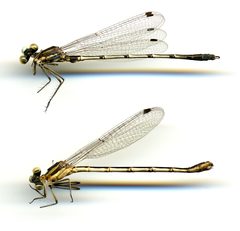
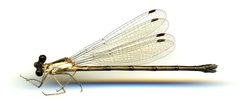
Lestes disjunctus, commonly known as the Northern Spreadwing, is a in the Lestidae. It is widely distributed across North America and inhabits a variety of freshwater including riverine wetlands, ponds, and marshes. The species exhibits a with , requiring before hatching. emerge in late June through July and remain active until late August. Larvae are predatory, feeding primarily on zooplankton and small aquatic . The species holds its wings at approximately 45 degrees to the body when at rest, a characteristic posture of spreadwing damselflies.
Pronunciation
How to pronounce Lestes disjunctus: //ˈlɛstiːz dɪsˈdʒʌŋktəs//
These audio files are automatically generated. While they are not always 100% accurate, they are a good starting point.
Identification
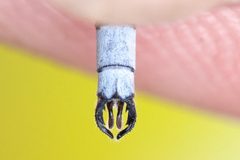
Lestes disjunctus can be distinguished from other by its characteristic spreadwing posture, holding wings at approximately 45 degrees to the body when at rest rather than folded parallel to the . This separates it from most other damselfly . Within the Lestes, precise identification to level typically requires examination of morphological characters including details of the male claspers and female ovipositor. The species is generally medium-sized with a slender body typical of the family.
Images
Habitat
Inhabits freshwater environments including riverine wetlands, small shallow ponds in forests, marshes, and slow-moving water bodies. In Alberta, Canada, specifically occupies small, shallow, fishless ponds with abundant emergent vegetation. Also documented in riverine wetlands adjacent to the St. Marys River, Michigan.
Distribution
North America. Documented across Canada including Alberta ( forest region) and Michigan, as well as the United States. GBIF records indicate presence in Vermont and throughout North America.
Seasonality
emerge in late June through July, with period extending to late August. stage undergoes through winter, hatching the following spring.
Diet
Life Cycle
with obligate . Eggs are laid in late summer and must overwinter before hatching the following spring. Larval development proceeds through 11-12 instars over approximately one year. Larval growth is completed in roughly 70 days under field conditions. Mean larval production is approximately 135 mg dry mass per square meter per year. occurs in late June to July, with period continuing to late August.
Behavior
perch on vegetation with wings folded together above the in the characteristic spreadwing posture. Tandem oviposition has been observed, with pairs depositing into plant tissue above or below the water surface. Larvae are sit-and-wait in vegetation. Laboratory studies indicate that solitary nymphs do not remain near areas of food concentration, and the presence of other nymphs does not affect use of feeding areas, suggesting relatively independent spacing . Larvae can switch hunting methods from ambush to active search.
Ecological Role
on zooplankton and small aquatic , regulating of these prey organisms. Serves as prey for fish and other aquatic predators where present. Contributes to nutrient cycling in freshwater through and as prey.
Similar Taxa
- Coenagrion resolutumSimilar size and preferences, but distinguished by different wing posture at rest (wings folded parallel to body), longer larval development time (10-22 months versus ~1 year), and different spacing in larvae. L. disjunctus has relatively longer and can switch hunting methods.
- Other Lestes speciesShare the characteristic spreadwing wing posture, but require examination of male claspers and female ovipositor for definitive separation.
Sources and further reading
- BugGuide
- Wikipedia
- GBIF taxonomy match
- iNaturalist taxon
- NCBI Taxonomy
- Catalogue of Life
- Recyclers in the Circle of Life: Bess beetles, Odontotaenius disjunctus — Bug of the Week
- Throwback Monday: Recyclers in the circle of life - Bess beetles, Odontotaenius disjunctus — Bug of the Week
- Bug Eric: Bosque del Apache National Wildlife Refuge
- Passalidae | Beetles In The Bush
- Bug Eric: New Mexico Dragonfly Blitz - Day 3
- Bug Eric: 2015
- Demographics of Lestes disjunctus disjunctus (Odonata: Zygoptera) in a riverine wetland
- The Physiological Ecology of Larval Lestes disjunctus Selys (Zygoptera:Odonata)
- Life cycles and food ofcoenagrion resolutum(coenagrionidae: odonata) andlestes disjunctus disjunctus(lestidae: Odonata) populations from the boreal forest of Alberta, Canada
- Use of space in relation to areas of food concentration by nymphs of Lestes disjunctus (Lestidae, Odonata) in captivity
- The influence of larval size, temperature, and components of the functional response to prey density on growth rates of the dragonflies Lestes disjunctus and Coenagrion resolutum (Insecta: Odonata)