
Lestes eurinus
Say, 1840
Amber-winged Spreadwing
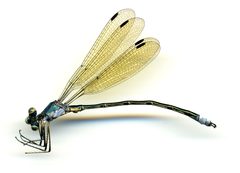
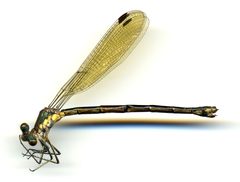
Lestes eurinus, the amber-winged spreadwing, is a of in the Lestidae. It is found in eastern North America. The species exhibits facultative voltinism, with capable of completing development in either one or two years depending on environmental conditions. Its is closely tied to temporary pond , where larvae develop in fishless waters.
Pronunciation
How to pronounce Lestes eurinus: /ˈlɛstiːz juːˈraɪnəs/
These audio files are automatically generated. While they are not always 100% accurate, they are a good starting point.
Identification
As a member of the Lestidae, Lestes eurinus holds its wings at approximately 45 degrees to the body when at rest, distinguishing it from most other which hold wings parallel to the body. The "amber-winged spreadwing" likely refers to wing coloration, though specific diagnostic features for separating this from are not detailed in available sources.
Images
Habitat
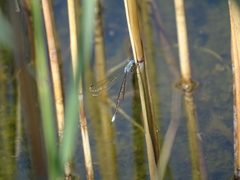
Temporary ponds and wetlands with fishless waters; breeding sites require hydroperiods sufficient for larval development. Females have been observed ovipositing specifically in emergent bur-reed (Sparganium americanum).
Distribution
Eastern North America. Specific records include Vermont and North Carolina, with the present across the eastern United States and potentially adjacent Canada.
Seasonality
begins in early May and lasts approximately two months, being temperature-dependent. Oviposition occurs during June and July. Larval growth is rapid from July to mid-October, arrested by late October, with occurring in the three stages preceding the ultimate instar. Growth resumes in March and continues rapidly until emergence. occurs from mid-July to mid-August.
Life Cycle
Approximately one year under typical conditions, though facultatively semivoltine (two-year development) depending on environmental conditions. occurs, enabling survival through dry periods and winter. The overwinters in late larval instars. Rapid larval growth occurs in summer months with development arrested in late autumn.
Behavior
Exhibits phenotypic plasticity in development time, allowing adjustment to variable hydroperiods. Flexible voltinism serves as a strategy against unpredictable temporary pond conditions. is rather unsynchronized and temperature-dependent.
Ecological Role
in aquatic larval stage; contributes to dynamics in temporary pond .
Sources and further reading
- BugGuide
- Wikipedia
- GBIF taxonomy match
- iNaturalist taxon
- NCBI Taxonomy
- Catalogue of Life
- Bug Eric: Bosque del Apache National Wildlife Refuge
- Bug Eric: January 2016
- Canvey Wick - February Projects with the South East England Youth Nature Network - Buglife Blog - Buglife
- Bug Eric: New Mexico Dragonfly Blitz - Day 3
- Life‐History Studies on Lestes Eurinus Say (Odonata)