
Noctuidae
Latreille, 1809
owlet moths, cutworms, armyworms
Subfamily Guides
27- Acontiinae(bird dropping moths)
- Acronictinae
- Agaristinae(Forester Moths)
- Amphipyrinae
- Bagisarinae
- Balsinae
- Bryophilinae
- Cobubathinae
- Condicinae
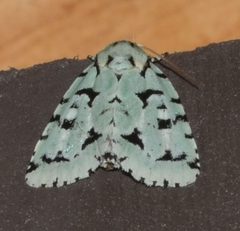
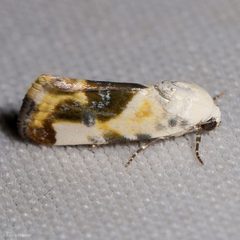
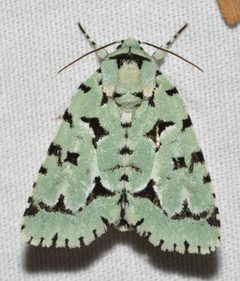
is a large of in the superfamily Noctuoidea, currently comprising approximately 1,089 and 11,772 . The family is taxonomically unstable, having recently lost several (Lymantriinae, Catocalinae, Calpinae) to the family Erebidae, making it now the second-largest family in Noctuoidea rather than the largest in Lepidoptera. are predominantly with cryptic brown, grey, or black coloration, though some tropical subfamilies exhibit bright coloration. Larvae are commonly known as or , with many species being significant agricultural pests.
Pronunciation
How to pronounce Noctuidae: //nɒkˈtjuːɪˌdiː//
These audio files are automatically generated. While they are not always 100% accurate, they are a good starting point.
Identification
are distinguished from similar by the presence of the nodular (epaulette) in the and trifine hindwing venation (reduction or absence of M2 ). Forewing stigmata—claviform, discal, and —provide useful -level characters when visible. Larvae are recognized by their smooth, robust bodies with rounded ; the presence of numerous secondary setae indicates membership in Pantheinae or Acronictinae. The family is difficult to distinguish from Erebidae in the field, requiring dissection or molecular analysis for definitive identification in many cases.
Images
Habitat
in distribution, occupying virtually all terrestrial except Antarctica. occur from sea level to elevations exceeding 4,000 m. Habitats include forests, grasslands, agricultural fields, tundra, and urban environments. Many species are associated with specific plants, with larvae feeding on foliage, stems, or roots depending on the species.
Distribution
Worldwide except Antarctica. North America and northern Mexico harbor approximately 2,522 ; Europe contains 1,576 species. Arctic occurrences include the setaceous Hebrew character (Xestia c-nigrum) in the Yukon Territory at 1,702 m elevation. High-altitude records include Xestia elisabetha above 4,000 m.
Seasonality
Most are multivoltine, with reproductive seasons spanning spring through fall. Some species, such as the eastern panthea moth (Panthea furcilla), reproduce year-round. Others are , including the lesser yellow underwing (Noctua comes) with a single . Early-season species such as Roland's Sallow (Psaphida rolandi) and Speckled Green Fruitworm Moth (Orthosia hibisci) emerge in February–March and disappear by May or June.
Diet
Larvae are predominantly herbivorous, feeding on diverse plant tissues including leaves, stems, and roots. Some feed on toxic plants without ill effect; the splendid brocade (Lacanobia splendens) consumes cowbane (Cicuta virosa). Certain larvae exhibit or , including the shivering pinion (Lithophane querquera) feeding on other lepidopteran larvae, and fall armyworm (Spodoptera frugiperda) consuming siblings and other caterpillar species. primarily nectar at flowers; some engage in puddling , seeking liquids from plant juices, honeydew, , urea, and mud.
Host Associations
- Quercus spp. - larval food plantRoland's Sallow (Psaphida rolandi) and other
- Gossypium spp. (cotton) - larval food plantAnomis flava flava (Cotton Semi-Looper)
- Glycine max (soybean) - larval food plantMultiple pest including velvetbean caterpillar, soybean looper, fall armyworm
- Zea mays (corn) - larval food plantCorn earworm (Helicoverpa zea), fall armyworm (Spodoptera frugiperda)
- Nerium oleander (oleander) - larval food plantSpanish moth (Xanthopastis timais) sequesters cardiac glycosides
- Emmenanthe penduliflora (whispering bells) - larval food plantAnnaphila astrologa
Life Cycle
Complete with four stages: , larva, pupa, . Eggs are spherical and deposited on vegetation or soil. Larvae pass through multiple instars; many overwinter as larvae. occurs in soil, leaf litter, or within plant tissues. Adults emerge to mate and oviposit. Some species exhibit extended pupal lasting up to seven years (e.g., Roland's Sallow).
Behavior
are predominantly and attracted to light. Many produce for mate location. Adults possess tympanal organs capable of detecting bat echolocation, enabling evasive maneuvers. When disturbed, some adults evert defensive glands or spray rectal fluids. Larvae of many species are nocturnal feeders, hiding in soil or debris during daylight; characteristically sever plant stems at or below ground level. exhibit gregarious and marching in some species.
Ecological Role
Larvae function as primary consumers in terrestrial . serve as , particularly for night-blooming plants. Some engage in mutualistic relationships, such as the lychnis (Hadena bicruris) pollinating Caryophyllaceae while its larvae feed on the same plants. Larvae constitute significant food sources for , birds, bats, and other . Adult moths in mountain provide critical fat and protein resources for grizzly bears during periods of food scarcity.
Human Relevance
Many are major agricultural pests causing billions of dollars in crop losses. The scarce bordered straw (Helicoverpa armigera) exceeds US$2 billion in annual agricultural losses. The variegated cutworm (Peridroma saucia) ranks among the most damaging vegetable pests. In West Africa, Busseola fusca, Heliocheilus albipunctella, Sesamia calamistis, Helicoverpa armigera, and devastate pearl millet, sorghum, and maize. Conversely, some species have been employed in , and serve as important . The is extensively studied for resistance evolution and development.
Similar Taxa
- ErebidaeFormerly included Lymantriinae, Catocalinae, and Calpinae were transferred to Erebidae; the two are morphologically similar and difficult to distinguish without dissection or molecular analysis.
- NotodontidaeProminent moths share habits and dull coloration, but rest with wings curled around the rather than flat, and lack the nodular characteristic of .
- GeometridaeInchworm have slender bodies and larvae with reduced numbers (2–3 pairs versus 4–5 pairs in most ), and lack the robust, smooth .
More Details
Taxonomic Instability
represents one of the most taxonomically challenging in Lepidoptera. Molecular has caused repeated reclassification, with major transferred to Erebidae. The current circumscription of Noctuidae sensu stricto is based primarily on trifine hindwing venation, but relationships with remaining Noctuoidea remain under active investigation.
Agricultural Pest Complexity
The soybean pest complex in the Americas exemplifies diversity and economic impact. Key include velvetbean caterpillar (Anticarsia gemmatalis), soybean looper (Chrysodeixis includens), soybean podworm (Helicoverpa zea), fall armyworm (Spodoptera frugiperda), and tobacco budworm (Heliothis virescens). Accurate larval identification is complicated by intraspecific color variation and interspecific morphological similarity, often requiring immunoassay or molecular methods for definitive identification.
Sources and further reading
- BugGuide
- Wikipedia
- GBIF taxonomy match
- iNaturalist taxon
- NCBI Taxonomy
- Catalogue of Life
- Silkworm Moths, Blacklighting, Hot Chocolate, Cookies and More | Bug Squad
- Noctuidae | Beetles In The Bush | Page 2
- Noctuidae | Beetles In The Bush | Page 3
- Bug Eric: Winter 'pillars
- Bug Eric: Blacklighting Already?
- Bug Eric: New Mexico Night Bugs
- Noctuoidea: Noctuidae: Noctuinae
- Biology of the Cotton Semi-Looper, Anomis flava flava (Fabr.) (Noctuidae, Lepidoptera)
- New distribution records of Catocala helena, Catocala fraxini (Lepidoptera: Erebidae), and Globia algae (Lepidoptera: Noctuidae) in Astrakhan Oblast, with first reports of Cucullia infuscata and Conistra erythrocephala (Lepidoptera: Noctuidae) in the Southern Urals
- Phylogenetic underpinnings of the Acronictinae and Amphipyrinae (Lepidoptera: Noctuidae) and implications for understanding larval and life history evolution in the lower Noctuidae