
Lymantriinae
Hampson, 1893
Tussock Moths
Tribe Guides
3- Leucomini
- Lymantriini
- Orgyiini(tussock moths (informal, applies to broader group))
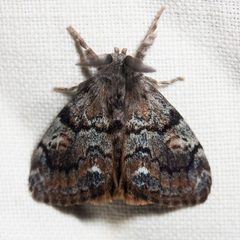
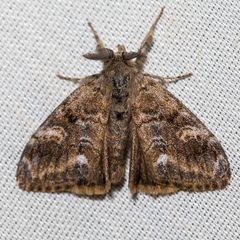
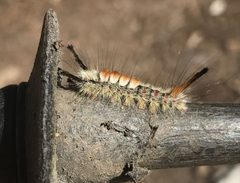
Lymantriinae is a of within Erebidae, comprising approximately 350 and over 2,500 . Members are commonly known as tussock moths, referring to the distinctive tufted appearance of their caterpillars. The subfamily has a distribution absent only from Antarctica, with notable concentrations in sub-Saharan Africa, India, Southeast Asia, and South America. Many species are significant forest defoliators, including economically important pests such as the spongy moth (Lymantria dispar).
Pronunciation
How to pronounce Lymantriinae: /ˌlaɪˌmænˈtraɪəˌniː/
These audio files are automatically generated. While they are not always 100% accurate, they are a good starting point.
Identification
Distinguished from other Erebidae by the combination of densely hairy with non-feeding mouthparts, and larvae with characteristic tufted hair arrangements including urticating setae. The presence of tussock-like tufts in caterpillars separates them from superficially similar Arctiinae larvae. Female flightlessness and reduced wing development occurs in some (e.g., Orgyia, Lymantria) but is not universal.
Images
Habitat
Primarily associated with forest and woodland . Larvae feed on diverse plants including trees, shrubs, vines, herbs, grasses, and lichens. Many exhibit broad host ranges relative to other Lepidoptera.
Distribution
distribution spanning all continents except Antarctica. Highest diversity in sub-Saharan Africa, India, Southeast Asia, and South America. Notable absence from the Antilles and New Caledonia. Madagascar approximately 258 .
Seasonality
Mostly ; approximately 20 confirmed and 20 additional likely diurnal species (based on reduced size) have been documented. activity periods vary by species and latitude.
Diet
do not feed. Larvae are herbivorous, feeding predominantly on trees and shrubs, with some known from vines, herbs, grasses, and lichens. Many species are feeders with broader ranges than typical Lepidoptera.
Host Associations
- Populus - larval for some
- Salix - larval for some
- Milkweeds (Asclepias) - larval for Euchaetes egle and related ; sequesters cardiac glycosides
- Douglas-fir - larval for Orgyia pseudotsugata
- Various forest trees - larval broad range for many pest
Life Cycle
Complete : , larva, pupa, . Larvae incorporate into the cocoon. Emerging adult females of some collect and store abdominal hairs to camouflage and protect egg masses. Eggs may alternatively be covered by hardening froth or camouflaged with collected debris. Some species exhibit gregarious larval .
Behavior
Larvae of many possess detachable as a defense against . Some species exhibit acoustic aposematism: emit ultrasonic signals detectable by bats, advertising their chemical unpalatability. This has been documented in milkweed-feeding species that sequester cardiac glycosides.
Ecological Role
Significant herbivores in forest ; many function as defoliators. Larvae serve as prey for birds, bats, and insects. Some species participate in Müllerian mimicry rings with other milkweed-feeding insects. can substantially alter forest composition and structure.
Human Relevance
Several are major forestry pests causing economically significant defoliation, including Lymantria dispar (spongy moth), Lymantria monacha (nun ), and Orgyia pseudotsugata (Douglas-fir tussock moth). Caterpillar cause dermatitis in humans and livestock. Some species have been subject to efforts. Former name suppressed by ICZN ruling in favor of precedence.
Similar Taxa
- ArctiinaeSimilar hairy larvae, but Arctiinae caterpillars lack the distinctive alternating bristle and tussock hair arrangement; typically more brightly patterned
- HerminiinaeSister lineage within Erebidae; generally less hairy with different wing venation; larvae not tussock-forming
More Details
Taxonomic History
Reclassified from to Lymantriinae of Erebidae based on phylogenetic studies. Formerly placed names (Liparidae, Orgyiidae, Dasychiridae, etc.) are junior synonyms. The name Liparidae is now permanently applied to a family of fish (snailfishes).
Tribes
Most classified into tribes: Arctornithini, Daplasini, Leucomini, Locharnini, Lymantriini, Orgyiini, Nygmiini; some genera remain unclassified (incertae sedis).
Chemical Defense
feeding on cardenolide-containing plants (e.g., milkweeds) sequester cardiac glycosides for defense. This chemical protection persists through and is complemented by ultrasonic aposematic signals in to deter bat .
Sources and further reading
- BugGuide
- Wikipedia
- iNaturalist taxon
- NCBI Taxonomy
- Catalogue of Life
- To Be an Underwing Underfoot | Bug Squad
- Bug in orange and black: Milkweed tussock moth, Euchaetes egle, and its caterpillars have tricks but no treats for hungry predators — Bug of the Week
- The other monarch caterpillar: Milkweed tussock moth, Euchaetes egle — Bug of the Week
- Save some milkweed for me! Monarchs and the milkweed tussock moth, Euchaetes egle — Bug of the Week
- Bug of the Week