
Orgyiini
Wallengren, 1861
tussock moths (informal, applies to broader group)
Genus Guides
3- Dasychira(tussock moths)
- Gynaephora(Arctic woolly bear moths)
- Orgyia(tussock moths)
Orgyiini is a tribe of in the Lymantriinae, Erebidae. The tribe was established by Wallengren in 1861 and later revised by Ferguson (1978) and Holloway (1999). Members are primarily distributed across the Old World and . The tribe is characterized by specific larval and morphological features that distinguish it from related lymantriine groups.
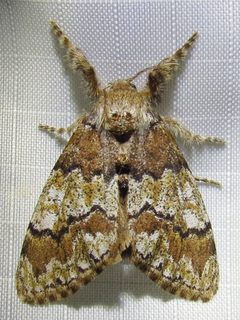
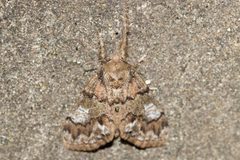
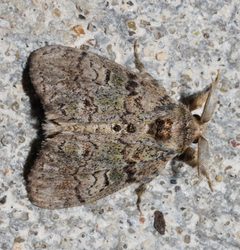
Pronunciation
How to pronounce Orgyiini: /ɔːˈdʒaɪ.ɪˌaɪ.naɪ/
These audio files are automatically generated. While they are not always 100% accurate, they are a good starting point.
Identification
Larvae possess brushes of hairs on abdominal segments 1–4 and 8, plus forward-projecting hair pencils from the sides of the . are distinguished by the presence of an accessory (areole) in the forewings. Male genitalia of some (e.g., Cyclomacula) lack the bifurcated valvae found in Dasychira and Olene, and lack the cornutus on the present in Telochurus.
Images
Distribution
Old World and . Documented from China (Jiangsu, Zhejiang, Hubei, Hunan, Fujian, Guangdong, Guangxi, Hainan, Shaanxi, Gansu, Sichuan, Yunnan, Xizang), India, Nepal, Malaysia, and Indonesia.
Similar Taxa
- DasychiraShares Lymantriinae but differs in male genitalia with bifurcated valvae, absent in Orgyiini such as Cyclomacula
- OleneRelated lymantriine with bifurcated valvae in male genitalia, distinguishing it from Cyclomacula and some other Orgyiini
- TelochurusDistinguished by presence of cornutus on in male genitalia, absent in Cyclomacula and presumably other Orgyiini