
Erebidae
Leach, 1815
Underwing, Tiger, Tussock, and Allied Moths
Subfamily Guides
17- Anobinae
- Arctiinae(Tiger Moths and Allies)
- Boletobiinae
- Calpinae(Fruit-piercing Moths)
- Erebinae(erebine moths)
- Eulepidotinae
- Herminiinae(Litter Moths)
- Hypeninae(Hypenine Snout Moths)
- Hypenodinae
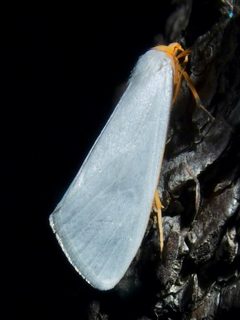
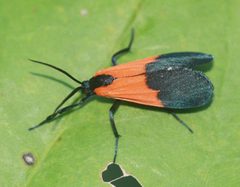
Erebidae is among the largest of by count, encompassing diverse macromoth groups formerly classified across multiple families. The family includes underwings (Catocala), tiger moths and wasp moths (Arctiinae), tussock moths (Lymantriinae), litter moths (Herminiinae), fruit-piercing moths (Calpinae), and snout moths (Hypeninae). range dramatically in size from 6 mm to over 300 mm wingspan. Coloration spans from cryptic browns and grays to vivid aposematic patterns. The family was reconstituted in 2010 through phylogenetic studies that revealed the former Noctuidae to be , with Arctiinae, Lymantriinae, and related lineages more closely related to each other than to core noctuids.

Pronunciation
How to pronounce Erebidae: //ˈɛrɛbɪˌdiː//
These audio files are automatically generated. While they are not always 100% accurate, they are a good starting point.
Identification
Distinguished from related Noctuoidea by the combination of quadrifid forewings and quadrifine hindwings (except Micronoctuini with bifine hindwings). This wing venation pattern separates Erebidae from Noctuidae (typically quadrifid forewings but not quadrifine hindwings), Nolidae, and Euteliidae. Within Erebidae, can often be recognized by larval traits: hairy larvae indicate Arctiinae or Lymantriinae; smooth larvae with reduced suggest arboreal adaptations in other subfamilies. underwings (Catocala) are recognized by cryptic forewings concealing brightly banded hindwings. Tiger moths (Arctiinae) typically show bold contrasting patterns and often possess tymbal organs for sound production.
Images
Habitat
Occupies virtually all terrestrial across global distribution except Antarctica. Specific show habitat preferences: litter moths (Herminiinae) associated with forest floor leaf litter; underwings (Catocala) primarily in woodland habitats with trees; tussock moths (Lymantriinae) in forests and shrublands; lichen moths (Lithosiini, Arctiinae) in habitats supporting and lichen growth. Many are attracted to artificial light sources, facilitating collection across diverse environments from nature reserves to agricultural fields to urban gardens.
Distribution
distribution on all continents except Antarctica. Documented from North America, South America, Europe, Asia, Africa, Australia, and numerous oceanic islands. Specific records include: Jordan (20 in 12 ), India (673 Arctiinae species), Brazil (Anticarsia gemmatalis as agricultural pest), Taiwan (Lymantria xylina), Russia (Baikal Nature Reserve), and extensive North American fauna. The shows greatest diversity in tropical and temperate regions.
Seasonality
activity patterns vary by and latitude. Many species are and attracted to light, with peak activity typically occurring at night; some Arctiinae are . Specific temporal patterns documented: Lymantria xylina males peak in light traps at midnight (23:00–0:00), females at dusk (19:00–20:00). Seasonal occurrence spans from spring through fall in temperate regions, with year-round activity possible in tropical areas. strategies vary: some species overwinter as , larvae, or pupae.
Diet
Larvae are predominantly herbivorous, feeding on diverse plant . Specific feeding guilds include: herbivores on living foliage; litter moths (Herminiinae) feeding on dead or withered leaves rather than living tissue; lichen moths (Lithosiini, Arctiinae) consuming and lichens; fruit-piercing moths (Calpinae, some Erebinae) with that pierce fruit skins to feed on juices; and at least one (Calyptra) with adults capable of piercing mammalian skin to feed on blood. Larval plant specificity ranges from monophagous to highly .
Host Associations
- Ulmus minor - larval Amata caspia larvae reared on leaves in Turkey
- Nerium oleander - larval Syntomeida epilais sequesters cardiac glycosides from this preferred
- Soybean - larval Anticarsia gemmatalis major agricultural pest causing up to 100% defoliation
- Various trees and shrubs - larval Catocala underwings typically associated with woody
Life Cycle
Holometabolous development with complete . Life stages include , larva (typically 5–6 instars), pupa, and . Specific developmental details: Amata caspia in Turkey observed mating and ovipositing in desiccators with leaves, with eggs hatching into larvae that developed through to adults. stage varies by and climate. time ranges from to multivoltine depending on species and latitude.
Behavior
of many exhibit strong positive to ultraviolet and visible light, with peak attraction varying by species and sex. Lymantria xylina shows pronounced in phototactic : males strongly attracted to light (peak at 363 nm wavelength), females rarely attracted except when non-ovipositing. Some Arctiinae produce sounds via tymbal organs for defense or mating communication. Fruit-piercing behavior in Calpinae and related groups represents unusual adult feeding . Defensive behaviors include: aposematic coloration advertising chemical protection; startle displays revealing hidden hindwing patterns in Catocala; and sound production in tiger moths.
Ecological Role
Larvae function as primary consumers in terrestrial , with diverse feeding strategies from leaf herbivory to detritivory (litter moths). Many serve as important prey for , including tachinid flies (documented include Hemihyalea edwardsii in Arctiinae). of some species contribute to pollination through nectar feeding. Fruit-piercing moths can cause economic damage to orchards. Some species are significant defoliators with -level impacts: gypsy moth (Lymantria dispar), tussock moths, and tent caterpillars can cause extensive tree defoliation. Larvae sequestering plant secondary compounds (cardiac glycosides, ) provide chemical defense resources to higher .
Human Relevance
Economic impacts are mixed: major agricultural pests include Anticarsia gemmatalis (velvetbean caterpillar on soybean), various cutworms, armyworms, and stalk borers; forest pests include gypsy moth, tussock moths, and California oak moth. Fruit-piercing moths damage orchard crops. Conversely, the includes used in research and species of aesthetic and scientific value. The McMorran artificial diet developed for laboratory rearing of Noctuidae and Erebidae has facilitated research on 103+ Lepidoptera species. Museum collections (Bohart Museum, University of Jordan Insect Museum) document biodiversity and support research. Some species are frequent contaminants in harvested vegetables, reflecting their abundance in agricultural .
Similar Taxa
- NoctuidaeFormerly included many erebid lineages; distinguished by typically quadrifid forewings but not quadrifine hindwings, and different phylogenetic relationships. Erebidae quadrifine hindwing condition is the key separating character.
- Arctiidae (former family)Now Arctiinae within Erebidae; previously treated as separate based on morphological characters, but phylogenetic studies showed closer relationship to Herminiinae and other erebid lineages than to core noctuids.
- Lymantriidae (former family)Now Lymantriinae within Erebidae; gypsy moth and related tussock moths were elevated to rank historically but molecular and morphological data support placement within Erebidae.
- NolidaeRelated quadrifid in Noctuoidea; similar wing venation but distinct phylogenetic lineage and typically different larval .
Misconceptions
The 'sheep moth' for Hemileuca eglanterina has led to false claims that larvae feed on sheep or wool; larvae are strictly herbivorous on plants. Woolly bear caterpillars (Arctiinae larvae) are sometimes mistakenly claimed to feed on sheep wool; they feed only on plants. Some internet sources falsely state that larvae feed on wool while still on sheep, confusing clothes moths (Tineidae, not Erebidae) with this . The taxonomic history of Erebidae has been particularly unstable, with repeated reclassification of constituent groups, leading to confusion in older literature where Arctiinae, Lymantriinae, and related groups were treated as separate families.
More Details
Taxonomic history
The was reconstituted in 2010 by Lafontaine and Schmidt based on combined molecular and morphological phylogenetic studies. Formerly, Arctiinae, Lymantriinae, and Micronoctuini were treated as separate families, and other erebid lineages were grouped within Noctuidae. The former Noctuidae was found to be with respect to these groups. Current classification recognizes 18 within Erebidae, though some are weakly supported and may be redefined. The family is one of six monophyletic families in Noctuoidea.
Size extremes
wingspans range from approximately 6 mm in some Micronoctuini (among the smallest macromoths) to over 300 mm (12 inches) in the white witch (Thysania agrippina), one of the largest moth globally.
Laboratory rearing
The McMorran diet, developed in 1965 and modified with linseed oil, has proven suitable for rearing diverse Erebidae including spruce budworm, cabbage looper, and numerous others. At least 103 Lepidoptera species across multiple have been reared on this diet, facilitating research on species that would otherwise require living plants.
Sources and further reading
- BugGuide
- Wikipedia
- GBIF taxonomy match
- iNaturalist taxon
- NCBI Taxonomy
- Catalogue of Life
- Bohart Open House: Like a Moth to a Flame! | Bug Squad
- Sheep Moths Draw Attention at Bohart Museum of Entomology Open House | Bug Squad
- Erebidae | Beetles In The Bush | Page 2
- Bug Eric: Two Spiny-butts
- This Artificial Diet May Make Insect Rearing Easier
- Bug Eric: There's a Moth in my Salad!
- Contribution to the Erebidae of Jordan (Lepidoptera: Erebidae)
- Noctuoidea: Erebidae: Erebinae
- Noctuoidea: Erebidae: Boletobiinae, Calpinae
- Noctuoidea: Erebidae: Herminiinae, Hypeninae, Hypocalinae
- Noctuoidea: Erebidae: Aganainae, Anobinae, Arctiinae
- Phototaxis Characteristics of Lymantria xylina (Lepidoptera: Erebidae)
- A catalogue of Indian Arctiinae (Erebidae, Lepidoptera)
- SPATIAL DISTRIBUITION OF ANTICARSIA GEMMATALIS HÜBNER, 1818 (LEPIDOPTERA: EREBIDAE) IN SOYBEAN USING GEOSTATISTICS DISTRIBUCIÓN ESPACIAL DE ANTICARSIA GEMMATALIS HÜBNER, 1818 (LEPIDOPTERA: EREBIDAE) EN SOJA MEDIANTE GEOESTADÍSTICA DISTRIBUIÇÃO ESPACIAL DE ANTICARSIA GEMMATALIS HÜBNER, 1818 (LEPIDOPTERA: EREBIDAE) EM SOJA UTILIZANDO GEOESTATÍSTICA
- Amata (Syntomis) caspia (Staudinger, 1877) (Lepidoptera: Erebidae)’nın Dış ve Genital Morfolojisi ile Biyoekolojisi Üzerinde Bazı Gözlemler Some Observations on External and Genital Morphology and Bioecology of Amata (Syntomis) caspia (Staudinger, 1877) (Lepidoptera: Erebidae)
- TO THE FAUNA AND ECOLOGY OF BOMBYCOIDEA AND NOCTUOIDEA MOTHS (LEPIDOPTERA: LASIOCAMPIDAE, ENDROMIDIDAE, SPHINGIDAE, NOTODONTIDAE, EREBIDAE, NOLIDAE, NOCTUIDAE) OF BAIKAL NATURE RESERVE
- Drasteria scolopax (Alphéraky, 1892) (Lepidoptera: Erebidae): New data on its range and ecology with description of a new subspecies