
Calpinae
Boisduval, 1840
Fruit-piercing Moths, Vampire Moths
Tribe Guides
3- Calpini(fruit-piercing moths)
- Ipnista
- Ophiderini
Calpinae is a of in the Erebidae, distinguished by a highly modified adapted for piercing. Most feed on fruit juices by piercing fruit skins, while males of several Calyptra species can pierce mammalian skin to feed on blood. The subfamily was historically classified within Noctuidae but was reclassified to Erebidae based on phylogenetic studies. It contains three monophyletic tribes: Calpini, Ophiderini, and Phyllodini. Some species reach wingspans exceeding 5 cm.
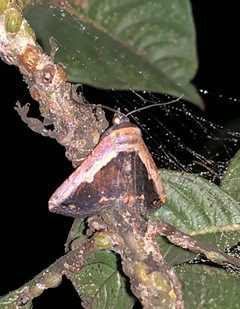
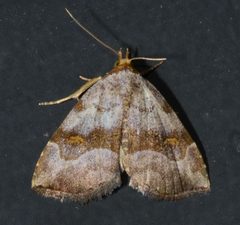
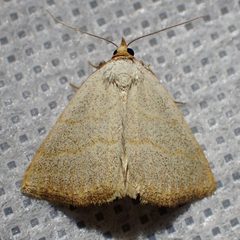
Pronunciation
How to pronounce Calpinae: /kælˈpɪniː/
These audio files are automatically generated. While they are not always 100% accurate, they are a good starting point.
Identification
Distinguished from other Erebidae by the presence of a piercing-sucking with sclerotized, barbed hooks—unique among Lepidoptera. Calpini (including Calyptra) can be separated from Ophiderini and Phyllodini by proboscis structure and feeding adaptations. Vampire moths (Calyptra) are identified by the extreme development of these structures capable of penetrating mammalian skin. Formerly confused with Scoliopteryginae, which was removed based on phylogenetic distance.
Images
Habitat
Subtropical and tropical regions of Asia, with extensions into temperate zones. Found in mountainous areas at elevations from 1,040 to 2,010 meters, including deciduous and mixed forests, forest edges, and areas with fruiting vegetation. include oak woodlands, riparian corridors with poplar and willow, and agricultural areas where fruits are available.
Distribution
Primarily Indomalaya region with substantial radiation into East Asia and Palearctic. In China: Shaanxi, Zhejiang, Hainan, Hubei, Hunan, Fujian, Xinjiang, Sichuan, Ningxia, Hebei, Heilongjiang, Liaoning, Shandong, Henan, Yunnan. Also distributed through Japan, Korea, Mongolia, Eastern Kazakhstan, Central Asia, Middle East, Ukraine, Central and Southern Europe, North Africa, and Russia (Sakhalin, Amur region, Kuriles, Primorye, Siberia, Urals, European part, Northern Caucasus). Calyptra canadensis occurs in North America (USA and Canada).
Seasonality
active during warmer months; specific periods vary by and latitude. In temperate regions, activity concentrated in late spring through summer. Tropical species may be active year-round with peaks during fruiting seasons.
Diet
: Both sexes pierce and feed on juices from soft-skinned fruits (Rubus, Vitis) and thicker-skinned fruits (Ficus, Citrus, peaches). Males of at least 10 facultatively feed on mammalian blood using the modified to pierce skin; blood-feeding duration up to 50 minutes. Blood meals provide and but do not extend lifespan. Females do not feed on blood. Larvae: Feed on leaves; documented plants include Stephania spp. (Menispermaceae) for C. gruesa and Thalictrum spp. (Ranunculaceae) for C. thalictri.
Host Associations
- Stephania spp. - larval Menispermaceae; of Calyptra gruesa
- Thalictrum spp. - larval Ranunculaceae; of Calyptra thalictri
- Rubus spp. - food sourcesoft-skinned fruit pierced for juice
- Vitis spp. - food sourcegrape fruits pierced for juice
- Ficus spp. - food sourcefig fruits pierced for juice
- Citrus spp. - food sourcethick-skinned fruits pierced for juice
Life Cycle
Complete with , larva, pupa, and stages. Larvae are folivorous. details not well documented in available sources.
Behavior
activity pattern. locate fruit visually or chemically; blood-feeding males land on mammals and apply to skin, rocking back and forth to penetrate, then oscillate to drive proboscis deeper, opening hooks to anchor. Some exhibit startling display : flashing brightly colored hindwings when disturbed to escape . C. thalictri and C. fasciata show geographic variation in feeding behavior. Blood-feeding primarily facultative and opportunistic rather than obligate.
Ecological Role
Significant agricultural pests in South and Southeast Asia due to fruit-piercing damage. wound fruits, creating entry points for and reducing crop value. Blood-feeding represents unique nutrient acquisition strategy among Lepidoptera, potentially enhancing male reproductive through nutrient transfer to females via .
Human Relevance
Major pests of orchard and vineyard crops in tropical Asia. Fruit piercing causes direct damage and secondary . Vampire bites to humans produce red, sore wounds but are not considered medically dangerous. Research interest in evolutionary origins of blood-feeding from fruit-piercing . Calyptra used as model systems for studying feeding behavior evolution and biomechanics.
Similar Taxa
- ScoliopteryginaeFormerly included in Calpinae but phylogenetically distant; reclassified to separate based on molecular studies. Differ in larval and lack specialized piercing .
- EulepidotinaeSister group within Erebidae; closely related clade but lacks piercing adaptations and fruit-feeding .
- HypocalinaeRelated within same Erebidae clade; distinguished by different and feeding habits.
- Noctuidae (sensu stricto)Calpinae historically classified here; separated based on phylogenetic redefinition of Noctuidae. Noctuidae lack the highly modified piercing of Calpinae.
More Details
Taxonomic History
Originally described by Boisduval in 1840. Transferred from Noctuidae to Erebidae following major phylogenetic revision of Noctuoidea. Formerly included tribes Anomini and Scoliopterygini, which were removed to Scoliopteryginae based on distant relationship.
Research Significance
Calyptra vampire moths studied extensively at Purdue University by Dr. Jennifer Zaspel for molecular , feeding biomechanics, and behavioral evolution. First documentation of blood-feeding in C. thalictri occurred in 2006 in Far Eastern Russia.
Blood-Feeding Mechanism
armed with heavily sclerotized barbed hooks that anchor in tissue. Two-part structure allows alternating anchoring and drilling. Capable of penetrating thick hides of buffalo, tapirs, and elephants as well as human skin.
Sources and further reading
- BugGuide
- Wikipedia
- iNaturalist taxon
- NCBI Taxonomy
- Catalogue of Life
- To Be an Underwing Underfoot | Bug Squad
- Vampire Moths Suck the Blood of Vertebrates, Including Humans
- Sphingidae | Beetles In The Bush | Page 2
- predator avoidance | Beetles In The Bush | Page 7
- Noctuidae | Beetles In The Bush | Page 3
- Saturniidae | Beetles In The Bush | Page 2
- Taxonomic Revision of Vampire Moths of the Genus Calyptra (Lepidoptera: Erebidae: Calpinae) in Chinese Fauna.