
Scoliopteryginae
Herrich-Schäffer, 1852
Tribe Guides
2Scoliopteryginae is a of in the Erebidae, comprising two tribes: Anomini and Scoliopterygini. Larvae are characterized by distinctive extra setae on abdominal segments 1–7. Many possess a modified adapted for piercing fruit skin to feed on juice. The subfamily was transferred from Calpinae (Noctuidae) based on phylogenetic evidence establishing it as a .
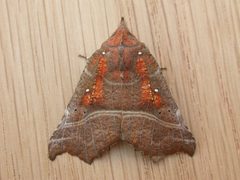
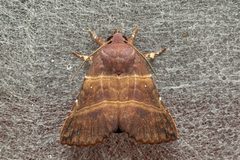
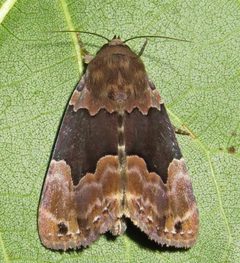
Pronunciation
How to pronounce Scoliopteryginae: /ˌskoʊ.li.ɒp.təˈrɪ.dʒɪ.naɪ/
These audio files are automatically generated. While they are not always 100% accurate, they are a good starting point.
Identification
Larval identification relies on the presence of extra setae on abdominal segments 1–7, a feature not shared with most other erebid larvae. may be distinguished from related by the combination of fruit-piercing and phylogenetic placement; however, -level identification requires examination of genitalia and wing venation patterns.
Images
Appearance
generally possess a modified for piercing, with a thickened, sclerotized structure enabling penetration of fruit skin. Larvae bear extra setae on the first through seventh abdominal segments, a diagnostic trait for the . Wing patterns and body form vary between the constituent tribes Anomini and Scoliopterygini.
Distribution
Global distribution encompassing regions where constituent occur; precise range boundaries depend on included within tribes Anomini and Scoliopterygini.
Diet
Many feed on fruit juice using a piercing-sucking . Larval feeding habits are presumed herbivorous but specific plants are not documented for the as a whole.
Behavior
fruit-piercing enables exploitation of intact fruits without reliance on damaged or fermenting material.
Human Relevance
Fruit-piercing may cause economic damage to cultivated fruits in regions where abundant occur.
Similar Taxa
- CalpinaePreviously included Scoliopteryginae; distinguished by larval setal arrangement and structure based on phylogenetic revision.
- Other Erebidae subfamiliesLack the combination of larval extra setae on abdominal segments 1–7 and specialized fruit-piercing in .
More Details
Taxonomic history
Originally classified within Calpinae (Noctuidae), Scoliopteryginae was elevated and transferred to Erebidae based on molecular phylogenetic studies demonstrating strong monophyletic support. Contains tribes Anomini and Scoliopterygini.
Larval morphology
The extra setae on abdominal segments 1–7 represent a consistent diagnostic character across the , though functional significance remains unstudied.