
Asphondylia
Loew, 1850
gall midges, holly berry midge
Species Guides
28- Asphondylia ambrosiae
- Asphondylia antennariae
- Asphondylia apicata(Creosote Apex Gall Midge)
- Asphondylia atriplicicola(Saltbush Blister Gall Midge)
- Asphondylia atriplicis(Tumor Stem Gall Midge)
- Asphondylia auripila(Large Creosote Gall Midge)
- Asphondylia betheli
- Asphondylia bigeloviaebrassicoides
- Asphondylia borrichiae
is a large of gall midges in the Cecidomyiidae, with over 300 described distributed worldwide. All species in this genus induce galls on plants, particularly on flowers and flower buds. The genus is notable for the morphological similarity of its members, making species identification challenging without plant or gall characteristics. Some species exhibit complex ecological relationships with fungi and within their galls.
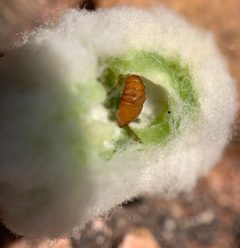
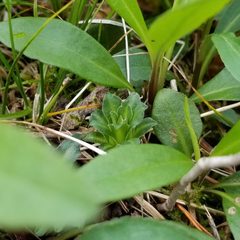
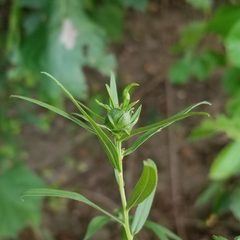
Pronunciation
How to pronounce Asphondylia: //æs.fɒnˈdɪl.jə//
These audio files are automatically generated. While they are not always 100% accurate, they are a good starting point.
Identification
identification relies heavily on plant association and gall rather than morphology. The shape, placement, and structure of the gall, combined with knowledge of the host plant species, often provide the most reliable means of distinguishing species. Larval and pupal characteristics are frequently more useful than adult features for species-level identification. For some , molecular methods may be necessary due to cryptic speciation and minimal morphological differentiation.
Images
Habitat
Diverse corresponding to plant distributions, including forests, grasslands, coastal salt marshes, agricultural fields, and urban landscapes. are found wherever their specific host plants grow, from temperate zones to tropical regions. Some species occupy highly specialized habitats such as saltbush in Mediterranean coastal areas or restinga in Brazil.
Distribution
distribution with recorded from North America, South America, Europe, Asia, Africa, and Australia. High diversity in the Northern Hemisphere with many undescribed species expected in the Southern Hemisphere, particularly in tropical and subtropical regions. Specific species have more restricted ranges tied to their plants.
Seasonality
Varies by and climate. Some species are with single per year; others are multivoltine with multiple generations. Activity generally coincides with plant flowering and bud development. In temperate regions, typically emerge in spring when host plants produce new growth. Some species overwinter as larvae within galls.
Diet
Larvae feed on plant tissue within induced galls. of some may feed on plant sap from feeding punctures made with their ovipositors, though adult feeding habits are poorly documented for most species.
Host Associations
- Ilex opaca - American holly; of A. ilicicola (holly berry )
- Borrichia frutescens - sea oxeye; of A. borrichiae
- Glycine max - soybean; of soybean pod gall midge
- Ceratonia siliqua - carob; of A. gennadii
- Atriplex spp. - saltbush; of multiple Mediterranean
- Solidago spp. - goldenrod; of North American
- Larrea tridentata - creosote bush; of ~15
- Capsicum annuum - pepper; recorded for A. gennadii
- Solanum tuberosum - potato; recorded for A. gennadii
Life Cycle
Females deposit into actively growing plant tissue, typically flowers or flower buds. Larvae hatch and feed within the developing gall, which provides both nutrition and shelter. Larvae complete development within the gall, then pupate. emerge from pupal cases, often leaving visible exit holes or protruding pupal cases on the gall surface. Some are ; others have multiple per year. strategies vary: some species overwinter as larvae in galls, others in soil.
Behavior
Induces gall formation through chemical manipulation of plant tissue, likely via substances in female saliva or larval secretions that alter plant regulation and . Some exhibit complex relationships with symbiotic fungi within galls, which may provide supplementary nutrition or modify gall chemistry. The holly berry (A. ilicicola) manipulates berry coloration through association with fungi, preventing red pigmentation and reducing vertebrate on infested berries.
Ecological Role
Gall formation creates novel microhabitats that support diverse of associated organisms including , , and . Galls may alter plant resource allocation and . Some act as agricultural pests by reducing seed production or fruit quality. The structural complexity of galls contributes to biodiversity by providing specialized .
Human Relevance
Some are significant agricultural pests, notably the soybean pod gall midge which affects soybean production. The holly berry is a minor ornamental pest of American holly, causing green, unripe berries. Several species have been studied as model systems for understanding plant-insect interactions, gall induction mechanisms, and . No species are known to bite or sting humans.
Similar Taxa
- Cecidomyiidae (other genera)Other gall midge also induce galls, but is distinguished by its large size, distribution, and particular association with flower and bud galls. Many other cecidomyiid genera induce leaf or stem galls rather than floral galls.
- EumarchaliaFormerly considered distinct, now synonymized with based on morphological and biological similarities.
More Details
Taxonomic challenges
-level in is exceptionally difficult due to morphological similarity among . plant association remains the primary criterion for species identification, yet some species (notably A. gennadii) exhibit unusually broad host ranges, complicating this approach. Cryptic speciation is common, with genetically distinct species that are morphologically nearly identical.
Fungal associations
Many maintain associations with ambrosia fungi within their galls. These fungi may provide essential nutrients to larvae, modify plant chemistry to enhance gall development, or protect larvae from natural enemies. The fungal associations in some species are obligate, while in others they appear facultative.
Research significance
serve as important models for studying the evolutionary of gall induction, plant specificity, and ecology. The exemplifies how insects can manipulate plant development through chemical signals, though the exact mechanisms of gall induction remain incompletely understood.
Sources and further reading
- BugGuide
- Wikipedia
- GBIF taxonomy match
- iNaturalist taxon
- NCBI Taxonomy
- Catalogue of Life
- Deck the halls with boughs of holly adorned with cheery red and green berries! Green is good for holly berry midge, Asphondylia ilicicola — Bug of the Week
- Deck the halls with boughs of holly…and the Native holly leafminer, 'Phytomyza ilicicola', and Holly berry midge, 'Asphondylia ilicicola' — Bug of the Week
- Green is good - Holly berry midge, Asphondylia ilicicola — Bug of the Week
- Green is good for holly berry midge, Asphondylia ilicicola — Bug of the Week
- The Insects Behind the Weird Growths on Plants
- Archive — Bug of the Week
- Ecology and evolution ofAsphondylia borrichiae
- Endophytic Fungi within Galls and Host Plants of Asphondylia Borrichiae (Diptera: Cecidomyiidae)
- Life histories and host plants of the genus Asphondylia (Diptera; Cecidomyiidae) in Japan
- The taxonomic status of the carob gall midge,Asphondylia gennadii(Marchal), comb. n. (Diptera, Cecidomyiidae), and of otherAsphondyliaspecies recorded from Cyprus
- Life History Patterns and Host Ranges of the Genus Asphondylia (Diptera: Cecidomyiidae)
- Distribution of Asphondylia Gall Midges (Diptera: Cecidomyiidae) in Japan
- Taxonomy and phylogeny of theAsphondyliaspecies (Diptera: Cecidomyiidae) of North American goldenrods: challenging morphology, complex host associations, and cryptic speciation
- Genetic and ecological differences between Asphondylia yushimai and the ivy gall midge, Asphondylia sp. (Diptera: Cecidomyiidae), with a new distribution record of the former from Hokkaido and South Korea
- Phylogenetic Position of the Genus Wagnerinus Korotyaev (Coleoptera: Curculionidae) Associated with Galls Induced by Asphondylia baca Monzen (Diptera: Cecidomyiidae)
- Life History of Asphondylia ilicicola (Diptera: Cecidomyiidae), a Pest of American Holly1
- Depth Associations and Utilization Patterns in the Parasitoid Guild of Asphondylia rudbeckiaeconspicua (Diptera: Cecidomyiidae)
- Five new species of Asphondylia (Diptera, Cecidomyiidae, Asphondyliini) from Brazilian restinga (Atlantic Forest)
- Saltbush-associated Asphondylia species (Diptera: Cecidomyiidae) in the Mediterranean Basin and their chalcidoid parasitoids (Hymenoptera: Chalcidoidea)
- Native American Plant Hosts of Asphondylia websteri (Diptera: Cecidomyiidae)