
Curculionidae
Latreille, 1802
True Weevils, Snout Beetles
Subfamily Guides
17- Bagoinae
- Baridinae(Flower Weevils)
- Ceutorhynchinae(Minute Seed Weevils)
- Conoderinae
- Cossoninae
- Cryptorhynchinae(hidden-snout weevils)
- Curculioninae(flower weevils)
- Cyclominae
- Dryophthorinae
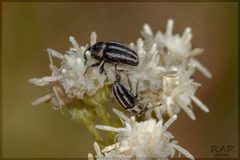
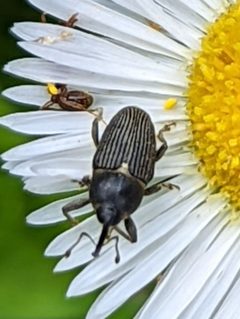
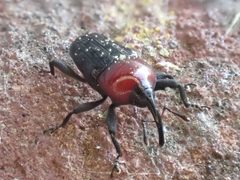
, the true weevils or snout beetles, is one of the largest animal with over 83,000 described across 6,800 worldwide. Members are characterized by a well-developed, downward-curved rostrum (snout), elbowed ending in clubs, and robust, heavily sclerotized bodies often covered in or bristles. The family exhibits extraordinary diversity in form, size (1–35 mm, typically 5–15 mm), and , encompassing herbivores, wood-borers, and fungus-feeders. is common, with females typically possessing more basally positioned antennae and longer, thinner rostra used for oviposition into plant tissue.
Pronunciation
How to pronounce Curculionidae: //kɜːrˈkjuːliːəˌnɪdiː//
These audio files are automatically generated. While they are not always 100% accurate, they are a good starting point.
Identification
are recognized by the prominent downward-curved rostrum, though this is sometimes short (e.g., Entiminae). are elbowed with clubbed tips, and the first antennal segment often fits into a groove on the side of the rostrum. Body is robust, convex, heavily sclerotized, and covered with or bristles. Larvae are C-shaped, lightly sclerotized, with minute antennae, robust , and no legs. : females have antennae positioned more basally and longer, thinner rostra than males.
Images
Habitat
Extremely diverse; occupy terrestrial including forests, grasslands, agricultural fields, and urban environments. Specific are specialized: Scolytinae (bark beetles) inhabit woody tissues, Platypodinae (ambrosia beetles) are wood-borers, Entiminae (broad-nosed weevils) are often ground-dwelling.
Distribution
; found on all continents except Antarctica. Particularly diverse in tropical regions.
Seasonality
Highly variable across ; some have cycles, others multivoltine. Many temperate species overwinter as larvae or . Activity patterns range from year-round in tropical regions to seasonal in temperate zones.
Diet
Most are herbivorous as larvae and , feeding on plant tissues including leaves, stems, roots, seeds, and fruits. Some are specialized: Scolytinae feed on phloem and cambium; Platypodinae and some Scolytinae feed on ambrosia fungi they cultivate in wood; Cossoninae and Cryptorhynchinae feed on rotten wood or bark.
Life Cycle
Highly variable across and . Larvae typically develop in plant tissues (roots, stems, seeds, wood) or soil. Some species overwinter as larvae underground; others as . Number of per year ranges from one to multiple depending on species and climate.
Behavior
When disturbed, often exhibit (playing dead) by lying motionless on their backs. Females use the elongated rostrum to drill into plant tissue for oviposition. Some mark oviposition sites with to deter competitors. capability varies: many species are fully winged, while some island lineages (e.g., Laparocerus) are flightless.
Ecological Role
Major herbivores in terrestrial ; significant decomposers through wood-boring activities. Bark beetles (Scolytinae) play important roles in forest dynamics, though some become destructive pests. Ambrosia beetles cultivate fungal gardens, creating unique micro-ecosystems within wood. Many serve as food for vertebrates and .
Human Relevance
Numerous are economically important agricultural and forest pests: boll weevil (Anthonomus grandis), plum curculio (Conotrachelus nenuphar), clover root curculio (Sitona hispidulus), and various grain weevils (Sitophilus spp.). Some species are used as agents against weeds. The 's enormous diversity makes it a significant subject of taxonomic and evolutionary research.
Similar Taxa
- BrentidaeSister group to ; distinguished by straight rather than elbowed and lack of the antennal groove on the rostrum found in most Curculionidae.
- Scolytidae (historical)Formerly treated as a distinct for bark beetles, now recognized as Scolytinae within ; distinguished by cylindrical body form adapted for wood-boring.
Sources and further reading
- BugGuide
- Wikipedia
- GBIF taxonomy match
- iNaturalist taxon
- NCBI Taxonomy
- Catalogue of Life
- Curculionidae | Beetles In The Bush | Page 3
- Curculionidae | Beetles In The Bush | Page 2
- Weevil genus beats records in Macaronesia | Blog
- Bug Eric: Odd Little Weevils
- Clover Root Curculio: Historic Perspectives Guide Modern Management
- Plum Curculio: New Guide Gathers IPM Recommendations for North American Fruit Pest
- Salient Features in the Biology of Curculionidae (Coleoptera: Curculionidae)
- Oviposition and Host Object Marking by the Females of Ceutorhynchus floralis (Coleoptera: Curculionidae)
- Morphological and behavioural features of bark beetles of the tribe Scolytini (Coleoptera, Curculionidae, Scolytinae) associated with fungi
- Determination of Scolytinae and Platypodinae (Coleoptera : Curculionidae) flight area using sticky traps
- Characterization of the Complete Mitochondrial Genome and Evaluation of COI Barcoding in Philonis inermis (Coleoptera: Curculionidae: Cryptorhynchinae) Using Genome Skimming.
- The genome sequence of the Acorn Weevil, Curculio glandium (T.Marsham, 1802) (Coleoptera: Curculionidae).
- Temporal, spatial, and vertical distribution of plum curculio (Coleoptera: Curculionidae) in southeastern peach orchards.