
Mayetiola
Kieffer, 1896
Species Guides
1- Mayetiola destructor(Hessian fly)
Mayetiola is a of gall midges in the Cecidomyiidae. The genus includes approximately 15 described , with Mayetiola destructor (the ) being the most economically significant. Most species in this genus are associated with cereal crops and grasses. Unlike many other cecidomyiids, M. destructor does not form galls. The genus exhibits a distinctive developmental feature: elimination during early embryogenesis, where germ-line retain the full chromosome complement while somatic nuclei eliminate approximately 32 chromosomes.
Pronunciation
How to pronounce Mayetiola: /maɪˌɛt.iˈoʊ.lə/
These audio files are automatically generated. While they are not always 100% accurate, they are a good starting point.
Identification
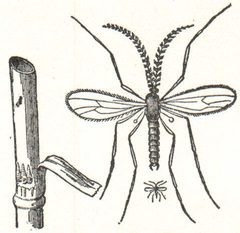
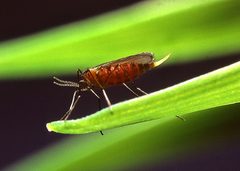
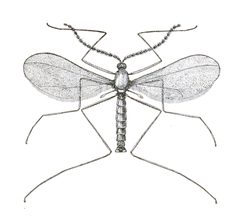
Mayetiola are small, delicate flies typical of the Cecidomyiidae . possess long, slender legs and with bead-like segments. The is distinguished from other cecidomyiid genera primarily by larval and associations rather than conspicuous morphological features. Species-level identification requires examination of genitalia and other microscopic characters. Mayetiola destructor is recognizable by its association with wheat and the characteristic "flaxseed" stage of the .
Images
Habitat
Agricultural fields and grasslands where cereals and grasses grow. are closely tied to cultivated wheat, barley, rye, and various wild grasses.
Distribution
Widespread across temperate regions. Present in North America (throughout the United States and Canada), Europe (including Scandinavia, Western, Central and Eastern Europe), North Africa (Algeria, Morocco, Tunisia), the Middle East (Iraq, Israel, Syria, Turkey), and New Zealand. The originated in the Middle East and has spread to most wheat-producing regions globally.
Diet
Larvae feed internally on stem tissue of plants. First- and second-instar larvae feed on wheat stems, causing direct damage to vascular tissues. do not feed.
Host Associations
- Triticum aestivum - primary wheat, principal of M. destructor
- Hordeum vulgare - barley
- Secale cereale - rye
- various grasses - including Agropyron spp. and other wild grasses
Life Cycle
are deposited in grooves on upper leaf surfaces. Larvae hatch and migrate down leaf grooves to feed beneath leaf at the crown or nodes. Larval development includes two instars lasting two to three weeks. Mature larvae form a rigid, dark brown (the "flaxseed" stage) attached to the stem. emerge after and live only 1–4 days. number varies with latitude: two generations per year in northern regions (Kansas and northward), three to six generations in southern states. The overwinters as larvae within puparia.
Behavior
females deposit in clusters of 5–12 on younger leaves and plants. Larvae exhibit negative geotaxis, moving downward from leaf surfaces to protected feeding positions at the stem base. The exhibits a unique chromosomal : during the fifth embryonic division, germ-line retain all ~40 while somatic nuclei eliminate ~32 chromosomes, retaining only 8.
Ecological Role
Herbivore and agricultural pest. are influenced by , particularly Platygaster hiemalis, which parasitize pupae.
Human Relevance
Major economic importance as pests of cereal production. Mayetiola destructor () is one of the most destructive pests of wheat globally, causing stunted growth, lodging, and reduced grain yield. First documented in North America in 1779, it is among the earliest recorded insect on the continent. Management relies on wheat cultivars, delayed planting, volunteer wheat destruction, and . The has been extensively studied for its unique elimination mechanism, contributing to developmental research.
Similar Taxa
- other CecidomyiidaeMost cecidomyiids form galls; Mayetiola destructor is exceptional in not forming galls despite being in the 'gall midge'
- DasyneuraSimilar small size and grass-feeding habits; distinguished by larval and range
- Sitodiplosis mosellanaOrange wheat blossom , another cecidomyiid cereal pest; distinguished by feeding on wheat rather than stems
Sources and further reading
- BugGuide
- Wikipedia
- GBIF taxonomy match
- iNaturalist taxon
- NCBI Taxonomy
- Catalogue of Life
- Congratulations, UC Davis Linnaean Games Team: National Champs! | Bug Squad
- These Entomologists Are a Powerhouse of a Team | Bug Squad
- Aboveground Pests - AgriLife Extension Entomology
- Hessian fly - Mayetiola destructor - Entomology Today
- Hessian Fly: New Guide Details Wheat Pest Management
- How One Early-Career Entomologist's Path Led Him to the ESA Governing Board
- Mayetiola destructor . [Distribution map].
- Mayetiola destructor . [Distribution map].
- Experiments on chromosome elimination in the gall midge, Mayetiola destructor
- Parasitism of Mayetiola destructor (Diptera: Cecidomyiidae) by Platygaster hiemalis (Hymenoptera: Platygasteridae) on Hessian Fly-Resistant Wheats2
- Monitoring Parasitoids and Parasitism Rates of Mayetiola destructor1 on Wheat in Central Texas