
Tropiduchidae
Stål, 1866
Tropiduchid Planthoppers
Subfamily Guides
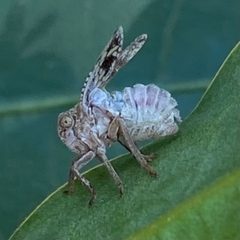
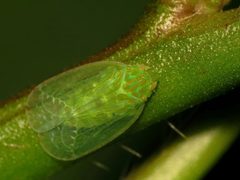
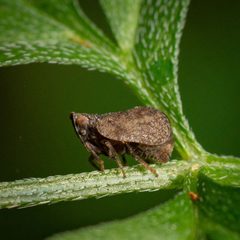
2is a of planthoppers in the order Hemiptera, within the superfamily Fulgoroidea. The family contains at least 160 and approximately 600 described distributed worldwide. Members are characterized by their planthopper and are classified within the Elicinae and other subfamilies. The family includes economically significant pests such as (the Dubas ), a serious pest of date palms in the Middle East and North Africa.
Pronunciation
How to pronounce Tropiduchidae: //ˌtrɒpɪˈdjuːkɪdiː//
These audio files are automatically generated. While they are not always 100% accurate, they are a good starting point.
Images
Distribution
Worldwide distribution including Madagascar, Democratic Republic of the Congo, Borneo, Chile, China, Oman, and other regions. Specific documented locations include: Madagascar ( Laberia), Bas-Uélé Province of northern Democratic Republic of the Congo (genus Fritzruehlia), Borneo and Greater Sunda region (genus Sogana), Coquimbo Region of Chile (genus Selamorpha), Yunnan and southwestern China (genus Zema), and Oman and Middle East ().
Host Associations
- Calceolaria polifolia - associated withSelamorpha variegata found associated with this plant in Chile
- Phoenix dactylifera - pest of is a serious pest of date palms
- Various plants - Pelitropis rotulata has documented plants
Human Relevance
The includes economically important agricultural pests. (Dubas ) is a key pest of date palms (Phoenix dactylifera) in the Middle East and North Africa, causing direct damage to leaves and coating them with honeydew, which can reduce fruit yields by up to 50%. This has driven research into methods and strategies.
More Details
Taxonomic Structure
The has been subject to significant taxonomic revision. Recent studies have established new tribes such as Laberiini within the Elicinae. The Scolopsomorpha was moved from Dictyopharidae to Tropiduchidae. The family is part of the planthopper superfamily Fulgoroidea and is characterized by specific morphological features of the , tegmina, legs, and genital structures that distinguish it from related families.
Research and Control Efforts
Due to the economic importance of , substantial research has been conducted on and geographical information system techniques for modeling and densities. Molecular gut content analysis has identified at least 56 of O. lybicus, providing opportunities for . Studies have shown that predator respond to changes in O. lybicus , with higher rates in spring compared to autumn.
Sources and further reading
- BugGuide
- Wikipedia
- GBIF taxonomy match
- iNaturalist taxon
- NCBI Taxonomy
- Catalogue of Life
- Publications | Entomology Research Museum
- What Eats Dubas Bugs? Molecular Gut Content Analysis Finds 56 Predators of Date Palm Pest
- Bug Eric: Wasp Wednesday: Clitemnestra bipunctata
- Bug Eric: January 2012
- Sogana from the Greater Sunda (Hemiptera: Fulgoromorpha: Tropiduchidae)
- On the genus Fritzruehlia Schmidt, 1924 (Hemiptera: Fulgoroidea: Tropiduchidae)
- Laberiini, a new tribe of Tropiduchidae planthoppers from Madagascar (Hemiptera: Fulgoroidea)
- Revision of the Afrotropical genus Scolopsomorpha Melichar (Hemiptera: Fulgoromorpha: Tropiduchidae)
- Peer Review #2 of "Remote sensing and spatial statistical techniques for modelling Ommatissus lybicus (Hemiptera: Tropiduchidae) habitat and population densities (v0.1)"
- Peer Review #1 of "Remote sensing and spatial statistical techniques for modelling Ommatissus lybicus (Hemiptera: Tropiduchidae) habitat and population densities (v0.1)"
- Remote sensing and geographical information analytical techniques for modelling Ommatissus lybicus (Hemiptera: Tropiduchidae) habitat and population densities
- Taxonomic study of the genus Zema Fennah (Hemiptera: Fulgoromorpha: Tropiduchidae) from China
- Extension of the genus Paruzelia (Hemiptera: Fulgoromorpha: Tropiduchidae) to Borneo with the discovery of a new species
- New genus and species of brachypterous planthopper of the tribe Elicini (Hemiptera: Fulgoroidea: Tropiduchidae) from Chile
- Pelitropis rotulata (Homoptera: Tropiduchidae): Host Plants and Descriptions of Nymphs
- A new tribe of Elicinae Melichar, 1915 (Hemiptera, Tropiduchidae) with the description of a new genus and two new species from southern China.
- Genus Varma (Hemiptera, Tropiduchidae): new species description and updated male and female identification keys.