
Elicinae
Melichar, 1915
Tribe Guides
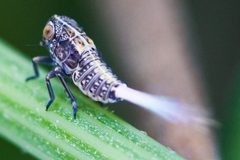
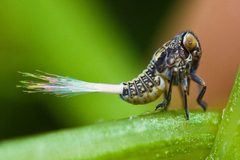
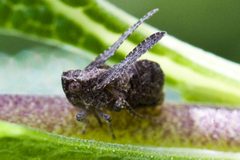
1Elicinae is a of tropiduchid planthoppers (Hemiptera: Tropiduchidae) comprising four extant tribes (Elicini, Bucini, Parathisciini, Elibucini) and four extinct tribes. Members are distinguished from other tropiduchids by their steeply tectiform body shape and distinctive female genitalia. The subfamily has a distribution with notable concentration in Asia, and includes several of agricultural and forestry significance.
Pronunciation
How to pronounce Elicinae: /ɛlɪˈsɪniː/
These audio files are automatically generated. While they are not always 100% accurate, they are a good starting point.
Identification
Distinguished from other Tropiduchidae by steeply tectiform body profile and female genitalia with triangular first valvulae with well-developed connective laminae, rounded gonoplacs lacking marginal teeth. Tribe Elibucini specifically identified by forewings extending well beyond with costal area lacking crossveins, hind tibiae without lateral spines, and elongate phallobase reaching or approaching apex.
Images
Habitat
Broad range of environments including rainforests, macchia, and semidesert . Specific microhabitat preferences vary by tribe and .
Distribution
distribution with marked concentration of in Asia. Present in South America, Africa, and Asia. In China, represented only by tribe Elicini ( Indogaetulia and Connelicita) and newly described tribe Elibucini from southern China (Hainan, Guizhou, Sichuan).
Diet
Sap-sucking phytophagous insects feeding on vascular plant fluids.
Ecological Role
Several are known agricultural or forestry pests. Specific functions beyond herbivory not documented.
Human Relevance
Some function as agricultural or forestry pests, though specific crop or timber impacts are not detailed at level.
Similar Taxa
- TropiduchinaeTypical tropiduchids differ in less steeply tectiform body shape and different female genitalia structure.
- IssidaeElicinae share issid-like female genitalia but differ in overall body plan and tribal composition.
More Details
Tribal composition
Four extant tribes: Elicini (type tribe), Bucini, Parathisciini, and Elibucini (established 2026). Four extinct tribes known from fossil record: Austrini, Gedanotropidini, Laberiini, Patollini.
Taxonomic history
moved back into Tropiduchidae by Gnezdilov (2013), uniting with Gaetuliini and establishing Parathisciini. Elicini transferred from Nogodinidae at this time.
Research gaps
Chinese fauna considered insufficiently explored; additional undescribed likely to occur in this region.