
Rhopalomyia
Rübsaamen, 1892
Species Guides
24- Rhopalomyia anthophila(Downy Flower Gall Midge)
- Rhopalomyia audibertiae(Sage Leaf Gall Midge)
- Rhopalomyia baccharis(coyote brush twisted stem gall midge)
- Rhopalomyia californica(Coyote Brush Bud Gall Midge)
- Rhopalomyia chrysothamni(chrysanthemum gall midge)
- Rhopalomyia clarkei
- Rhopalomyia ericameriae(Rosette Bud Gall Midge)
- Rhopalomyia erigerontis
- Rhopalomyia floccosa(Sagebrush Woolly Stem Gall Midge)
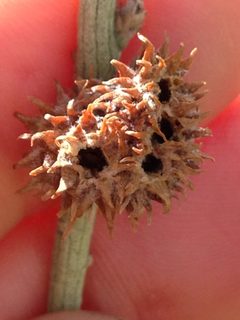
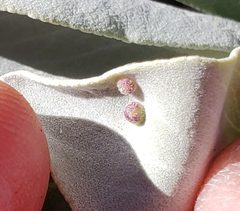
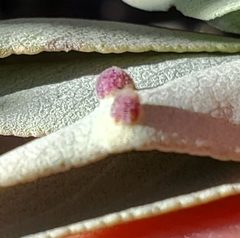
Rhopalomyia is a large of gall midges (Cecidomyiidae) comprising at least 220–267 described with distribution. Established by Ewald Heinrich Rübsaamen in 1892, most species induce highly specific galls on Asteraceae, though some species have expanded to Fabaceae, Apocynaceae, Ericaceae, and Myrtaceae. Galls occur on diverse plant organs including buds, leaves, stems, rhizomes, and flower . The genus exhibits complex associations and gall , with some species serving as agents.
Pronunciation
How to pronounce Rhopalomyia: /roʊˌfæloʊˈmaɪə/
These audio files are automatically generated. While they are not always 100% accurate, they are a good starting point.
Identification
identification relies heavily on gall and plant association rather than morphology alone. Diagnostic characters include gonostyle structure (partially setulose in some species) and palp segmentation (four-segmented in some species). Gall location (bud, leaf, stem, rhizome, flower-) and specific host plant or species provide primary identification cues. Molecular data from the mitochondrial COI barcoding region supports phylogenetic placement and species delineation.
Images
Habitat
Associated with herbaceous vegetation, particularly in open and disturbed . Goldenrod-associated occur in eastern United States meadows and fields. Some species inhabit xeric environments such as dry riverbeds in Japan, while others occur in urban environments. plant availability determines local distribution.
Distribution
. Documented from North America (eastern United States, Arizona, California), South America (Argentina), Europe (Denmark, Norway, Sweden), Asia (Japan, Korea), and Australia (eastern Australia).
Diet
Larvae feed on plant tissue within induced galls, which serve as nutrient sinks. Specific larval feeding substrates vary by gall type: bud, leaf, stem, rhizome, or flower- tissue of plants.
Host Associations
- Asteraceae - primary Most induce galls on Asteraceae; includes Artemisia, Cassinia, Chrysothamnus, Euthamia, Ozothamnus, Solidago
- Fabaceae - Documented include Podolobium ilicifolium, Pultenaea forsythiana, Prosopis caldenia; first recorded for in Australian
- Apocynaceae - Parsonsia straminea documented as ; first record for
- Myrtaceae - Kunzea documented as ; first record for
- Ericaceae - Styphelia triflora documented as ; first record for
- Solidago - 16 described North American associated with goldenrods
- Euthamia - for multiple North American goldenrod gallers
- Artemisia - Multiple including R. longitubifex, R. yomogicola induce galls on Artemisia princeps, A. montana, A. japonica, A. indica
- Chrysothamnus nauseosus - for R. chrysothamni in Arizona
- Tripleurospermum perforatum - Target for potential agent Rhopalomyia n. sp.
Life Cycle
Multivoltine documented in some . Development occurs entirely within plant galls. takes place inside the gall. First descriptions of pupae provided for some species only recently.
Behavior
Females induce galls on specific plant organs by ovipositing into plant tissue; larval feeding stimulates gall formation. Gall shape and size influenced by host plant condition—plants with lower water and nutritional availability receive more oviposition attacks, while galls achieve greater under improved conditions. Some exhibit host range expansion to plant species.
Ecological Role
Gall induction transforms plant tissue into nutrient sinks with de novo vasculature, altering source-sink dynamics. Galls support complex including and —up to seven associated documented from single gall types. Serves as host for diverse parasitoid in urban and natural environments.
Human Relevance
Some investigated as agents for plants, particularly scentless chamomile (Tripleurospermum perforatum). Subject of ecological research on plant-insect interactions, gall development mechanisms, and speciation processes. Gall in the has prompted reconsideration of species identification practices in cecidomyiids.
Similar Taxa
More Details
Taxonomic complexity
Gall in R. longitubifex led to previous misidentification as three separate (R. longitubifex, R. shinjii, and Rhopalomyia sp.), highlighting that gall shape differences may not reliably indicate species boundaries in this .
Phylogenetic revision
Australian have expanded the morphological definition of Rhopalomyia to include species with partially setulose gonostyle and four-segmented palp, previously considered diagnostic of other .
Synonymy
Recent revisions designated R. lanceolata as synonym of R. lobata, and R. albipennis and R. carolina as synonyms of R. solidaginis.
Sources and further reading
- BugGuide
- Wikipedia
- GBIF taxonomy match
- iNaturalist taxon
- NCBI Taxonomy
- Catalogue of Life
- Factors Affecting Distribution of the Gall Forming Midge Rhopalomyia californica (Diptera: Cecidomyiidae)
- Revision of the goldenrod-galling Rhopalomyia species (Diptera: Cecidomyiidae) in North America
- ANATOMICAL ASPECTS OF STEM GALLS INDUCED BY RHOPALOMYIA SPP. ON THEIR HOST PLANTS
- New species of Rhopalomyia and Dasineura (Diptera: Cecidomyiidae) associated with Prosopis caldenia Burkart (Fabaceae) in Argentina
- Ecology ofRhopalomyia californicaFelt (Diptera: Cecidomyiidae) and its parasites in an urban environment
- Irrigation and fertilization of Chrysothamnus nauseosus (Asteraceae) affect the attack and gall growth of Rhopalomyia chrysothamni (Cecidomyiidae)
- Life History and Host Specificity of Rhopalomyia n. sp. (Diptera: Cecidomyiidae), a Potential Biological Control Agent of Scentless Chamomile
- Influence of Host Condition on the Performance of Rhopalomyia n. sp. (Diptera: Cecidomyiidae), a Biological Control Agent for Scentless Chamomile, Tripleurospermum perforatum
- Effects of Floods on the Survival and Species Component of Rhopalomyia Gall Midges (Diptera: Cecidomyiidae) Associated with Artemisia princeps (Asteraceae) Growing in a Dry Riverbed in Japan
- Seven new Rhopalomyia gall midges (Diptera: Cecidomyiidae) from Australia broaden the scope of the genus
- Host range expansion by Rhopalomyia yomogicola (Diptera: Cecidomyiidae) from a native to an alien species of Artemisia (Asteraceae) in Japan
- Polymorphism of axillary bud galls induced by Rhopalomyia longitubifex (Diptera: Cecidomyiidae) on Artemisia princeps and A. montana (Asteraceae) in Japan and Korea, with designation of new synonyms
- Exploring the diversity of galls on Artemisia indica induced by Rhopalomyia species through morphological and transcriptome analyses