High Sierra Checkerspot
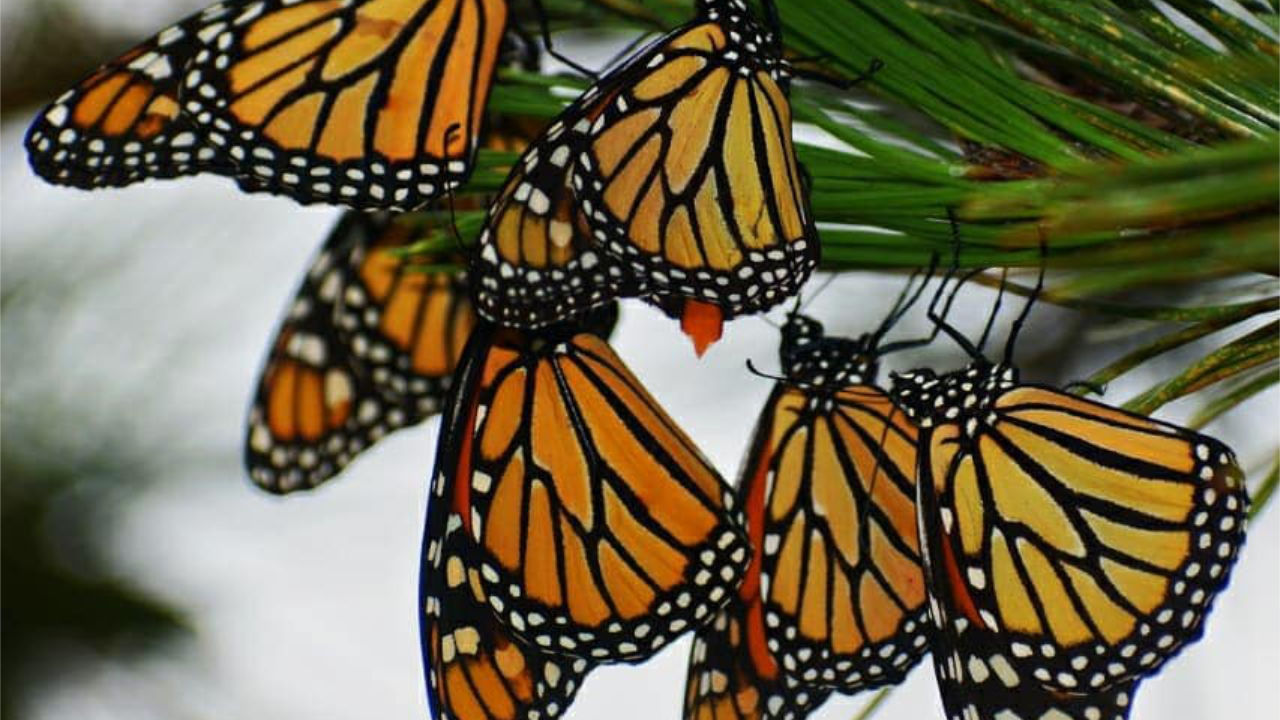
Chlosyne palla altasierra is a subspecies of checkerspot butterfly in the family Nymphalidae, described by Emmel, Emmel & Mattoon in 1998. It is known by the common name High Sierra Checkerspot. The subspecies is recognized as valid and accepted in taxonomic databases. As a member of the genus Chlosyne, it belongs to a group of butterflies commonly known as crescents and checkerspots, which are characterized by their orange and black patterned wings.
Chlosyne palla palla is a subspecies of checkerspot butterfly in the family Nymphalidae. It is found in North America. The species belongs to a genus of brush-footed butterflies commonly known as the checkerspots or crescents. Limited observational records exist for this particular subspecies.
Chlosyne rosita browni is a subspecies of checkerspot butterfly described by Bauer in 1961. It belongs to the genus Chlosyne, a group of brush-footed butterflies commonly known as checkerspots. The subspecies is part of the larger species Chlosyne rosita, which occurs in North America. Like other members of the Nymphalidae family, it exhibits the characteristic reduced front legs of brush-footed butterflies.
metalmark moths
Choreutoidea is a superfamily of Lepidoptera containing a single family, Choreutidae (metalmark moths). The group was elevated to superfamily status by Minet in 1986 based on morphological evidence, resolving long-standing taxonomic uncertainty. Members are small moths known for distinctive wing patterns that often resemble metal markings, and some species exhibit remarkable predator mimicry of jumping spiders.
Choristoneura spaldingiana is a species of leafroller moth in the family Tortricidae. The genus Choristoneura includes several economically significant conifer-feeding species, most notably the spruce budworm (C. fumiferana), a major forest pest in North America. While specific details about C. spaldingiana remain sparse in the provided sources, congeners in this genus are known for caterpillars that feed on conifer foliage and display characteristic leaf-rolling behaviors for shelter.
Choristostigma disputalis is a small crambid moth described by Barnes and McDunnough in 1917. It is distributed across western North America from Alberta and British Columbia south to California, Oregon, and Arizona. Adults have a wingspan of approximately 20 mm and are active from April through August. The species is most readily distinguished from its congener Choristostigma elegantalis by its paler forewing ground color and distinctive wing pattern elements.
Chorrera is a genus of snout moths (family Pyralidae, subfamily Phycitinae) established by Harrison Gray Dyar Jr. in 1914. It belongs to the diverse pyralid moth fauna and is represented by at least one described species. The genus is placed within the Phycitinae, a subfamily known for slender-bodied moths with elongated labial palps forming a snout-like projection.
Bold Medicine Moth
Chrysendeton medicinalis, commonly known as the bold medicine moth, is a small crambid moth species native to eastern North America. It was described by Augustus Radcliffe Grote in 1881. The species is characterized by its distinctive white, ocherous, and brown wing patterning with silvery-white bands. Adults are active nearly year-round in the southern portions of its range.
Ring-clawed Deer Fly
Chrysops cincticornis is a deer fly in the family Tabanidae, first described by Walker in 1848. It is commonly known as the Ring-clawed Deer Fly. The species has been documented in Vermont and other parts of the United States, with 291 observations recorded on iNaturalist. Research on this species has focused on its oviposition behavior and fecundity, with laboratory studies showing females deposit eggs in gelatinous masses on mud substrates near water, averaging 156 eggs per female.
sack-bearer moths
Cicinnus is a genus of sack-bearer moths (family Mimallonidae) in the subfamily Cicinninae. Species in this genus are characterized by their uniformly pink or pale coloration and relatively simple wing patterns. The genus includes C. chambersi, described in 2020 from southeastern Arizona, which represents the first U.S. Cicinnus species described in nearly 50 years. C. melsheimeri is the most widespread North American species, while other species occur primarily in Mexico.
Cissusa n-sp is an undescribed species of moth in the family Noctuidae, genus Cissusa. The designation "n-sp" indicates a new, formally unnamed species awaiting description. Members of the genus Cissusa are part of the diverse owlet moth fauna of North America. No specific information is available for this particular undescribed taxon.
Cisthene coronado is a moth species in the family Erebidae, subfamily Arctiinae, tribe Lithosiini. Described by Carroll B. Knowlton in 1967, it is currently known only from the US state of Arizona. As a member of the lichen moth genus Cisthene, it likely exhibits the typical aposematic coloration and lichen-mimicking appearance characteristic of this group, though specific details of its biology remain poorly documented.
Cisthene deserta is a small moth in the family Erebidae, subfamily Arctiinae. First described by Felder in 1868, this species has a restricted distribution in western North America, recorded from Utah and California. Adults are active from spring through mid-summer, with forewings measuring 9–11 mm.
Kentucky Lichen Moth
Cisthene kentuckiensis, known as the Kentucky lichen moth, is a species of lichen moth in the family Erebidae. It was described by Harrison Gray Dyar Jr. in 1904. The species is found in the eastern and central United States, with larvae that feed on lichens.
Cisthene tenuifascia schwarziorum is a subspecies of lichen moth in the family Erebidae. As a member of the genus Cisthene, it belongs to a group of small, often brightly patterned tiger moths. The genus Cisthene is part of the tribe Lithosiini, which includes species commonly known as lichen moths due to their frequent association with lichen-covered substrates. This subspecies was described from populations in the southwestern United States.
Cisthenina is a subtribe of lichen moths within the family Erebidae, containing approximately 428 described species. Members were formerly classified as the tribe Cisthenini in the subfamily Lithosiinae of the family Arctiidae, but were reclassified following taxonomic revisions of the tiger moth group. The subtribe is characterized by its association with lichen-based camouflage patterns. It represents a well-documented lineage with substantial observational data.
Little Shaded Lichen Moth
Clemensia umbrata is a moth in the family Erebidae, described by Packard in 1872. It is known as the Little Shaded Lichen Moth and occurs in forested regions of North America. The species belongs to the lichen moth tribe Lithosiini, whose larvae feed on lichens. Adults are nocturnal and are attracted to light.
striped chocolate-tip, drab tent-maker moth
Clostera strigosa is a moth species in the family Notodontidae (the prominents), described by Augustus Radcliffe Grote in 1882. It is known by two common names: the striped chocolate-tip and the drab tent-maker moth. The species is found in North America, with records from Canada (Alberta, Manitoba, Saskatchewan) and the United States (Vermont). The specific epithet 'strigosa' refers to the streaked or striped appearance typical of this species.
rose plume moth
Cnaemidophorus is a genus of plume moths in the family Pterophoridae, established by Wallengren in 1862. The genus contains four described species, including the well-known rose plume moth (C. rhododactyla). These moths are characterized by their deeply divided wings, a defining feature of plume moths. The genus has been documented across Europe and parts of Asia.
Cobubatha is a genus of moths in the family Noctuidae, subfamily Eriopinae. The genus includes species of small to medium-sized moths with relatively unremarkable forewing patterns compared to many noctuids. Members of this genus are part of the diverse North American noctuid fauna. The specific epithet 'n-sp' indicates an undetermined or undescribed species within the genus.
Cocytius is a genus of hawkmoths in the family Sphingidae, established by Hübner in 1819. Species in this genus are large-bodied moths with robust flight capabilities. The genus includes Cocytius antaeus, which has been documented from Isla del Coco, Costa Rica.
long-tailed skippers
Codatractus is a genus of skipper butterflies in the family Hesperiidae, subfamily Eudaminae. It comprises approximately 13 species distributed across the Neotropical and Nearctic regions. The genus was established by Lindsey in 1921. Several species possess distinctive long hindwing tails characteristic of the Eudaminae.
Codatractus valeriana is a skipper butterfly (Hesperiidae) originally described from Middle America. The species has undergone taxonomic revision, with current treatment placing it in the genus Thorybes as Thorybes valeriana, rendering Codatractus valeriana a synonym. Records indicate presence in both Middle and North America. As a hesperiid, it likely exhibits the characteristic rapid, darting flight pattern of skippers, though specific behavioral details remain poorly documented.
Common Ringlet (subspecies)
Coenonympha tullia ampelos is a subspecies of the Common Ringlet butterfly, distributed across parts of Europe and North America. As a member of the Satyrinae subfamily, it inhabits open grassland and wetland habitats including peat bogs. The species is known to occur in association with Sphagnum moss-dominated blanket bogs, where it serves as an indicator of intact bog ecosystems.
Coenonympha tullia eunomia is a subspecies of the common ringlet butterfly, a member of the Satyrinae subfamily within Nymphalidae. It occurs in Europe and North America, with populations found in Austria, Bosnia and Herzegovina, and other regions. As a subspecies of the widespread C. tullia, it inhabits similar environments to the nominate form, typically associated with grassland and bog habitats.
Large Heath butterfly (subspecies)
Coenonympha tullia insulana is a subspecies of the Large Heath butterfly, a member of the Satyrinae subfamily within Nymphalidae. The species is associated with peatland habitats, particularly blanket bogs. It is one of several subspecies of Coenonympha tullia found across parts of Europe and potentially North America, though specific details for insulana are limited in the provided sources.
Outis Skipper, button-grass skipper
Cogia outis is a species of skipper butterfly in the family Hesperiidae, commonly known as the Outis Skipper or button-grass skipper. The species was described by Skinner in 1894, originally placed in the genus Eudamus. As a member of the dicot skipper group, it belongs to a diverse lineage of fast-flying, moth-like butterflies. The species has been documented in 57 iNaturalist observations, indicating it is not exceptionally rare but also not commonly encountered.
Casebearers, Case-bearing moths
Coleophora is a large genus of case-bearing moths in the family Coleophoridae, comprising approximately 1,350 described species. The genus occurs on all continents but is most diverse in the Nearctic and Palaearctic regions. Larvae construct distinctive portable silken cases from host plant material, which serve as key identification characters and provide protection. Many species exhibit narrow host plant specificity, with larvae feeding on seeds, flowers, or leaves.
Cigar Casebearer Moth, Birch-Alder Casebearer
A small case-bearing moth with a wingspan of 11–14 mm. Adults are active in June and are difficult to identify without dissection and microscopic examination of genitalia. Larvae feed on birch, alder, and other woody plants, constructing portable cases from silk and plant material. The species occurs across Europe (except the Balkan Peninsula), Japan (Hokkaido), and North America.
case-bearer moths, case-bearing moths
Coleophorinae is a subfamily of small moths within the family Coleophoridae, commonly known as case-bearer moths. The larvae construct distinctive portable cases from silk and plant material, which they carry throughout their development. The subfamily contains the majority of species in Coleophoridae, with adults generally characterized by narrow wings and relatively long antennae. Many species are specialists on particular host plants, making them important subjects for ecological and taxonomic study.
brown arborvitae leafminer, brown cedar leafminer
Coleotechnites thujaella is a small gelechiid moth commonly known as the brown arborvitae leafminer or brown cedar leafminer. It occurs in northeastern North America, where its larvae feed internally on Thuja foliage. The species is recognized by its distinctive wing pattern of black triangular costal patches and paired black dots on cream-white forewings. Adults have a wingspan of 9–10 mm and are active in a single annual generation.
Yellows, Sulphurs, Yellows and Sulphurs
Coliadinae is a subfamily of Pieridae butterflies comprising approximately 300 described species, commonly known as yellows or sulphurs for their characteristic coloration. The subfamily is divided into two well-supported monophyletic groups: the Coliadini (clouded yellows, brimstones, and sulphurs) and the Euremini (grass yellows). Many species exhibit strong sexual dimorphism, with males often displaying ultraviolet-reflective wing patches absent in females. The group has a global distribution with particularly high diversity in tropical and subtropical regions.
Collomeninae is a subfamily of moths within the family Nolidae, established in 2012 by Zahiri, Lafontaine, and Schmidt. The subfamily comprises approximately ten genera distributed primarily in tropical regions of South America and Southeast Asia. The type genus is Collomena. The subfamily is distinguished from other Nolidae by a combination of morphological characters related to wing venation and genitalia structure.
new beauty
Colobura annulata, commonly known as the new beauty, is a butterfly in the family Nymphalidae. The species was described in 2001 by Willmott, Constantino, and Hall. It ranges from Central America into northern South America, with records extending as far north as southern California and northern Texas. Historical records from Suriname have contributed to understanding of its biology, including corrections to erroneous early hostplant records.
distinguished colymychus moth
Colomychus talis is a crambid moth occurring in the southeastern United States and Mexico. Adults are active from May through August. The species was described by Augustus Radcliffe Grote in 1878 and is recorded from ten U.S. states.
Ornate Compacta Moth
Compacta capitalis is a species of crambid moth described by Augustus Radcliffe Grote in 1881. It occurs across the eastern and central United States, with records spanning from Maryland south to Florida and westward to Texas, with possible occurrence in Colorado and north to Illinois. Adults are active during the warmer months, with flight records from May through August. The species is characterized by distinctive dark apical blotches on both forewings and hindwings.
A small crambid moth with a wingspan of approximately 21 mm, ranging from the southern United States through Central America to South America. Adults are active during summer months in the northern part of its range. First described by Guenée in 1854 from the original basionym Botys hirtalis.
Zebra conchylodes moth (for C. ovulalis)
Conchylodes is a genus of snout moths in the family Crambidae, comprising 21 recognized species. The genus was established by Guenée in 1854 and is placed in the tribe Udeini. The monotypic genus Nonazochis, described by Amsel in 1956, was synonymized with Conchylodes, with its type species Azochis graphialis transferred to Conchylodes as Conchylodes graphialis. The genus includes the zebra conchylodes moth (Conchylodes ovulalis), noted for its distinctive black-and-white striped pattern.
Condica n-sp-one is an undescribed species within the genus Condica, a group of moths in the family Noctuidae. The genus Condica comprises small to medium-sized moths commonly known as condica moths or owlet moths. This particular species has not yet received a formal scientific description, hence the provisional designation "n-sp-one" (new species one). Members of this genus are generally nocturnal and are found primarily in the Americas.
Condica n-sp-two is an undescribed species within the genus Condica, a group of noctuid moths. The "n-sp-two" designation indicates it is a numbered, unnamed species awaiting formal taxonomic description. Members of Condica are generally small to medium-sized moths with relatively plain forewings. This species is known from specimen records but lacks published species-level documentation.
Condica orta is a moth species in the family Noctuidae, subfamily Condicinae, described by Barnes and McDunnough in 1912. It is a North American species with limited published documentation. Available records indicate it belongs to a genus of noctuid moths commonly known as condicines or underwing moths, though specific ecological and biological details for this species remain sparse in the accessible literature.
Conservula is a genus of moths in the family Noctuidae, established by Augustus Radcliffe Grote in 1874. The genus contains at least 17 described species distributed across multiple continents. Members exhibit distinctive morphological traits, including naked eyes without lashes, fully developed proboscis, and characteristic metathoracic tuft development that varies geographically.
Columbia dune moth
Copablepharon absidum is a noctuid moth commonly known as the Columbia dune moth. It is part of the genus Copablepharon, a group associated with sandy habitats. The species has a documented distribution across western North America, from British Columbia southward through the Rocky Mountain region to California. Limited observational records suggest it may be uncommon or locally restricted.
orange skipperling
Copaeodes aurantiaca, commonly known as the orange skipperling, is a grass skipper in the family Hesperiidae. It is native to Central America and North America, with documented presence in the southwestern United States including Arizona. The species is active during late summer and early autumn, and has been observed in botanical gardens and natural habitats with abundant flowering vegetation.
Coptodisca is a genus of small moths in the family Heliozelidae, established by Walsingham in 1895. Species are leafminers whose larvae feed internally on leaves of woody plants, creating distinctive blotch mines. Several species have become invasive pests in Europe, particularly C. lucifluella and C. juglandiella on walnut (Juglans) and related trees. The genus is native to the Nearctic region with approximately 20 described species.
An undescribed species of shield-bearer moth in the family Heliozelidae, known from larvae mining leaves of Morella species (bayberries). The genus Coptodisca contains small moths whose larvae are leaf miners, creating distinctive disc-shaped or blotch mines on host plants. This species has been documented but not formally described in scientific literature.
A genus of trumpet leaf-miner moths in the family Tischeriidae, described by Walsingham in 1890. Species in this genus are stenophagous leaf miners with larvae that feed internally within leaves, creating distinctive blotch or trumpet-shaped mines. The genus has been documented across multiple continents including the Neotropics, South America, Madagascar, and East Asia, with host-plant associations spanning several plant families including Sapindaceae, Combretaceae, Asteraceae, Nyssaceae, Staphyleaceae, Symplocaceae, and Theaceae.
Coptotriche zelleriella is a small moth in the family Tischeriidae, described by James Brackenridge Clemens in 1859. The species occurs across eastern North America, from Ontario and Quebec south to Florida and west to Texas and Missouri. Its larvae are leaf miners that feed exclusively on white oak group (Quercus sect. Quercus) species.
Cornifrons is a genus of moths in the family Crambidae, subfamily Evergestinae. The genus was established by Lederer in 1858. Four species are currently recognized: Cornifrons actualis, C. albidiscalis, C. phasma, and the type species C. ulceratalis. The genus belongs to the snout moth family Crambidae, a large group of lepidopterans characterized by their elongated labial palps.
Corticivora clarki is a species of tortricid moth in the subfamily Olethreutinae, first described by Clarke in 1951. It belongs to the genus Corticivora, which is part of the tribe Grapholitini. The species has been recorded from Vermont in the northeastern United States. Like other members of Tortricidae, it is a small moth with characteristic bell-shaped resting posture. Specific biological details regarding its host plants, life history, and ecological role remain poorly documented in available literature.