
Coleophorinae
case-bearer moths, case-bearing moths
Genus Guides
1- Coleophora(Casebearers)
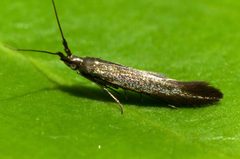
Coleophorinae is a of small within the Coleophoridae, commonly known as case-bearer moths. The larvae construct distinctive portable cases from silk and plant material, which they carry throughout their development. The subfamily contains the majority of in Coleophoridae, with generally characterized by narrow wings and relatively long . Many species are on particular plants, making them important subjects for ecological and taxonomic study.
Pronunciation
How to pronounce Coleophorinae: /ˌkoʊ.liˈɒf.əˌraɪ.niː/
These audio files are automatically generated. While they are not always 100% accurate, they are a good starting point.
Identification
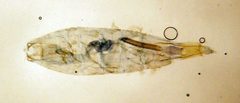
are distinguished from other small Lepidoptera by the combination of narrow, elongated forewings, very long , and small body size. They differ from members of the Batrachedrinae (the other subfamily in Coleophoridae) by genitalia structure and larval case . Within Coleophorinae, identification often requires examination of genitalia or larval case characteristics, as many are externally similar. The larval stage is readily identified by the portable case—this separates Coleophorinae from most other small larvae.
Images
Habitat
Found in diverse terrestrial including grasslands, meadows, heathlands, scrub, woodland edges, and wetlands. Many are associated with specific plant , such as salt marshes (on chenopods), sand dunes (on grasses and low herbs), or calcareous grasslands. Larval habitat is determined by host plant distribution; cases may be found on living vegetation or among leaf litter.
Distribution
Widespread across the Holarctic region, with greatest diversity in the Palearctic. Present throughout Europe, Asia, and North America; extending into northern Africa and parts of the Middle East. Some have been introduced to other regions through human activity. Distribution patterns often correlate with plant ranges.
Seasonality
periods vary by and latitude, generally occurring from late spring through autumn in temperate regions. Many species are with adults flying in a single peak period, while others may have partial second in favorable conditions. Larvae are typically present from summer through the following spring, within their cases.
Life Cycle
are laid on plant tissues, often on leaves or stems. Larvae hatch and immediately begin constructing a silk case, which they enlarge and reinforce with plant fragments as they grow. Larvae feed on host plant material—leaves, seeds, or stems depending on —while remaining partially within the portable case. Development includes multiple instars, with the case serving as protection and camouflage. occurs inside the case, which is usually attached to vegetation or substrate. emerge to mate and oviposit; many species appear to lack functional mouthparts as adults.
Behavior
Larvae exhibit the distinctive of carrying their protective cases throughout feeding and movement, retreating entirely within when disturbed. Cases are dragged behind using abdominal and silk attachment. Larvae may move between plants or plant parts as food quality declines. are generally or , with relatively weak ; they are often attracted to light. Mating behavior is not well documented for most .
Ecological Role
Larvae function as herbivores, with many acting as that may influence plant , though impacts are generally minor. The case-bearing habit provides a food source for and capable of penetrating cases. serve as prey for insectivorous birds, bats, and arthropods. Some species are considered indicators of quality or specific plant .
Human Relevance
Generally of minor economic importance; a few have been recorded as minor pests of crops such as clover, lucerne, or fruit trees, but damage is rarely significant. The group is of interest to lepidopterists due to taxonomic challenges and the diversity of case morphologies. Some species have been used in ecological studies of plant-insect specialization.
Similar Taxa
- BatrachedrinaeThe other in Coleophoridae; distinguished by differences in genitalia structure and larval —Batrachedrinae larvae do not construct portable cases but rather feed internally in plant tissues or create fixed shelters.
- Tineidae of clothes moths and relatives with similar small size and long ; distinguished by different wing venation, larval habits (feeding on keratin, fungi, or detritus rather than living plants with portable cases), and often different posture.
- Elachistidae of small with narrow wings; distinguished by shorter relative to body, different wing venation with characteristic discal spot, and larvae that are leaf miners or stem borers without portable cases.
More Details
Taxonomic note
Coleophorinae has historically been treated as the Coleophoridae, with Batrachedrinae sometimes included as a . Current classification recognizes Coleophoridae as the family with two subfamilies: Coleophorinae and Batrachedrinae. This distinction is supported by molecular and morphological data, though some sources may still use the older family-level treatment.
Larval case diversity
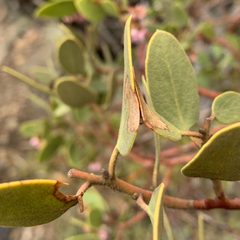
The of larval cases is highly variable among and often species-specific, incorporating different plant materials and architectural forms. Case shape, size, and composition are important taxonomic characters, particularly for distinguishing closely related species that are difficult to separate as .