
Elachistidae
Bruand, 1850
Grass-miner moths, Grass Miner Moths
Subfamily Guides
2- Agonoxeninae(palm moths)
- Elachistinae(grass-miner moths)
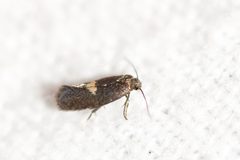
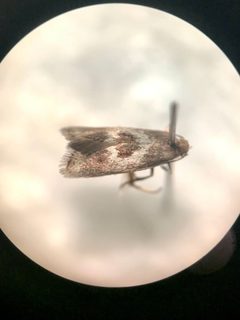
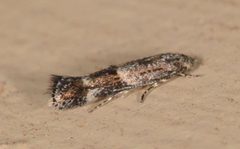
is a of small in the superfamily Gelechioidea, commonly known as grass-miner moths. The family has undergone significant taxonomic revision, with modern circumscriptions restricting it to essentially the Elachistinae. Members are small to very small moths with wingspans usually around 1 cm, characterized by feather-like wings with fine hair covering the fringes and often reduced hindwings. The family contains approximately 805 valid placed in 10 , with Elachista being the largest genus. Larvae are typically leaf miners or stem miners on Poales (grasses and related plants).
Pronunciation
How to pronounce Elachistidae: /ɛˈlækɪˌstɪdiː/
These audio files are automatically generated. While they are not always 100% accurate, they are a good starting point.
Identification
Small to very small with wingspans usually around 1 cm. Wings appear feather-like due to fine hair covering the wing fringes. Hindwings often significantly reduced in area, essentially consisting of a small strip with a wide hairy fringe. lack maxillary palpi and fronto-clypeal . Genital structure is taxonomically important for identification, particularly in the large Elachista.
Images
Distribution
Worldwide distribution with records from Europe (Denmark, Norway, Sweden), North America (Vermont, USA), Central America (Honduras, Guatemala), South America (Ecuador), Africa (St Helena Island, East Africa), and Asia (Thailand).
Similar Taxa
- OecophoridaeHistorically, several now placed in Oecophoridae (Depressariinae, Hypertrophinae, Stenomatinae) were lumped within based on shared symplesiomorphies; modern phylogenetic studies have separated these .
- AgonoxenidaeSometimes treated as a within (Agonoxeninae), but likely represents a basal lineage of Gelechioidea best treated as an independent .
- EthmiidaeFormerly included in broad circumscriptions of but now recognized as a distinct representing a basal gelechioid lineage.
More Details
Taxonomic Instability
The has experienced massive taxonomic revision. Earlier classifications lumped approximately 3,300 in eight , but this arrangement was and unnatural. Modern treatments restrict essentially to the former subfamily Elachistinae, with about 805 valid species in 10 .
Notable Genera
Major include Elachista (the largest genus, with numerous groups), Perittia, Stephensia, Urodeta, and Eretmograptis. The genus Elachista has been subject to intensive revision, with the E. dispunctella complex alone reduced from 64 to 19 valid species through and morphological analysis.
Larval Biology
Caterpillars are typically leaf miners or stem miners on Poales (grasses and grass-like plants). Some are monophagous, such as Elachista trifasciata on St Helena Island, which feeds exclusively on Carex dianae.
Economic Importance
Some are agricultural pests, notably Stenoma catenifer, which infests Hass avocados in Guatemala. Most species appear to have minimal direct economic impact.
Conservation Concerns
Elachista trifasciata on St Helena Island is considered sensitive to climate change, highlighting potential vulnerability of island in this .
Sources and further reading
- BugGuide
- Wikipedia
- GBIF taxonomy match
- iNaturalist taxon
- NCBI Taxonomy
- Catalogue of Life
- Nota Lepidopterologica goes advanced open access with Pensoft Publishers | Blog
- Uncategorized | Blog - Part 22
- Pensoft Editorial Team | Blog - Part 126
- Bug Eric: Wasp Wednesday: Four-toothed Mason Wasp
- Aspects of the Field Ecology of Stenoma catenifer (Lepidoptera: Elachistidae) Infesting Hass Avocados in Guatemala
- Elachista trifasciata (Wollaston, 1879) on St Helena Island (Lepidoptera: Elachistidae: Elachistinae)
- The Elachista dispunctella (Duponchel) complex (Lepidoptera, Elachistidae) revisited, with exceptional level of synonymy
- The Elachistinae (Lepidoptera: Gelechioidea: Elachistidae) of Ecuador with descriptions of five new species
- An annotated catalogue of Elachistinae of the World (Lepidoptera: Gelechioidea: Elachistidae)
- New species in the Elachista praelineata species group (Lepidoptera, Elachistidae, Elachistinae) from East Africa, with identification keys to the Afrotropical species.
- First male description of Urodeta longa Sruoga & Kaila, 2019 from Thailand with identification keys to Asian species of Urodeta Stainton, 1869 (Lepidoptera, Elachistidae, Elachistinae).
- The First Neotropical Record of the Genus Urodeta (Lepidoptera: Elachistidae: Elachistinae) with Keys to the World Species and a Description of a New Species from Honduras.