
Depressariinae
Meyrick, 1883
Genus Guides
8- Agonopterix(flat-body moths)
- Apachea
- Bibarrambla(bog bibarrambla moth (sole species))
- Depressaria
- Exaeretia
- Himmacia
- Nites
- Semioscopis
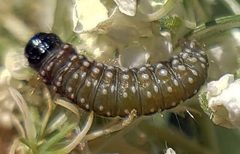
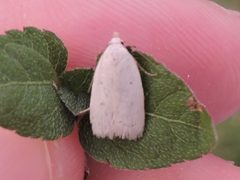
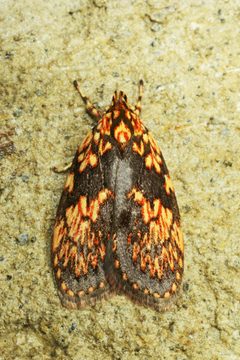
Depressariinae is a of in the superfamily Gelechioidea, comprising approximately 600 as of 1999. Modern classifications treat this group as the distinct Depressariidae, though its taxonomic position has historically varied, with placements in Elachistidae sensu lato or expanded Oecophoridae. The group exhibits highest diversity in temperate regions, particularly the Holarctic, and is presumed to be of Palaearctic origin. Larvae typically develop in leaves spun together with silk, as stem borers, or as seed and flower feeders of dicotyledonous plants.
Pronunciation
How to pronounce Depressariinae: //dɛˌprɛsəˈriː.ae.naɪ//
These audio files are automatically generated. While they are not always 100% accurate, they are a good starting point.
Identification
Members of Depressariinae are small to medium-sized gelechioid moths. The is distinguished from related groups by a combination of genitalia characteristics and, in some , subtle wing pattern differences that require microscopic examination. has proven useful for distinguishing cryptic species, with genetic divergences of 4-5% or more indicating specific separation in some cases.
Images
Habitat
Found in diverse terrestrial worldwide except oceanic islands and frozen wastelands. Highest diversity occurs in temperate regions. Specific inhabit mountain areas at elevations from 800-2300m, forested habitats in Mediterranean regions, and various other terrestrial environments.
Distribution
Worldwide distribution except some oceanic islands and frozen wastelands. Highest diversity in temperate regions with presumed Holarctic, possibly Palaearctic, origin. Documented from Europe (over 160 and , with more than 80 from Central Europe), Australia (approximately 20 species), and other regions. Specific records include Spain, Portugal, Italy, Greece, Morocco, and the Canary Islands.
Host Associations
- Carthamus caeruleus - plantLarval for Agonopterix carduncelli
- Elaeoselinum asclepium - plantLarval for Agonopterix pseudoferulae; Apiaceae
Life Cycle
Caterpillars typically develop in leaves spun together with silk, as stem borers, or as seed and flower feeders of dicotyledons. Larvae of some have been collected in March and successfully reared to .
Similar Taxa
- AmphisbatinaeOften considered sufficiently close to be included within Depressariinae, particularly when Depressariinae is elevated to rank; sometimes treated as tribe Amphisbatini within Depressariinae
- CryptolechiinaeGroup around Cryptolechia sometimes included in Depressariinae when treated as oecophorid , though sometimes separated as tribe Cryptolechiini
- Orophia lineageCacochroa and relatives sometimes included in Depressariinae as tribes Orophiini and Cacochroini, particularly when Depressariinae is treated as a full
- XyloryctidaePreviously considered a of Oecophoridae and sometimes included in Depressariinae treatments
- Semioscopis lineageOccasionally separated from core Depressariinae as tribe Epigraphiini
More Details
Taxonomic instability
The circumscription of Depressariinae has varied considerably across classifications. When treated as a of Oecophoridae, different tribal arrangements apply than when elevated to full rank as Depressariidae. The core group becomes tribe Depressariini in all treatments that recognize subdivisions.
Ongoing species discovery
New continue to be described regularly. Three new and one new were described from Europe in 2017 alone, including species first collected decades earlier but not formally recognized. is increasingly used to resolve cryptic diversity.
Sources and further reading
- BugGuide
- Wikipedia
- GBIF taxonomy match
- iNaturalist taxon
- NCBI Taxonomy
- Catalogue of Life
- Three new species and one new subspecies of Depressariinae (Lepidoptera) from Europe
- Agonopterix calavrisella sp. nov., a new Depressariinae from the impurella species subgroup from South Italian forests (Lepidoptera: Gelechioidea, Depressariidae)