
Depressariidae
Meyrick, 1883
Flat-bodied moths
Genus Guides
9- Carcina(oak long-horned flat-body moths)
- Depressariinae
- Ethmiinae
- Eupragia
- Machimia
- Oditinae
- Peleopodinae
- Psilocorsis
- Stenomatinae(Stenomatine moths)
Depressariidae is a of comprising approximately 2,300 worldwide. Formerly treated as a of Gelechiidae, it is now recognized as a distinct family within the superfamily Gelechioidea. The family includes ten subfamilies: Acriinae, Aeolanthinae, Cryptolechiinae, Depressariinae, Ethmiinae, Hypercalliinae, Hypertrophinae, Oditinae, Peleopodinae, and Stenomatinae. Several , including Carcina, Gonionota, Machimia, Himmacia, and Psilocorsis, remain unplaced within the subfamily structure. Members of this family exhibit diverse larval feeding habits, with many species specialized on particular plant families.
Pronunciation
How to pronounce Depressariidae: //dɛˌprɛsəˈri.aɪdi.ai//
These audio files are automatically generated. While they are not always 100% accurate, they are a good starting point.
Identification
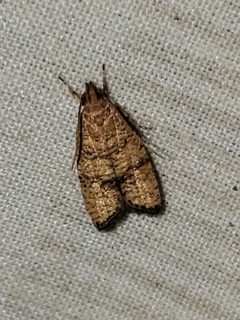
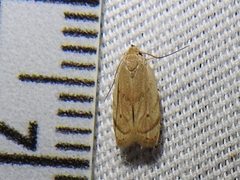
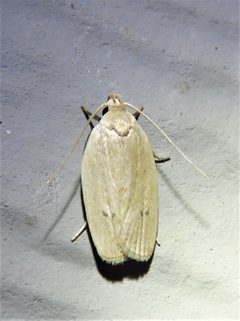
Members of Depressariidae can be distinguished from superficially similar tortricid leafrolling by their upturned labial palps, which project forward between the and resemble small horns. The Ethmia, a representative member, exhibits characteristic black, white, and gray coloration with relatively large size for microlepidoptera (10–15 mm). Many require dissection of genitalia for definitive identification due to subtle external morphological differences.
Images
Habitat
vary considerably across the . The Ethmia is abundant in oak woodlands. The Antaeotricha floridella occupies dry sandhills and scrub habitats in peninsular Florida. Timocratica albella develops within the branches and trunk of camu camu trees in Peruvian Amazon plantations. Agonopterix guanchella has been collected from multiple locations on Gran Canaria in the Canary Islands.
Distribution
Worldwide distribution with approximately 2,300 . The Ethmia is particularly diverse in the southwestern United States, with over 50 species north of Mexico. The includes Eurasian species introduced to North America, such as Depressaria depressana. Some species exhibit restricted distributions: Antaeotricha floridella is to peninsular Florida sandhills, and Agonopterix guanchella is known only from Gran Canaria. Distribution records from GBIF include Denmark, Norway, and Sweden.
Diet
Larval feeding habits are diverse and often specialized. The Ethmia feeds predominantly on plants in the Boraginaceae, Ehretiaceae, and Hydrophyllaceae; Ethmia discostrigella has been observed feeding on Mountain Mahogany. Depressaria depressana is a family-level on Apiaceae, feeding on more than a dozen across multiple tribes including Daucus carota, Pastinaca sativa, and Heracleum maximum. Depressaria radiella feeds almost exclusively on Pastinaca and Heracleum. Timocratica albella larvae bore into and consume the outer bark (rhytidome) of camu camu (Myrciaria dubia).
Host Associations
- Myrciaria dubia - larval camu camu; branches and trunk bored by Timocratica albella larvae
- Daucus carota - larval wild carrot; Depressaria depressana
- Pastinaca sativa - larval wild parsnip; Depressaria radiella and D. depressana
- Heracleum maximum - larval native cow parsnip; Depressaria radiella in eastern North America
- Heracleum sphondylium - larval hogweed; Depressaria radiella in Eurasia
- Zizia aurea - larval native North American apiaceous ; Depressaria depressana can survive on fruits
- Cercocarpus montanus - larval Mountain Mahogany; Ethmia discostrigella
- Quercus geminata - larval sand live oak; Antaeotricha floridella
- Drymonia - larval Gesneriaceae ; Ethmia lesliesaulae and E. normgershenzi in Rica
Life Cycle
Complete with , larval, pupal, and stages. Timocratica albella exhibits: egg stage lasting 11.5 days; larval stage with nine instars lasting 164.8 days; pupal stage lasting 25.6 days; and adult stage lasting 5.7 days, for a total of approximately 208 days at 28°C and 58–60% relative humidity. Larvae of many construct silken tubes or webs for concealment. Acrolophus species, historically placed in Depressariidae, are known as "grass tube moths" due to larval construction of silken tubes at grass bases or roots.
Behavior
are attracted to blacklights and ultraviolet light sources. Larvae of Timocratica albella are particularly voracious in their final instar, consuming 21–78 cm² of outer bark throughout development. Larvae of many are cryptic and feed concealed within plant tissues, between leaf layers, or within constructed silken tubes. Some larvae exhibit mining in conifer needles or broadleaved plants.
Ecological Role
Larvae function as herbivores, with many exhibiting high specificity. Some species serve as significant pests: Timocratica albella causes severe economic damage to camu camu in Peru, with damage reaching 91–95% in some plots. Depressaria radiella and D. depressana have been studied for their capacity to detoxify furanocoumarin defensive compounds in their Apiaceae hosts, with D. radiella showing greater metabolic capacity than D. depressana.
Human Relevance
Some have economic importance as pests of cultivated plants. Timocratica albella is a serious pest of camu camu, an economically important fruit crop in the Peruvian Amazon. The serves as a subject of taxonomic research, with new species regularly described; recent examples include Antaeotricha floridella from Florida and Agonopterix guanchella from the Canary Islands. Two Rican species, Ethmia lesliesaulae and Ethmia normgershenzi, were named to honor conservationists Leslie Saul-Gershenz and Norm Gershenz.
Similar Taxa
- GelechiidaeDepressariidae was formerly treated as a of Gelechiidae; distinguished by upturned labial palps in many Depressariidae
- TortricidaeSuperficially similar leafrolling ; Depressariidae distinguished by upturned palps projecting like horns between
- ColeophoridaeThe Ethmia was formerly placed in Coleophoridae before transfer to Depressariidae based on revised phylogenetic understanding
- TineidaeThe Acrolophus was formerly placed in Tineidae; now in separate Acrolophidae but historically associated with Depressariidae
More Details
Taxonomic History
The 's classification has undergone significant revision. Formerly treated as Depressariinae within Gelechiidae, molecular and morphological evidence supported elevation to family rank. The Ethmia was transferred from Coleophoridae to Depressariidae. The genus Acrolophus was removed to family Acrolophidae. These changes reflect ongoing refinement of gelechioid .
Furanocoumarin Metabolism
in the Depressaria exhibit varying capacity for detoxification of furanocoumarin defensive compounds in their Apiaceae . Depressaria radiella from Heracleum maximum metabolize angular more rapidly than those from Pastinaca sativa, suggesting host-associated . Depressaria depressana, a more recent invader to North America, metabolizes these compounds at lower rates than D. radiella.
Phylogenetic Research
A 2024 phylogenetic analysis of the Semioscopis (ZooKeys 1265) contributed to understanding relationships within Depressariidae, including description of a new from China. has been employed in species delimitation, though in some cases such as Agonopterix guanchella, no closely related species were detected.
Sources and further reading
- BugGuide
- Wikipedia
- GBIF taxonomy match
- iNaturalist taxon
- NCBI Taxonomy
- Catalogue of Life
- What's in a Name? Leslie Saul-Gershenz and Norm Gershenz | Bug Squad
- Bug Eric: My Personal National Moth Week, 2017
- Lepidoptera | Blog - Part 5
- Bug Eric: September 2017
- Bug Eric: New Mexico Night Bugs
- Agonopterix guanchella Buchner, sp. n., a new species of Depressariidae from Canary Islands (Spain) (Lepidoptera: Depressariidae)
- INCIDENCIA DE DAÑOS, CICLO BIOLÓGICO y MORFOLOGĺA DEL BARRENADOR DE RAMAS Y TRONCO DEL CAMU CAMU Timocratica albella Zeller, 1839 (LEPIDOPTERA: DEPRESSARIIDAE) INCIDENCE OF DAMAGE, BIOLOGICAL CYCLE and MORPHOLOGY OF THE CAMU CAMU BRANCH AND TRUNK BORER Timocratica albella Zeller, 1839 (LEPIDOPTERA: DEPRESSARIIDAE)
- Degree of dietary specialization on furanocoumarin-containing hostplants in a newly invasive species, Depressaria depressana (Lepidoptera: Depressariidae)
- Phylogenetic analysis of the genus Semioscopis (Lepidoptera, Depressariidae), with description of a new species from China.