
Psilocorsis
Clemens, 1860
Species Guides
6- Psilocorsis amydra
- Psilocorsis cirrhoptera
- Psilocorsis cryptolechiella(Black-fringed Leaftier Moth)
- Psilocorsis fatula
- Psilocorsis quercicella(oak leaftier moth)
- Psilocorsis reflexella(Dotted Leaftier Moth)
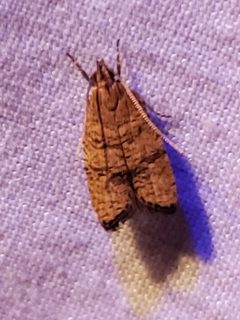
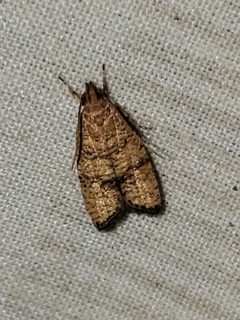
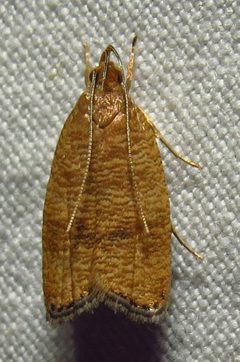
Psilocorsis is a of in the Depressariidae, first described by Clemens in 1860. within this genus are known as leaf-tiers or leaf-tiers, with larvae that construct shelters by binding together leaves of their plants. The genus contains approximately 14 recognized species distributed primarily in North America. Larvae are associated with woody plants including oaks (Quercus) and American beech (Fagus grandifolia), and serve as hosts for .
Pronunciation
How to pronounce Psilocorsis: /ˌsaɪloʊˈkɔrsɪs/
These audio files are automatically generated. While they are not always 100% accurate, they are a good starting point.
Identification
are small in the Depressariidae. Larvae can be distinguished by their leaf-tying , creating shelters by lashing together multiple leaves or folding single leaves. Specific identification to level requires examination of adult genitalia and wing patterns; some species are associated with particular plants (e.g., P. quercicella with oak, P. faginella with beech).
Images
Habitat
Deciduous forest systems, particularly stands of northern hardwoods. Larval is determined by plant distribution: oak-dominated forests for oak-associated , American beech stands for beech-associated species.
Distribution
North America; documented from Nova Scotia, Canada through the eastern United States, with records from Vermont and other eastern states. Individual have more restricted ranges based on plant distribution.
Diet
Larvae feed on leaves of woody plants. Documented plants include American beech (Fagus grandifolia) for P. faginella and oak (Quercus) for P. quercicella. Specific host associations vary by .
Host Associations
- Fagus grandifolia Ehrh. - larval plantAmerican beech; documented for P. faginella
- Quercus spp. - larval plantOak ; inferred for P. quercicella from specific epithet and characteristics
Life Cycle
Complete with , larva, pupa, and stages. Larvae are the feeding stage and construct leaf shelters. occurs within the leaf shelter or in the soil. Specific timing of developmental stages varies by and latitude.
Behavior
Larvae exhibit leaf-tying , binding together multiple leaves or folding single leaves to create protective shelters during feeding. This behavior makes larvae conspicuous during the feeding stage. Leaf-tiers differ from leaf-rollers in that they may involve more than one leaf, creating a sandwich-like structure.
Ecological Role
Herbivore on deciduous tree foliage. Serves as for of , contributing to structure and natural enemy diversity in forest . Documented parasitoid communities include multiple wasp attacking larval stages.
Similar Taxa
- Other Oecophoridae/Depressariidae leaf-tiersSimilar leaf-tying larval ; distinguished by plant specificity, larval coloration, and
- Tortricidae leaf-rollersBoth groups create leaf shelters, but tortricids typically roll single leaves rather than tying multiple leaves together; larval and wing patterns differ
- Gelechiidae twirler mothsSome create similar shelters; distinguished by larval and characteristics
More Details
Taxonomic history
The has undergone several taxonomic revisions. The type P. faginella was originally described as Hagno faginella by Chambers (1872), then placed in Cryptolechia (1878), before being transferred to Psilocorsis by Busck (1908). The placement has also changed, with the genus formerly placed in Oecophoridae and now in Depressariidae.
Predator interactions
Larvae are hunted by solitary mason wasps including Ancistrocerus campestris and Ancistrocerus unifasciatus, which attempt to extract caterpillars from their leaf shelters. These paralyze captured caterpillars to provision nest for their offspring.
Sources and further reading
- BugGuide
- Wikipedia
- GBIF taxonomy match
- iNaturalist taxon
- NCBI Taxonomy
- Catalogue of Life
- Bug Eric: How to (Almost) Catch a Leaf-tier Caterpillar (Video)
- Bug Eric: Wasp Wednesday: Four-toothed Mason Wasp
- Structure and Dynamics of a Parasitoid Community Attacking Larvae ofPsilocorsis quercicella(Lepidoptera: Oecophoridae)
- The External Morphology of the Immature Stages of the Beech Leaf Tier, Psilocorsis faginella (Chamb) (Lepidoptera: Oecophoridae), with Notes on Its Biology in Nova Scotia