
Eupragia
Walsingham, 1911
Species Guides
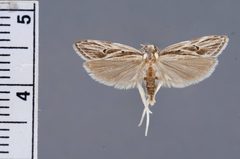
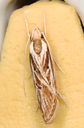
1- Eupragia hospita(Streaked Eupragia)
Eupragia is a of small in the Depressariidae, first described by Walsingham in 1911. The genus contains four described distributed in North America, with recorded primarily in the southwestern United States and Mexico. Larval stages and associations remain poorly documented.

Pronunciation
How to pronounce Eupragia: /juːˈpreɪdʒiə/
These audio files are automatically generated. While they are not always 100% accurate, they are a good starting point.
Identification
are small with narrow, elongated forewings characteristic of Depressariidae. Specific diagnostic features for the are not well documented in accessible literature. -level identification requires examination of genitalia and reference to original descriptions by Hodges (1969, 1974) and Meyrick (1929).
Images
Habitat
Associated with arid and semi-arid regions of the southwestern United States and Mexico based on collection localities of described .
Distribution
Southwestern United States (Arizona, California, Texas) and Mexico. The appears to have a Nearctic distribution centered in the Sonoran and Chihuahuan desert regions.
Similar Taxa
- Other Depressariidae generaEupragia shares the characteristics of narrow forewings and small size, but lacks distinctive external features that readily separate it from related without dissection.
More Details
Taxonomic History
Originally described by Walsingham in 1911 with Eupragia solida as type . Two additional species were described by Hodges in 1969 and 1974, and one by Meyrick in 1929. The has received limited taxonomic study since original descriptions.
Research Needs
, larval , and plant relationships are unknown for all . No published photographs of living or larvae are readily available.