
Agonopterix
Hübner, 1825
flat-body moths
Species Guides
35- Agonopterix alstroemeriana(Poison hemlock moth)
- Agonopterix argillacea(Clay-colored Agonopterix Moth)
- Agonopterix arnicella
- Agonopterix atrodorsella(Beggartick Leaffolder Moth)
- Agonopterix cajonensis
- Agonopterix canadensis(Canadian agonopterix)
- Agonopterix chrautis
- Agonopterix clarkei
- Agonopterix clemensella(Clemens' Agonopterix)
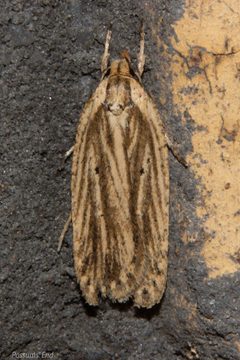
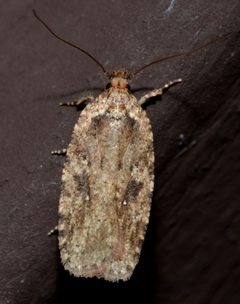
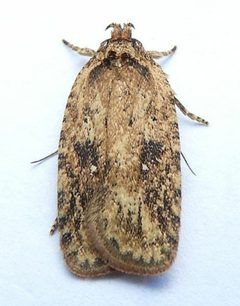
Agonopterix is a of small in the Depressariidae, superfamily Gelechioidea. are commonly known as "flat-body moths" due to their characteristic flattened resting posture. The genus exhibits considerable cryptic diversity, particularly in Mediterranean and temperate regions, with many species distinguished by subtle differences in wing pattern and genitalia structure. Several species have been studied for their specialized plant relationships, including some with potential as agents.
Pronunciation
How to pronounce Agonopterix: /æɡoʊnɒptərɪks/
These audio files are automatically generated. While they are not always 100% accurate, they are a good starting point.
Identification
Identification to level requires examination of wing pattern details and genitalia . has proven useful for distinguishing cryptic species, with some sister species showing genetic divergences around 4-5%. The is distinguished from related Depressariidae by combination of flat-body resting posture, forewing shape, and genitalia characters. Specific identification often requires reference to original descriptions and due to subtle morphological differences between species.
Images
Habitat
varies by . Some species occupy forested habitats in southern Europe, while others are found in more open vegetation. Specific microhabitat preferences are poorly documented for most species.
Distribution
Widely distributed across the Palearctic region, with records from Europe (including Scandinavia, Mediterranean regions, and the British Isles), Russia (Russian Far East), Japan, China, Nepal, and the Canary Islands. Some have been introduced to other regions as agents.
Diet
Larvae of most feed on specific plants, with many showing monophagous or oligophagous habits. Documented host associations include: Heracleum mantegazzianum (giant hogweed), Ulex europaeus (gorse), Conium maculatum (poison hemlock), and various Apiaceae and Fabaceae. feeding habits unknown.
Host Associations
- Heracleum mantegazzianum - larval Agonopterix heracliana
- Ulex europaeus - larval Agonopterix umbellana, studied as agent
- Conium maculatum - larval Agonopterix alstroemeriana, monophagous association
Life Cycle
Complete with , larval, pupal, and stages. Larvae typically feed internally or on shoots of plants. Specific details of developmental timing and stage vary among and are poorly documented for most.
Behavior
rest with wings held flat against substrate, creating characteristic flattened silhouette. Larval feeding typically restricted to specific plants, with some mining or boring in stems, shoots, or umbels. activity pattern typical for .
Ecological Role
Larvae function as specialized herbivores on their plants. Some have been investigated as potential agents for plants including gorse (Ulex europaeus) and giant hogweed (Heracleum mantegazzianum). Role in otherwise poorly documented.
Human Relevance
Some studied for potential as agents against weeds. Agonopterix umbellana was evaluated for gorse control in Australia. Agonopterix heracliana has been investigated for giant hogweed management. No significant economic importance as pests or beneficial species otherwise documented.
Similar Taxa
- DepressariaSimilar flat-body resting posture and general ; distinguished by genitalia characters and wing pattern details
- Oecophoridae (sensu lato) historically confused with Depressariidae; Agonopterix now placed in Depressariidae based on morphological and molecular evidence
- Elachistidae sometimes included Agonopterix in older treatments; distinguished by wing venation and genitalia structure
Misconceptions
The placement of Agonopterix has been historically unstable, with treatments placing it in Oecophoridae, Elachistidae, or as Depressariinae within these families. Current consensus based on molecular and morphological data places the in family Depressariidae.
More Details
Taxonomic history
The has undergone significant taxonomic revision, with many descriptions based on limited material. Recent integrative taxonomic studies combining , genitalia dissection, and have revealed substantial cryptic diversity, particularly in Mediterranean and East Asian faunas. Several new species have been described from China, Japan, Nepal, and southern Europe in the past two decades.
Genomic resources
sequences have been published for three : Agonopterix arenella (Brindled Flat-body), Agonopterix subpropinquella (Ruddy Flat-body), and Agonopterix heracliana (Common Flat-body ), providing resources for phylogenetic and evolutionary studies.
Sources and further reading
- BugGuide
- Wikipedia
- GBIF taxonomy match
- iNaturalist taxon
- NCBI Taxonomy
- Catalogue of Life
- A revision of Agonopterix lacteella (Lepidoptera: Depressariidae) and establishing A. pallidior Stringer, 1930 as a junior synonym
- Agonopterix calavrisella sp. nov., a new Depressariinae from the impurella species subgroup from South Italian forests (Lepidoptera: Gelechioidea, Depressariidae)
- Agonopterix guanchella Buchner, sp. n., a new species of Depressariidae from Canary Islands (Spain) (Lepidoptera: Depressariidae)
- New Data on the Taxonomy and Distribution of Flat Moths of the Genus Agonopterix Hübner, [1825] (Lepidoptera, Depressariidae) of the Russian Fauna
- Host plant selection by a monophagous herbivore is not mediated by quantitative changes in unique plant chemistry: Agonopterix alstroemeriana and Conium maculatum
- Host testing, establishment and biology of the gorse soft shoot moth, Agonopterix umbellana (Fabricius) (Lepidoptera: Oecophoridae), a potential biological control agent for gorse, Ulex europaeus L. (Fabaceae), in Australia
- The genome sequence of the Common Flat-body moth, Agonopterix heracliana Linnaeus, 1758.
- The genome sequence of the Brindled Flat-body, Agonopterix arenella (Denis & Schiffermüller, 1775).
- The genome sequence of the Ruddy Flat-body, Agonopterix subpropinquella (Stainton, 1849).