
Oecophoridae
Bruand, 1851
Concealer moths
Subfamily Guides
3- Oecophorinae(concealer moths)
- Pleurotinae
- Ymeldia
is a of small in the superfamily Gelechioidea, commonly known as concealer moths. The family's circumscription remains unsettled due to unresolved of gelechoid moths, with various treatments placing different within or outside the family. The group includes with diverse ecological roles, from nutrient recyclers feeding on dead plant material to significant household pests.
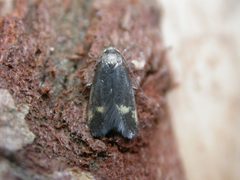
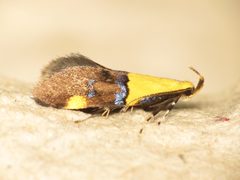
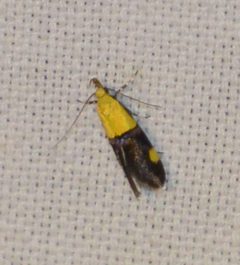
Pronunciation
How to pronounce Oecophoridae: //iːkəˈfɔːrɪdiː//
These audio files are automatically generated. While they are not always 100% accurate, they are a good starting point.
Images
Distribution
Global distribution with particularly high diversity in Australia. Established include introduced in Europe, such as Borkhausenia crimnodes in central Portugal.
Diet
Larvae of many feed on dead plant material, functioning as nutrient recyclers. Some species are pests of stored products: Endrosis sarcitrella (white-shouldered house moth) infests stored grain, and Hofmannophila pseudospretella (brown house moth) feeds on textiles, carpets, and stored foodstuffs. Larvae of Borkhausenia species likely feed on decomposed plants.
Life Cycle
Complete with , larval, pupal, and stages. Larvae construct shelters or conceal themselves, giving rise to the 'concealer moths.'
Behavior
Many are . Some species have been introduced to new regions through human commerce, such as via imported timber.
Ecological Role
Nutrient recyclers through consumption of dead plant material. Some serve as prey for , including mason wasps (Euodynerus foraminatus) which provision nests with oecophorid caterpillars.
Human Relevance
Mixed economic impact: includes beneficial nutrient recyclers and significant household pests. Endrosis sarcitrella and Hofmannophila pseudospretella are widespread pests of stored products and textiles. Agonopterix ulicetella has been used for of European gorse (Ulex europaeus) in New Zealand and Hawaii. Agonopterix alstroemeriana (defoliating hemlock moth) has been used against poison hemlock (Conium maculatum) in the United States.
Similar Taxa
- ElachistidaeSome treatments place such as Depressariinae and Stathmopodinae in Elachistidae rather than , though this may render Elachistidae .
- EthmiidaeSometimes included in expanded circumscriptions of , though more likely a distinct .
- XyloryctidaeOccasionally included in broad treatments of ; may be part of a monophyletic Oecophoridae but requires further research.
More Details
Taxonomic Uncertainty
The and of gelechoid remain unresolved, strongly affecting circumscription. Different authors recognize varying compositions, with some including only Oecophorinae and Stathmopodinae, while others expand the to include additional groups.
Subfamily Composition
Historically included : Amphisbatinae, Autostichinae, Depressariinae (including Cryptolechiinae), Hypertrophinae, Metachandinae, Oecophorinae (including Chimabachinae, Deuterogoniinae, Peleopodinae, Philobotinae), Stathmopodinae, and Stenomatinae. Current treatments vary in which subfamilies are retained.
Introduced Species
Borkhausenia crimnodes, described from Argentina but also known from South Africa, is now established in central Portugal. The was first detected in 2012 and identified through , with larvae likely feeding on decomposed plant material.
Sources and further reading
- BugGuide
- Wikipedia
- GBIF taxonomy match
- iNaturalist taxon
- NCBI Taxonomy
- Catalogue of Life
- Pensoft Editorial Team | Blog - Part 96
- entomology | Blog - Part 14
- Dainty, delicate, little fairies | Beetles In The Bush
- Portugal | Blog
- Bug Eric: The Mason Wasp Euodynerus foraminatus Endorses Bee Blocks
- Nota Lepidopterologica | Blog - Part 2