
Agonopterix alstroemeriana
Clerck, 1759
Poison hemlock moth, Hemlock moth, Defoliating hemlock moth
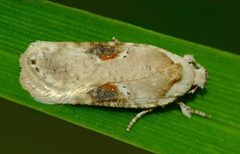
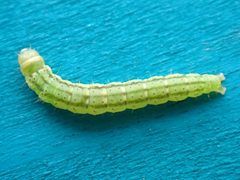
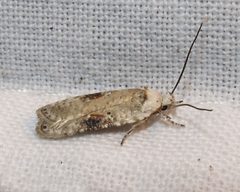
Agonopterix alstroemeriana, commonly known as the poison hemlock , is a small moth in the Depressariidae. Native to the Palearctic region, it was accidentally introduced to North America in 1973 and has since established across the contiguous United States. The is a herbivore exclusively associated with Conium maculatum (poison hemlock), a highly toxic plant containing piperidine alkaloids. Its larval feeding can cause significant defoliation of plants.
Pronunciation
How to pronounce Agonopterix alstroemeriana: //ˌæɡəˈnɒptərɪks ˌælstroʊˈmɛriˌænə//
These audio files are automatically generated. While they are not always 100% accurate, they are a good starting point.
Images
Habitat
Associated with stands of Conium maculatum (poison hemlock), a herb of disturbed sites, roadsides, riparian areas, and agricultural margins. The inhabits environments where this plant grows, ranging from moist meadows to dry waste ground.
Distribution
Native to the Palearctic region. Introduced to North America in 1973; now established throughout the contiguous 48 United States. Specific native range boundaries within the Palearctic not detailed in available sources.
Diet
Herbivorous and monophagous; larvae feed exclusively on Conium maculatum (poison hemlock). Ovipositing females select plants based on volatile compound profiles, showing negative correlation with Z-ocimene concentrations and avoiding damaged plants with elevated volatile emissions. Notably, host selection is not mediated by quantitative changes in the unique piperidine alkaloids that characterize this host plant.
Host Associations
- Conium maculatum - monophagous herbivoreexclusive larval plant; oviposition and feeding restricted to this
Behavior
Females discriminate among plants during oviposition using volatile chemical cues rather than host-specific alkaloid concentrations. Damaged plants emitting higher levels of volatiles are avoided for oviposition relative to undamaged controls. This represents an unusual case where a herbivore does not use the unique defensive chemistry of its host plant as a primary cue for host location.
Ecological Role
Specialized herbivore in a plant-herbivore system involving a chemically defended plant with few other insect herbivores. The 's ability to exploit Conium maculatum, which is protected by piperidine alkaloids toxic to most herbivores, makes it a notable exception in this . Its feeding activity can substantially defoliate host .
Human Relevance
Accidentally introduced to North America, where it has become established as a biological associate of a toxic weed. The "defoliating hemlock " reflects its potential to reduce poison hemlock . No documented direct economic or health impacts on humans.
Similar Taxa
- Other Agonopterix speciesMany are morphologically similar small in Depressariidae; accurate identification requires examination of genitalia or association with plant Conium maculatum, which is exclusive to this .
More Details
Host plant chemistry and herbivore behavior
Research demonstrates that A. alstroemeriana's selection challenges conventional assumptions about herbivores. Despite feeding on a plant characterized by unique piperidine alkaloids (coniine, γ-coniceine), ovipositing females do not use quantitative variation in these compounds as cues. Instead, they respond to a widespread monoterpene (Z-ocimene) and general damage-induced volatiles, suggesting that host selection in this system is mediated by cues indicating plant quality or competitive status rather than host identity chemistry.
Taxonomic note
The has been classified in Oecophoridae in some literature (per the 2008 source), but current places it in Depressariidae based on molecular and morphological revisions of the Gelechioidea.