
Borkhausenia
Hübner, 1825
Species Guides
2Borkhausenia is a of concealer moths in the Oecophoridae, described by Jacob Hübner in 1825. It belongs to the Oecophorinae and is probably closely related to Hofmannophila (brown house moth). The genus has a distribution with recorded from Europe, Australia, South America, North America, Africa, and Asia. Several other oecophorid genera, including Schiffermuelleria and Metalampra, have historically been included in Borkhausenia. The genus contains approximately 50 described species, though taxonomic boundaries have shifted over time.
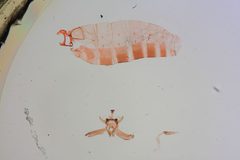
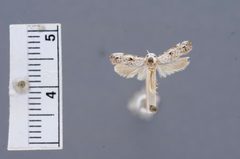

Pronunciation
How to pronounce Borkhausenia: /bɔrk.haʊˈseɪ.niə/
These audio files are automatically generated. While they are not always 100% accurate, they are a good starting point.
Identification
Borkhausenia are small typically with narrow wings and relatively plain coloration, often in shades of brown, grey, or ochre. Species within the can be difficult to distinguish from one another without examination of genitalia. The genus can be separated from the related Hofmannophila by differences in wing venation and male genital structure. Historical confusion with Schiffermuelleria and other oecophorine genera has been resolved through modern taxonomic revision.
Images
Habitat
preferences vary considerably among . European species such as B. fuscescens and B. minutella have been recorded in diverse environments including woodlands, grasslands, and human-modified habitats. Australian species occupy a range of habitats across the continent. The introduced of B. crimnodes in Portugal was found in a warm temperate zone with eucalyptus plantations nearby.
Distribution
The has a wide global distribution. are recorded from: Europe (including Spain, France, Italy, Germany, Norway, United Kingdom), Australia (Queensland, New South Wales, Victoria, Tasmania, South Australia, Western Australia), South America (Argentina, Chile, Colombia, Peru, Falkland Islands), North America (southwestern USA: Arizona, New Mexico, California, Colorado), Africa (Morocco, Tunisia, South Africa), and Asia (Japan, Palestine, Formosa/Taiwan, Asia Minor/Armenia).
Diet
Larvae of Borkhausenia have been observed feeding on decomposed plant material. This detritivorous habit has been documented for B. crimnodes and is inferred for other species based on -level patterns.
Ecological Role
As , Borkhausenia larvae contribute to decomposition processes in their . The introduced of B. crimnodes in Portugal has not exhibited and has been observed only in very low numbers, suggesting limited ecological impact in novel environments.
Human Relevance
Borkhausenia crimnodes was introduced to central Portugal, likely through imported timber from South America intended for the paper industry. This represents a case of unintentional human-mediated . The has not become and remains rare in its introduced range.
Similar Taxa
- HofmannophilaClosely related within Oecophorinae; historically confused with Borkhausenia but separable by wing venation and genitalia
- SchiffermuelleriaFormerly included in Borkhausenia; now treated as distinct based on morphological differences
- MetalampraOriginally described as a subgenus of Borkhausenia; elevated to full status
More Details
Taxonomic history
The circumscription of Borkhausenia has changed substantially over time. Several now treated as distinct (Schiffermuelleria, Metalampra) were formerly included, as were some more distant members of Gelechioidea. Telechrysis has been treated as either a subgenus of Borkhausenia or as a separate genus in Oecophorinae or Amphisbatinae by different authors.
Species discovery
The contains approximately 50 described , with notable concentrations in Australia (over 20 species) and Europe. New species continue to be described, particularly from under-sampled regions.