
Oecophorinae
Bruand, 1851
concealer moths
Tribe Guides
1Oecophorinae is the nominate of the concealer Oecophoridae, part of the superfamily Gelechioidea. Its circumscription remains disputed, with historical inclusion of groups now sometimes treated as separate subfamilies (Chimabachinae, Deuterogoniinae, Peleopodinae, Philobotinae) or families. No robust tribal classification has been established for the bulk of . The subfamily contains numerous genera with frequent new descriptions, including well-differentiated groups around Oecophora and Peleopoda.
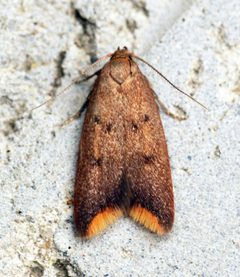
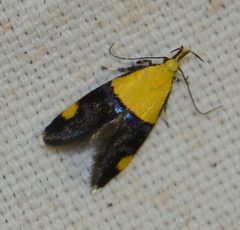
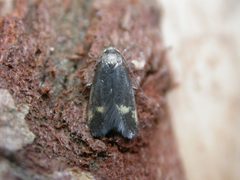
Pronunciation
How to pronounce Oecophorinae: /ˌiːkəˈfɒrɪniː/
These audio files are automatically generated. While they are not always 100% accurate, they are a good starting point.
Images
Distribution
distribution with documented in northwestern Rica (Area De Conservación Guanacaste), Australia, and Europe.
Similar Taxa
- AmphisbatinaeHistorical taxonomic confusion; delimitation versus Oecophorinae has been contested
- DepressariinaeHistorical taxonomic confusion; delimitation versus Oecophorinae has been contested; tribe placement (Cacochroini, Orophiini) varies by classification scheme
- HypertrophinaeHistorical taxonomic confusion; delimitation versus Oecophorinae has been contested
- XyloryctidaeUncertain familial placement; may belong within Oecophoridae as a , creating circumscription issues
More Details
Taxonomic instability
The has experienced repeated reclassification attempts. Proposed tribes (Carcinini, Crossotocerini, Denisiini, Herrichini, Oecophorini, Peleopodini, Pleurotini, Cacochroini, Orophiini) lack robust evolutionary support. Many remain unplaced to tribe, and genera may not be valid.
Notable genus biology
Struthoscelis, a within Oecophorinae, had its first documented described in 2017, including discovery of novel male wing .
Sources and further reading
- BugGuide
- Wikipedia
- iNaturalist taxon
- NCBI Taxonomy
- Catalogue of Life
- Descriptions of Four New Species of Struthoscelis Meyrick (Lepidoptera: Oecophoridae: Oecophorinae), One from Area De Conservación Guanacaste, Northwestern Costa Rica, Providing the First Known Biology for the Genus, and Discovery of a Novel Wing Morphology in Males