
Oecophorini
Genus Guides
20Oecophorini is a tribe of small to medium-sized within the Oecophoridae. These concealer moths exhibit considerable diversity in form and coloration. The tribe is part of the Oecophorinae, which itself has disputed taxonomic boundaries. Members are characterized by their folded wing posture at rest and often intricate wing patterns.
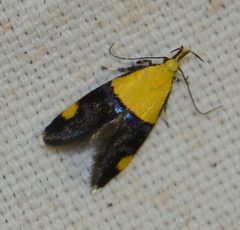
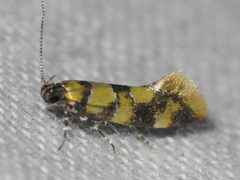
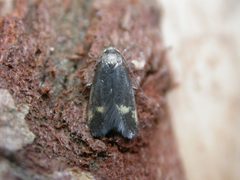
Pronunciation
How to pronounce Oecophorini: //ɛ.kəˈfoʊr.ɪ.naɪ//
These audio files are automatically generated. While they are not always 100% accurate, they are a good starting point.
Identification
Oecophorini are distinguished from other oecophorid tribes primarily by genitalic characters and wing venation patterns, requiring microscopic examination for definitive assignment. Externally, they resemble other Oecophorinae but often show more pronounced wing patterning with distinct fasciae or streaking. Separation from the related tribe Decadarchini and other oecophorine tribes is not reliably possible from photographs alone.
Images
Appearance
are small to medium with wingspans generally ranging from 10–25 mm. Forewings are typically narrow to moderately broad, often with mottled, streaked, or spotted patterns in shades of brown, grey, ochre, or white. Hindwings are usually paler and more uniform. At rest, wings are held tent-like or slightly flattened over the body. are and often as long as or longer than the forewing. Labial palps are usually prominent and curved upward.
Habitat
Found in diverse terrestrial including forests, woodlands, scrublands, and urban gardens. Larvae develop in concealed microhabitats such as leaf litter, dead wood, bark crevices, and silk-lined tunnels or cases. are often encountered at light or resting on vegetation.
Distribution
Widespread across temperate and tropical regions. Strongly represented in the Australasian region, with significant diversity also in the Palearctic, Nearctic, and Afrotropical regions. Exact boundaries are complicated by ongoing taxonomic revision of the .
Seasonality
activity varies by and region; in temperate zones, most species fly from spring through autumn. Tropical species may be active year-round. Many species show peak activity in late spring and early summer.
Life Cycle
Complete . Larvae are concealed feeders, often constructing silk-lined tunnels, portable cases, or feeding within plant material, leaf litter, or detritus. occurs within the larval shelter. Specific details vary considerably among constituent and .
Behavior
are primarily and strongly attracted to artificial light. Larvae are cryptic and sedentary, feeding in concealed locations. Many exhibit characteristic 'concealer' , with larvae using silk to bind feeding material or construct protective shelters.
Ecological Role
Larvae function as and decomposers, contributing to nutrient cycling in forest . Some feed on dead plant material, fungi, or decaying wood. They serve as prey for various including birds, bats, and spiders.
Human Relevance
Generally of minor economic importance. A few are minor pests of stored products or dried plant material. The group is of interest to lepidopterists and contributes to biodiversity surveys. Some species have been used as indicators of quality in ecological studies.
Similar Taxa
- DecadarchiniAnother tribe within Oecophorinae; distinguished by genitalic and larval characters, with often similar in appearance
- AutostichinaeFormerly included in Oecophoridae; resemble Oecophorini but have different wing venation and genitalic structure
- DepressariinaeRelated of Oecophoridae; often broader-winged with different resting posture and larval habits
More Details
Taxonomic Uncertainty
The circumscription of Oecophorini and the broader Oecophorinae remains under active revision. Molecular studies have challenged traditional groupings, and the number of recognized and varies between authorities. The tribe likely represents a pending comprehensive phylogenetic analysis.
Larval Concealment
The 'concealer moths' derives from the larval habit of hiding within silk-lined tunnels or portable cases constructed from silk and or plant material. This is widespread but not universal across the tribe.