
Depressaria
Haworth, 1811
Species Guides
5- Depressaria alienella(Yarrow Webworm)
- Depressaria cinereocostella
- Depressaria daucella(Dingy Flat-body)
- Depressaria depressana(Purple Carrot-seed Moth)
- Depressaria radiella(parsnip moth)
Depressaria is a of in the Depressariidae ( Depressariinae), previously treated as part of Oecophoridae or as a distinct family. The genus contains approximately 80+ described , with new species continuing to be discovered. Most species are on Apiaceae (umbellifers), feeding on reproductive structures, though some species utilize Salicaceae (willows). Several species are economically significant agricultural pests or in North America, including D. depressana (purple carrot-seed moth) and D. radiella (parsnip webworm). The type species, D. heraclei (parsnip moth), has a confused taxonomic history dating to Linnaeus.
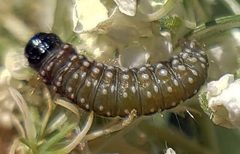
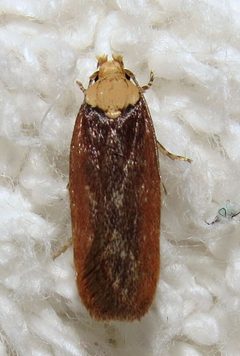
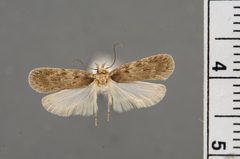
Pronunciation
How to pronounce Depressaria: /dɛp.rɛˈsaɪ.ri.ə/
These audio files are automatically generated. While they are not always 100% accurate, they are a good starting point.
Identification
are small to medium-sized with relatively broad, somewhat flattened wings held roof-like over the body at rest. The is distinguished from related (Agonopterix, Psorosticha) by genitalic characters and larval associations, though external is often similar. Larvae typically construct silk webbing or shelters on host plants, with some boring into stems or floral structures. Species-level identification requires examination of genitalia or molecular markers; several remain taxonomically unresolved.
Images
Habitat
Associated with plants in the Apiaceae (umbellifers) for most , including agricultural fields, meadows, roadsides, and natural with these plants. Some species inhabit willow beds and riparian areas (e.g., D. conterminella). Larval microhabitats include floral umbels, leaf , stems, and buds depending on species.
Distribution
Holarctic distribution with greatest diversity in the Palearctic. Native to Eurasia; multiple introduced to North America including D. depressana (first reported 2008, rapidly expanding), D. radiella (introduced over 160 years ago), and D. pastinacella. Records from Europe, Asia, North America, and Australia (D. kollari).
Seasonality
Variable by and latitude. D. conterminella is with active in summer ( laid June-July). D. depressana is multivoltine with seasonal activity from late spring to early fall. D. radiella is univoltine. Many temperate species show adult periods in late spring to summer.
Diet
Larvae feed primarily on reproductive structures (flowers, seeds, umbels) of Apiaceae; some are -level while others are restricted to single or species. D. depressana utilizes multiple tribes of Apiaceae. D. radiella and D. pastinacella are effectively restricted to Pastinaca and Heracleum. D. conterminella feeds on Salix (willow) shoots and leaves. D. multifidae feeds on a broader variety of plant parts including , floral stems, flowers, and leaves of Lomatium.
Host Associations
- Apiaceae (umbellifers) - primary -level specialization for most ; includes multiple across tribes
- Salix spp. (willows) - For D. conterminella and related
- Daucus carota (wild carrot) - For D. depressana
- Pastinaca sativa (wild/domesticated parsnip) - For D. radiella, D. pastinacella, D. depressana
- Heracleum maximum/sphondylium (cow parsnip/hogweed) - For D. radiella, D. pastinacella
- Lomatium grayi/dissectum - For D. multifidae, D. leptotaeniae
- Zizia aurea (golden alexanders) - For D. depressana
Life Cycle
Variable by . D. conterminella: ; laid in bark crevices June-July, hatch following spring, four larval instars with colour change at third , in soil, after ~3 weeks. D. depressana: multivoltine. D. radiella: univoltine. Larval development typically completed within plant structures (umbels, stems, ). Pupation occurs in soil, within host stems, or in silk shelters depending on species.
Behavior
Larvae construct silk webbing or shelters; first instars often tunnel into buds or , later instars may spin leaves together or bore into stems. D. pastinacella larvae exhibit reduced aggressive when occupying silk shelters. Some show stem-boring behavior with selection for larger stems that support complete larval development. are .
Ecological Role
Significant floral herbivores reducing seed production of plants; can exert selection pressure on plant chemical defenses (). D. pastinacella and related influence reproductive success and potentially of Heracleum and Pastinaca. May serve as prey for birds and other ; some species experience high rates on certain hosts.
Human Relevance
Several are agricultural pests: D. depressana threatens carrot seed production; D. conterminella damages commercial willow beds used for basketry. D. radiella and D. pastinacella are in North America, affecting native and introduced Apiaceae. Control methods include modified harvest timing and burning of .
Similar Taxa
- AgonopterixFormerly included in Depressaria; distinguished by genitalic characters and often narrower associations
- PsorostichaClose relative formerly placed in Depressaria; differs in larval habits and
- HorridopalpusSometimes treated as Depressaria subgenus but likely more distant phylogenetically; sources maintaining Depressariidae as may subsume it
Misconceptions
The -level classification of Depressariinae has been unstable, with treatments as Depressariidae, Oecophoridae, or Elachistidae. The type D. heraclei has been subject to ~200 years of nomenclatural confusion involving misidentifications of Linnaean types and multiple incorrect spellings (heracliana, heracleana).
More Details
Taxonomic notes
The contains a proposed subgenus Hasenfussia of uncertain relationship; Horridopalpus is sometimes included as subgenus by sources treating Depressariinae as . Several remain undescribed or of uncertain status including D. albiocellata, D. aurantiella, D. kollari, D. pavoniella, D. reticulatella, and two North American (sp. A 'Wyoming-California', sp. B 'Modoc County, California').
Chemical ecology
possess P450-mediated detoxification systems for in plants. CYP6AB3 in D. pastinacella shows remarkable substrate specificity, metabolizing only imperatorin among six common furanocoumarins. This biochemical specialization reflects tight with host plant chemistry.
Invasion biology
D. depressana exhibits higher genetic diversity and faster (15 years across eastern North America) compared to D. radiella's 160+ year westward expansion, possibly due to broader range and greater capacity. Multiple introductions and genetically diverse founding suggested for D. depressana.
Sources and further reading
- BugGuide
- Wikipedia
- GBIF taxonomy match
- iNaturalist taxon
- NCBI Taxonomy
- Catalogue of Life
- Reactions of Heracleum Lanatum to Floral Herbivory by Depressaria Pastinacella
- Genetic Structure and Colonization of North America by Depressaria depressana (Fabricius 1775) (Lepidoptera: Depressariidae) over 15 Years; Contrasts with Westward Expansion of Depressaria radiella (Goeze, 1783) over 160 Years
- Studies of the Willow-Shoot Moth, Depressaria Conterminella, Zell
- Life History of the Parsnip Webworm, Depressaria pastinacella (Lepidoptera: Oecophoridae), in Central Iowa
- Degree of dietary specialization on furanocoumarin-containing hostplants in a newly invasive species, Depressaria depressana (Lepidoptera: Depressariidae)
- Reduced Aggressive Behavior: A Benefit of Silk-Spinning in the Parsnip Webworm, Depressaria pastinacella (Lepidoptera: Oecophoridae)
- Paradoxical host shift by Depressaria pastinacella in North America: is enemy‐free space involved?
- Selection of plant parts by Depressaria multifidae (Lep., Oecophoridae) on its seasonally‐restricted hostplant, Lomatium grayi (Umbelliferae)
- The Use of Ephemeral Plant Parts on Small Host Plants: How Depressaria leptotaeniae (Lepidoptera: Oecophoridae) Feeds on Lomatium dissectum (Umbelliferae)
- Effects of Furanocoumarins on Feeding Behavior of Parsnip Webworms Depressaria pastinacella
- Remarkable substrate‐specificity of CYP6AB3 in Depressaria pastinacella , a highly specialized caterpillar