
Acrolophus
grass tube moths
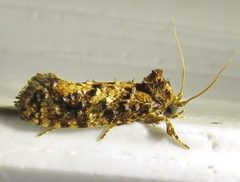
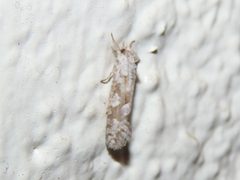
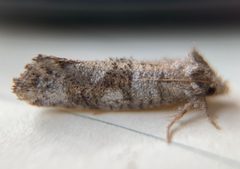
Acrolophus is a of in the Acrolophidae, commonly known as "grass tube moths." The family was formerly placed in Tineidae (clothes moths and kin) but has been reclassified based on updated evolutionary relationships. Larvae of many construct silken tubes at the base of grasses or grass roots for concealment while feeding.
Pronunciation
How to pronounce Acrolophus: /ˌækrəˈloʊfəs msʃ p/
These audio files are automatically generated. While they are not always 100% accurate, they are a good starting point.
Identification
Members of Acrolophus can be distinguished from similar small by their placement in Acrolophidae, which was separated from Tineidae based on molecular and morphological studies. Specific -level identification within the requires detailed examination and is not reliably accomplished from photographs alone.
Images
Habitat
Associated with grassland and prairie where larval plants occur. have been documented at blacklight setups in residential yards and urban settings.
Distribution
Documented from Colorado Springs, Colorado and Leavenworth, Kansas. The occurs in North America, with specific ranges varying.
Seasonality
active during summer months. Observed during National Week events in late July.
Diet
Larvae feed on grasses, constructing silken tubes at the base of grass plants or on grass roots for concealment while feeding. Specific grass are not documented for most species.
Life Cycle
Complete with , larva, pupa, and stages. Larvae are known to spin silken tubes for concealment while feeding. Detailed information for most is not available.
Behavior
are and attracted to blacklights. Larvae construct silken tubes at the base of grasses or on grass roots.
Ecological Role
Larvae function as herbivores in grassland . Their concealed feeding habit within silken tubes may provide some protection from and .
Human Relevance
One , Clemens' Grass Tubeworm Moth (Acrolophus popeanella), is mentioned as occurring in residential areas and being attracted to porch lights. No significant economic impact is documented.
Similar Taxa
- Tineidae (clothes moths)Acrolophidae was formerly classified within Tineidae; they share small size and concealed larval habits but differ in -level and specific larval tube construction
- Crambidae (snout moths)Some crambid larvae also construct silken tubes or tunnels in grasses, but differ in including prominent labial palps that form 'snouts'
More Details
Taxonomic History
The Acrolophidae was reclassified from Tineidae based on updated understanding of evolutionary relationships, reflecting ongoing changes in lepidopteran
Larval Behavior
The 'grass tube ' derives from the distinctive larval habit of spinning silken tubes at the base of grasses or on grass roots for concealment during feeding