
Agonoxeninae
Meyrick, 1926
palm moths
Genus Guides
3Agonoxeninae is a of small within the Elachistidae (grass-miner moths). The group has undergone substantial taxonomic revision, expanding from a arrangement centered on Agonoxena to encompass approximately 13 , with several genera transferred from Cosmopterigidae. Members are commonly referred to as palm moths, reflecting an ecological association with palms. The classification history illustrates ongoing debate about boundaries between Agonoxeninae, Blastodacnidae, and Elachistidae.
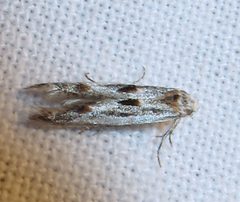
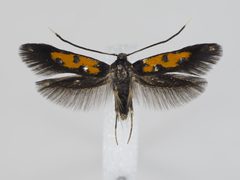
Pronunciation
How to pronounce Agonoxeninae: /ˌæɡəˌnɒksəˈnaɪ/
These audio files are automatically generated. While they are not always 100% accurate, they are a good starting point.
Identification
Distinguishing Agonoxeninae from related requires examination of genitalia and wing venation patterns. Former members of Cosmopterigidae (Asymphorodes, Pammeces, Proterocosma) share reduced wing scaling and elongated labial palps with their original , complicating field identification. Separation from Blastodacninae/Elachistinae depends on larval associations and subtle morphological characters not readily visible without magnification.
Images
Distribution
Widespread in tropical and subtropical regions where palms occur; specific range data limited by taxonomic instability and understudied fauna in many regions.
Diet
Larvae have been observed feeding on palms (Arecaceae), though specificity varies by and remains incompletely documented.
Host Associations
- Arecaceae - larval food plantpalm ; primary association defining
Ecological Role
Leaf-mining larvae contribute to nutrient cycling in palm ; specific ecological impacts unstudied for most .
Human Relevance
Some are minor pests of cultivated palms, though economic significance is limited compared to other palm-feeding Lepidoptera.
Similar Taxa
- BlastodacninaeFormerly treated as Blastodacnidae and merged with Agonoxeninae by some authorities; boundaries remain contested with shifting between classifications
- CosmopterigidaeThree (Asymphorodes, Pammeces, Proterocosma) transferred from this based on phylogenetic analysis; resemble small cosmopterigids
- ElachistinaeCo- within Elachistidae; Agonoxeninae distinguished by palm-feeding and subtle morphological differences in genitalia
More Details
Taxonomic instability
The exemplifies challenges in gelechioid classification. Hodges (1999) expanded Agonoxeninae to 31 by incorporating Blastodacnidae, while other treatments maintain narrower circumscriptions. Generic composition continues to shift as molecular clarifies relationships.
Former genera
Blastodacna, Dystebenna, Haplochrois, Heinemannia, and Spuleria are variably placed in Agonoxeninae or Elachistidae. Additional former include Chrysoclista, Colonophora, Glaucacna, Palaeomystella, Panclintis, Prochola, Tocasta, and Zaratha.