
Blastodacna
Wocke, 1876
Species Guides
2- Blastodacna atra(Apple Pith Moth)
- Blastodacna bicristatella
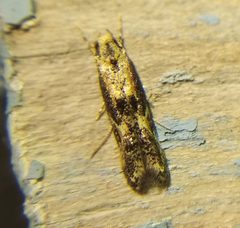
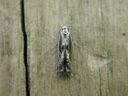
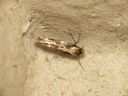
Blastodacna is a of small in the Elachistidae, first described by Wocke in 1876. The genus contains approximately 15 recognized distributed primarily across the Holarctic region, with the majority of species occurring in the Palearctic. Taxonomic placement of this genus has been disputed, with some authorities historically assigning it to Agonoxenidae or recognizing it as the separate family Blastodacnidae. The genus includes several species associated with fruit trees, notably Blastodacna pyrigalla, which is known as a pest of pear.
Pronunciation
How to pronounce Blastodacna: //ˌblæstoʊˈdæknə//
These audio files are automatically generated. While they are not always 100% accurate, they are a good starting point.
Identification
Members of Blastodacna are small with wingspans generally under 15 mm. The is characterized by relatively narrow, forewings and reduced wing venation typical of the Elachistidae. -level identification requires examination of genitalia and detailed wing pattern analysis; external alone is often insufficient for reliable determination.
Images
Habitat
occur in diverse terrestrial including deciduous woodlands, orchards, and shrublands. Many species are associated with woody plants, particularly fruit-bearing trees in the Pyrus and Malus.
Distribution
Holarctic distribution with strong Palearctic . Documented from Europe (including Scandinavia: Denmark, Norway, Sweden), the Middle East (Lebanon), East Asia (China, Japan, Russia), and North America (Vermont, USA).
Diet
Larval feeding habits vary by ; some are known to feed internally in fruits or seeds of woody plants. Blastodacna pyrigalla larvae feed within pear fruits. Specific diet for most species remains undocumented.
Host Associations
- Pyrus - larval Blastodacna pyrigalla
- Malus - larval some
Life Cycle
Complete with , larva, pupa, and stages. Larvae of some are internal feeders in fruits or seeds. Specific developmental timing varies by species and region.
Ecological Role
Larvae function as seed or fruit of woody plants. Some may influence fruit crop yields in orchard settings.
Human Relevance
Blastodacna pyrigalla is recognized as an agricultural pest of pear orchards in parts of its range. Other have minimal documented economic impact.
Similar Taxa
- ElachistaOverlapping assignment and similar small size; Blastodacna distinguished by wing venation and genitalia structure
- AgonoxenaHistorical confusion due to disputed placement; Blastodacna lacks the characteristic wing scaling patterns of Agonoxenidae sensu stricto
More Details
Taxonomic Uncertainty
-level classification remains unsettled. While Catalogue of Life and most modern sources place Blastodacna in Elachistidae ( Parametriotinae), alternative treatments in Agonoxenidae or as Blastodacnidae persist in literature. This reflects broader instability in gelechioid .