
Blastodacna atra
(Haworth, 1828)
Apple Pith Moth
Blastodacna atra, commonly known as the apple pith , is a small moth in the Elachistidae. It is native to most of Europe and has been introduced to North America, where it has been recorded in Massachusetts and Ontario. The is notable for its larval habit of mining inside the young shoots of apple trees (Malus species), which can cause localized damage to orchards. are active from May through September in western Europe.
Pronunciation
How to pronounce Blastodacna atra: /blæstoʊˈdæk.nə ˈæ.trə/
These audio files are automatically generated. While they are not always 100% accurate, they are a good starting point.
Identification
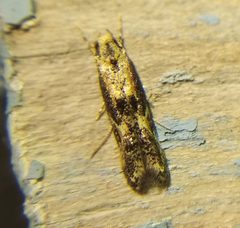
Distinguished from similar small Elachistidae by the distinctive forewing pattern: broad white streak with triangular indentation and two black -tufts, combined with narrow dark fuscous ground color. The specific association with apple shoots for larval mining, evidenced by small heaps of , provides additional identification context where larvae are present.
Images
Appearance
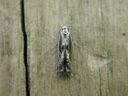
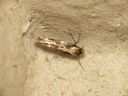
Small with wingspan of 11–13 mm. white. Forewings narrow, dark fuscous with broad white streak sprinkled with dark fuscous, extending from base to tornus; streak has broad triangular indentation at 2/5 containing black -tuft. Slender whitish fascia extends from apex of dorsal streak to before apex, with branch posteriorly in middle and sometimes branch below. Second black scale-tuft present in disc before this fascia. Hindwings grey.
Habitat
Orchards and areas with cultivated or wild apple trees (Malus ). Larvae occur within young shoots of plants.
Distribution
Native to most of Europe. Introduced to North America; recorded from Massachusetts and Ontario, Canada.
Seasonality
active May to September in western Europe.
Diet
Larvae mine inside young shoots of apples (Malus ). diet not documented.
Host Associations
- Malus - larval Larvae mine inside young shoots
Life Cycle
Larval stage spent mining inside young apple shoots; presence indicated by small heaps of . details not documented. emerge in spring through late summer.
Behavior
Larvae create internal mines in young shoots, occasionally causing small swellings; affected shoots may die off.
Ecological Role
Phytophagous herbivore specializing on Malus . Localized pest in apple orchards.
Human Relevance
Minor agricultural pest of apple orchards; larval mining can damage young shoots and reduce tree vigor in localized .
Similar Taxa
- Other Blastodacna speciesSimilar size and affiliation; distinguished by specific forewing pattern elements and association
- Other ElachistidaeSimilar size and general ; distinguished by diagnostic white streak with triangular indentation and paired black -tufts on forewing
Sources and further reading
- BugGuide
- Wikipedia
- GBIF taxonomy match
- iNaturalist taxon
- NCBI Taxonomy
- Catalogue of Life
- What a Wasp! What a Tattoo! | Bug Squad
- Bug Eric: Caught on Video: Prionyx atratus
- T.G.I.Flyday—Black horse fly (Tabanus atratus) | Beetles In The Bush
- Three new species of ground snakes discovered under graveyards and churches in Ecuador
- Lymexylidae | Beetles In The Bush
- Multiple Megarhyssa males | Beetles In The Bush