
Elachista
Treitschke, 1833
grass-miner moths, typical grass miner moths
Species Guides
29Elachista is a large of very small gelechioid moths, the type genus of the Elachistidae. These grass-miner moths are characterized by reduced, "feathery" hindwings and typically display one to three light transverse bands on the forewing uppersides. The genus has a near- distribution, being absent only from very cold regions and some oceanic islands, with highest diversity in the Palearctic. Taxonomic complexity includes numerous undescribed species, cryptic , and disputed subgeneric classifications.
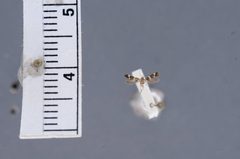
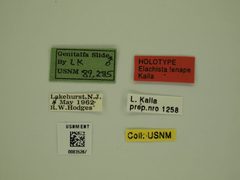
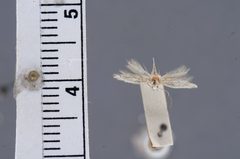
Pronunciation
How to pronounce Elachista: /ɛɪˈlæ.kɪs.tə/
These audio files are automatically generated. While they are not always 100% accurate, they are a good starting point.
Identification
Distinguished from other gelechioid by the characteristic feathery hindwings with long marginal hairs. Within Elachistidae, identification relies on forewing pattern—particularly number, position, and intensity of light transverse bands—and genitalia examination. Some (e.g., around E. dispunctella and E. triseriatella) are cryptic and require molecular or detailed morphological analysis.
Images
Appearance
Very small with reduced hindwings bearing a fringe of long hairs, giving a feathery appearance. Forewings typically narrow and elongate. Forewing uppersides usually display one to three light bands running from leading to trailing edge; some have predominantly white upper forewings.
Habitat
Associated with grasslands and supporting larval plants, primarily sedges (Carex) and grasses (Poaceae). Specific microhabitat requirements vary by ; some occupy restricted ranges such as St Helena Island's Central Ridge area.
Distribution
Near-, occurring on all continents except Antarctica. Absent from very cold regions and some oceanic islands. Most diverse in the Palearctic region. Documented from Europe, Asia (including China, Japan), Africa, Australia, and the Americas.
Host Associations
- Carex dianae - larval Monophagous larval for E. trifasciata on St Helena Island
- Poaceae - larval Grass ; general association for many
- Cyperaceae - larval Sedge ; primary group for many
Life Cycle
Larvae are leaf-miners, feeding internally within plant leaves. Specific developmental stages and timing vary by and region. Some species considered sensitive to climate change, suggesting temperature-dependent parameters.
Behavior
Larvae exhibit leaf-mining , creating internal feeding galleries in plant foliage. are presumably or , typical for gelechioid moths, though specific adult behaviors poorly documented in available sources.
Ecological Role
Larvae function as herbivores on sedges and grasses, potentially influencing plant through leaf mining activity. such as E. trifasciata serve as indicators of localized quality and climate sensitivity.
Human Relevance
Some of conservation concern due to restricted ranges and specificity; E. trifasciata on St Helena Island has been the subject of conservation recommendations. The serves as a model group for studies of cryptic and molecular in Lepidoptera.
Similar Taxa
- OecophoraHistorically confused with Elachista in older classifications; distinguished by different hindwing structure and phylogenetic placement in Oecophoridae rather than Elachistidae
- AgonoxenidaeSometimes included in Elachistidae in older sources; now recognized as distinct -level lineage within Gelechioidea
- EthmiidaeSometimes included in Elachistidae in older sources; phylogenetically distinct from Elachista despite superficial similarities
Sources and further reading
- BugGuide
- Wikipedia
- iNaturalist taxon
- NCBI Taxonomy
- Catalogue of Life
- Heterodera elachista Ohshima. [Distribution map].
- Heterodera elachista . [Distribution map].
- Heterodera elachista Ohshima. [Distribution map].
- Elachista trifasciata (Wollaston, 1879) on St Helena Island (Lepidoptera: Elachistidae: Elachistinae)
- New species in the Elachista praelineata species group (Lepidoptera, Elachistidae, Elachistinae) from East Africa, with identification keys to the Afrotropical species.