
Cicinnus
Blanchard, 1852
sack-bearer moths
Species Guides
2- Cicinnus chambersi
- Cicinnus melsheimeri(Melsheimer's Sack Bearer)
Cicinnus is a of sack-bearer moths ( Mimallonidae) in the Cicinninae. in this genus are characterized by their uniformly pink or pale coloration and relatively simple wing patterns. The genus includes C. chambersi, described in 2020 from southeastern Arizona, which represents the first U.S. Cicinnus species described in nearly 50 years. C. melsheimeri is the most widespread North American species, while other species occur primarily in Mexico.
Pronunciation
How to pronounce Cicinnus: //sɪˈsɪn.nəs//
These audio files are automatically generated. While they are not always 100% accurate, they are a good starting point.
Identification
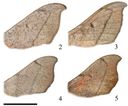
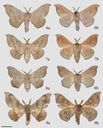
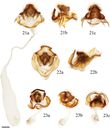
Cicinnus are distinguished from other Mimallonidae by their uniformly pink to pale coloration and relatively unmarked wings. C. chambersi can be separated from the widespread C. melsheimeri by its sharper forewing apex and more acute postmedial line angle near the apex. Male and female genitalia provide definitive separation between species, with C. chambersi showing structural differences from C. melsheimeri.
Images
Habitat
Mid-elevation oak and pine forests, particularly in isolated mountain systems. In the Sky Islands Region of Arizona, found at 1,155–1,828 m elevation in oak-dominated surrounded by arid and semi-arid lowlands.
Distribution
Primarily distributed in Mexico, with limited U.S. representation. C. melsheimeri occurs in eastern North America from Pennsylvania southward. C. chambersi is known from southeastern Arizona (Santa Cruz, Cochise, and Pima counties) in the Sky Islands Region.
Seasonality
activity in C. chambersi coincides with summer monsoon onset, with collection records from July and August. Seasonality of other is poorly documented.
Behavior
are and attracted to light (MV and UV light traps). C. chambersi is described as a late night-flying .
Similar Taxa
- Mimallonidae (other genera)Other sack-bearer moths typically show more complex wing patterns and coloration; Cicinnus is distinguished by uniform pink/pale coloration and simpler pattern elements.
- Cicinnus melsheimeriOccurs sympatrically with C. chambersi in the U.S.; distinguished by blunter forewing apex, less acute postmedial line angle, and distinct genitalia structure.
More Details
Recent U.S. discovery
C. chambersi, described in 2020, is the fifth Mimallonidae recorded from the United States and the first described from the country in nearly half a century. The species may represent a recent range expansion into Arizona.
Taxonomic history
The was established by Blanchard in 1852. It belongs to the Cicinninae, which contains relatively few compared to other Mimallonidae subfamilies.