
Mimallonidae
Burmeister, 1878
Sack-bearer Moths, Mimallonids
Genus Guides
2is a of approximately 300-320 in 43-44 , constituting the sole family of the superfamily Mimallonoidea. These are to the New World, with the vast majority occurring in the Neotropics and only five species known from the United States. are externally similar to moths in the superfamilies Bombycoidea and Drepanoidea, a resemblance that historically caused taxonomic confusion. The family has been reorganized based on molecular , now recognizing seven .
Pronunciation
How to pronounce Mimallonidae: //ˌmaɪməˈlɒnɪdiː//
These audio files are automatically generated. While they are not always 100% accurate, they are a good starting point.
Identification
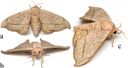
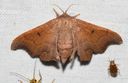
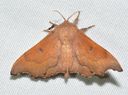
resemble Macroheterocera (particularly Bombycoidea and Drepanoidea) in external , making visual identification to level challenging without genitalia dissection or molecular analysis. Larvae are distinguished by their case-building : they construct portable or semi-portable sack-like cases from silk, , and plant material, with openings at both ends that can be blocked by the or flattened anal plate. Cases range from irregular to spindle-shaped in structure.
Images
Habitat
Occurs across diverse New World from tropical rainforests to temperate oak forests. In the United States, occupy specific : mid-elevation oak forests in Arizona's Sky Islands Region, white sand Florida Scrub habitats, sandy oak-pine barrens, and oak woodlands. Most species are associated with forested environments, particularly those containing plants from such as Anacardiaceae, Fagaceae, and Myrtaceae.
Distribution
Strictly to the New World, occurring in North America, Central America, South America, and the Caribbean (Cuba and The Bahamas). The vast majority of and are concentrated in tropical regions of Central and South America. Only five described species occur in the United States: Lacosoma arizonicum and L. chiridota (widespread in eastern North America and Arizona), L. elassa (southern Texas only), Cicinnus melsheimeri (eastern North America and sporadically in Rocky Mountains), and C. chambersi (southeastern Arizona).
Seasonality
activity generally coincides with summer months. In the Sky Islands Region of Arizona, adult and activity are influenced by the onset of the summer monsoon, with collections primarily in July-August. Specific seasonality for most Neotropical has not been documented.
Diet
Larvae feed on multiple plant including Anacardiaceae, Clusiaceae, Combretaceae, Fagaceae, Melastomataceae, Myrtaceae, and Rubiaceae. Specific associations include oaks (Quercus spp., Fagaceae) for some North American . feeding habits have not been documented.
Host Associations
- Quercus - larval oaks; for some North American
- Psidium guajava - larval guava; for Mimallo amilia in Surinam
- Eucalyptus urophylla - larval for Mimallo amilia in Brazil
- Anacardium occidentale - larval cashew; for Psychocampa callipius in Brazil
- Miconia calvescens - potential larval target of potential biocontrol by Druentica
- Clidemia hirta - potential larval target of potential biocontrol by Druentica in Hawaii
- Schinus terebinthifolius - potential larval Brazilian pepper tree; target of potential biocontrol by Aceclostria mus in United States
Life Cycle
Young caterpillars live inside folded leaves or beneath silken networks before constructing portable or semi-portable cases as they grow. Cases are open at both ends and vary from irregular to spindle-shaped. The and flattened anal plate of the terminal body segment can block case openings. presumably occurs within the larval case, though this has not been explicitly documented. is poorly known for most .
Behavior
Most are ; at least three species have males. Larvae exhibit distinctive case-building , constructing sack-like portable shelters from silk, , and plant material. Cases serve as protective structures during feeding and resting. Late night-flying activity has been documented for Lacosoma arizonicum.
Ecological Role
Larvae function as herbivores on diverse woody and herbaceous plants. Some have been evaluated as potential agents for plant species, including Druentica species for Miconia calvescens and Clidemia hirta control, and Aceclostria mus for Brazilian pepper tree management.
Human Relevance
Some are minor agricultural pests: Mimallo amilia damages guava in Surinam and eucalyptus in Brazil; Psychocampa callipius is a pest of cashew in Brazil. Conversely, certain species have been investigated as agents for plants. Several U.S. species are of conservation concern due to restricted and imperiled , particularly Cicinnus albarenicolus, which may persist at only a single Florida locality.
Similar Taxa
- Bombycoidea externally similar; historically caused taxonomic confusion; distinguished by phylogenetic placement and larval case-building unique to
- Drepanoidea externally similar; historically caused taxonomic confusion; distinguished by phylogenetic placement and larval case-building