
Cicinnus melsheimeri
(Harris, 1841)
Melsheimer's Sack Bearer
Cicinnus melsheimeri is a sack-bearer (Mimallonidae) widespread in the eastern United States and Rocky Mountains. It is one of only two Cicinnus recorded from the United States and is morphologically and genetically distinct from the southwestern C. chambersi and Mexican C. mexicana. The species shows variable brown shading along wing margins and possesses distinctive male genitalia with elongated vincular arms. Despite being relatively common in the East, it remains rarely collected in western portions of its range.
Pronunciation
How to pronounce Cicinnus melsheimeri: /ˈkɪsɪnəs mɛlˈʃaɪmɪri/
These audio files are automatically generated. While they are not always 100% accurate, they are a good starting point.
Identification
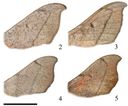
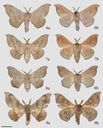
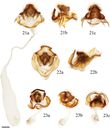
Distinguished from the southwestern C. chambersi by the more obtuse angle of the forewing postmedial line near the apex and by male genitalia with elongated vincular arms (versus reduced in C. chambersi). Differs from C. mexicana in both and genetics. The variable brown marginal wing shading can aid field recognition but is not consistent.
Images
Appearance
display brown shaded regions along wing margins, though this shading is variable. The forewing postmedial line forms a more obtuse angle near the apex compared to C. chambersi. Male genitalia feature elongated vincular arms, a diagnostic trait distinguishing this from .
Habitat
Mid-elevation oak forests in mountainous regions; occurs in northern Arizona north of the Mogollon Rim, central and northern New Mexico, and the Rocky Mountains. Eastern occupy broadleaf forest east of the Great Plains.
Distribution
Eastern United States from extreme southern Ontario southward, west to the Great Plains; Rocky Mountain region including northern Arizona, northern New Mexico, and western Texas; Mexico.
Behavior
Late night-flying activity pattern. Rarely collected in the Rocky Mountain portion of its range despite being widespread in the eastern United States. Not sympatric with C. chambersi.
Similar Taxa
- Cicinnus chambersiOverlaps in Arizona but not sympatric; distinguished by more acute angle of forewing postmedial line and reduced vincular arms in male genitalia
- Cicinnus mexicanaMexican closely related to C. chambersi; both differ from C. melsheimeri in and genetics
More Details
Taxonomic history
Originally described as Saccophora melsheimeri by Harris in 1841; later transferred to Cicinnus.