
Coptotriche
Walsingham, 1890
Species Guides
13- Coptotriche aenea(Blackberry Leafminer Moth)
- Coptotriche agrimoniella
- Coptotriche badiiella
- Coptotriche castaneaeella(Chestnut Blotchminer Moth)
- Coptotriche citrinipennella
- Coptotriche clemensella
- Coptotriche consanguinea
- Coptotriche crataegifoliae
- Coptotriche fuscomarginella
A of trumpet leaf-miner moths in the Tischeriidae, described by Walsingham in 1890. in this genus are stenophagous leaf miners with larvae that feed internally within leaves, creating distinctive blotch or trumpet-shaped mines. The genus has been documented across multiple continents including the Neotropics, South America, Madagascar, and East Asia, with -plant associations spanning several plant families including Sapindaceae, Combretaceae, Asteraceae, Nyssaceae, Staphyleaceae, Symplocaceae, and Theaceae.
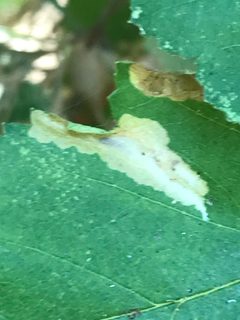
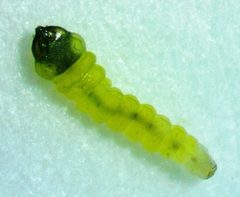
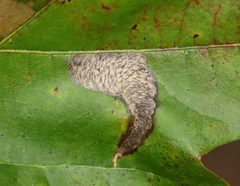
Pronunciation
How to pronounce Coptotriche: //ˌkɒptəˈtraɪki//
These audio files are automatically generated. While they are not always 100% accurate, they are a good starting point.
Identification
Distinguished from the closely related Astrotischeria primarily by genitalic characters, particularly in male and female genitalia . are small, inconspicuous with narrow wings. Accurate identification to level requires examination of genitalia and often knowledge of the plant. Leaf mines are typically trumpet-shaped or blotch mines on the upper or lower leaf surfaces.
Images
Habitat
Occupies diverse environments across its range including high elevation tropical moist forest (Madagascar), tropical and subtropical regions of the Americas, and temperate to subtropical areas of East Asia. Specific preferences vary by and correlate with -plant distribution.
Distribution
Documented from the Neotropics, South America, Madagascar (first Tischeriidae record for the island), and East Asia including China, Vietnam, and Japan. GBIF records additionally indicate presence in Scandinavia (Denmark, Norway, Sweden) and the northeastern United States (Vermont).
Diet
Larvae are specialized leaf miners feeding on living leaf tissue of specific plants. Documented host plants include Camptotheca acuminata (Nyssaceae), Turpinia arguta (Staphyleaceae), Serjania (Sapindaceae), Terminalia australis (Combretaceae), Baccharis latifolia and B. emarginata (Asteraceae), various Symplocos (Symplocaceae), and Eurya japonica (Theaceae). Feeding habit is stenophagous to oligophagous.
Host Associations
- Camptotheca acuminata - larval Nyssaceae; novel -plant for Tischeriidae
- Turpinia arguta - larval Staphyleaceae; novel -plant for Tischeriidae
- Serjania - larval Sapindaceae; novel -plant for Tischeriidae
- Terminalia australis - larval Combretaceae
- Baccharis latifolia - larval Asteraceae
- Baccharis emarginata - larval Asteraceae
- Symplocos sumuntia - larval Symplocaceae
- Symplocos poilanei - larval Symplocaceae
- Symplocos glauca - larval Symplocaceae
- Eurya japonica - larval Theaceae; evergreen tree of C. japoniella
Behavior
Larvae are internal leaf miners, creating blotch or trumpet-shaped mines in leaves of plants. Mining results in visible damage patterns on leaf surfaces. The exhibits specialized host-plant relationships with generally narrow dietary breadth (stenophagy to oligophagy).
Ecological Role
As leaf miners, larvae function as herbivores that modify leaf tissue and potentially affect -plant physiology. Coptotriche japoniella on Eurya japonica has been documented as a host for diverse , indicating a role in supporting higher .
Similar Taxa
- AstrotischeriaCongeneric in Tischeriidae with similar leaf-mining ; distinguished by genitalic and often by geographic distribution and associations
More Details
Novel host-plant records
Recent descriptions from China revealed Nyssaceae and Staphyleaceae as novel -plant for Tischeriidae, significantly expanding the known dietary breadth of the family. Serjania (Sapindaceae) represents another novel host-plant documented in the Neotropics.
Research significance
has been extracted and conserved from at least one (C. alavelona from Madagascar) for future phylogenetic or barcoding studies, indicating ongoing interest in molecular of the .
Sources and further reading
- BugGuide
- Wikipedia
- GBIF taxonomy match
- iNaturalist taxon
- NCBI Taxonomy
- Catalogue of Life
- Diagnostics of new species of Neotropical Tischeriidae (Lepidoptera), with the first record of Coptotriche Walshingham from South America
- Documenting trumpet leaf-miner moths (Tischeriidae): new Neotropical Coptotriche and Astrotischeria species, with notes on Sapindaceae as a host-plant family
- The first record of Tischeriidae (Insecta: Lepidoptera) from Madagascar, with description of Coptotriche alavelona sp. n. and an updated distributional checklist of Afrotropical Tischeriidae
- Discovery of the new Coptotriche species in China revealed two novel host-plant families and host-plant orders for Tischeriidae, a family of stenophagous, leaf-mining lepidopterans
- Guild Structure and Coexistence Mechanisms in the Parasitoid Assemblage Associated with a Leafminer,Coptotriche japoniella(Lepidoptera, Tischeriidae), on an Evergreen Tree,Eurya japonica(Theaceae)
- Guild Structure and Coexistence Mechanisms in the Parasitoid Assemblage Associated with a Leafminer, <I>Coptotriche japoniella</I> (Lepidoptera, Tischeriidae), on an Evergreen Tree, <I>Eurya japonica</I> (Theaceae)