Coptotriche castaneaeella
(Chambers, 1875)
Chestnut Blotchminer Moth
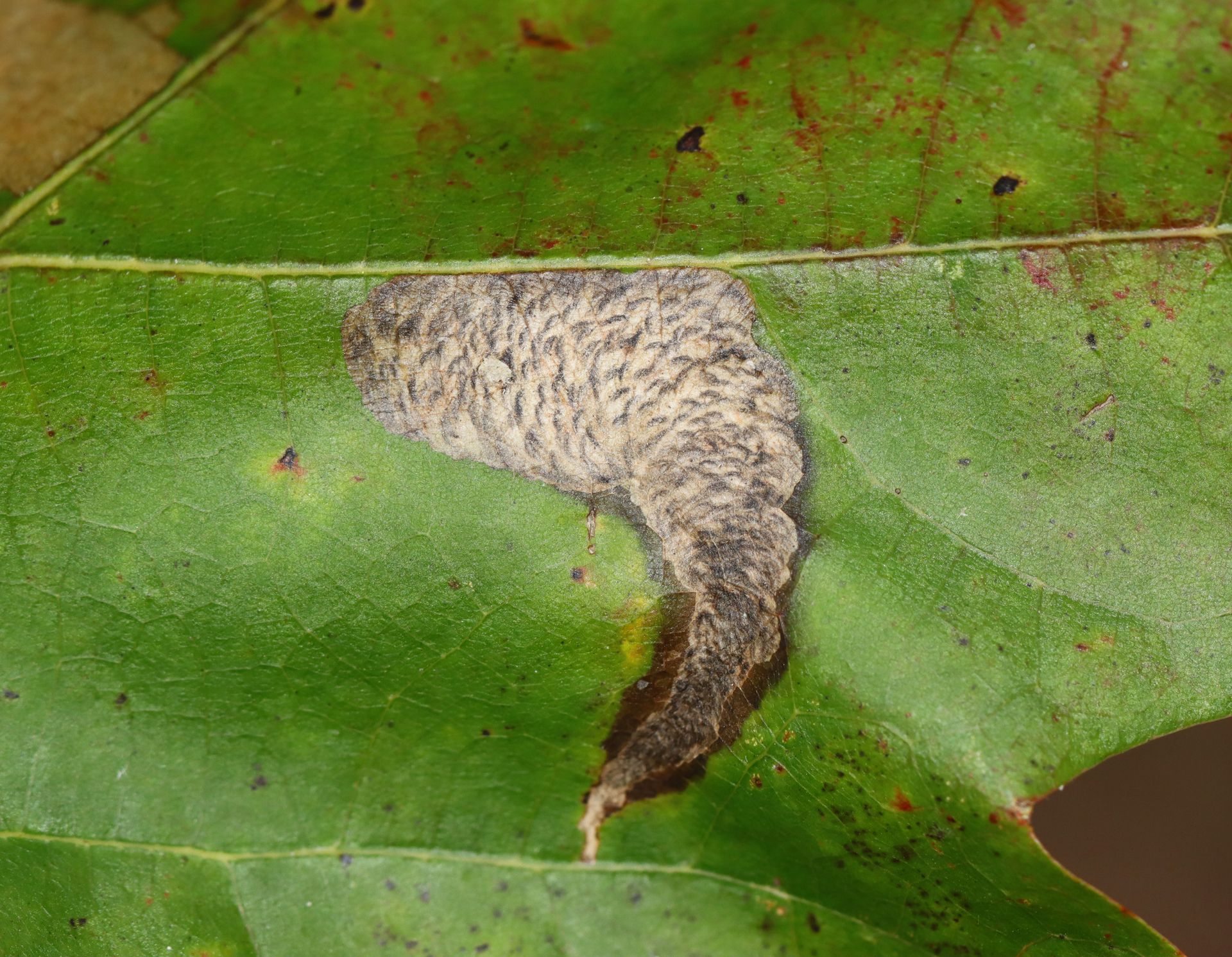
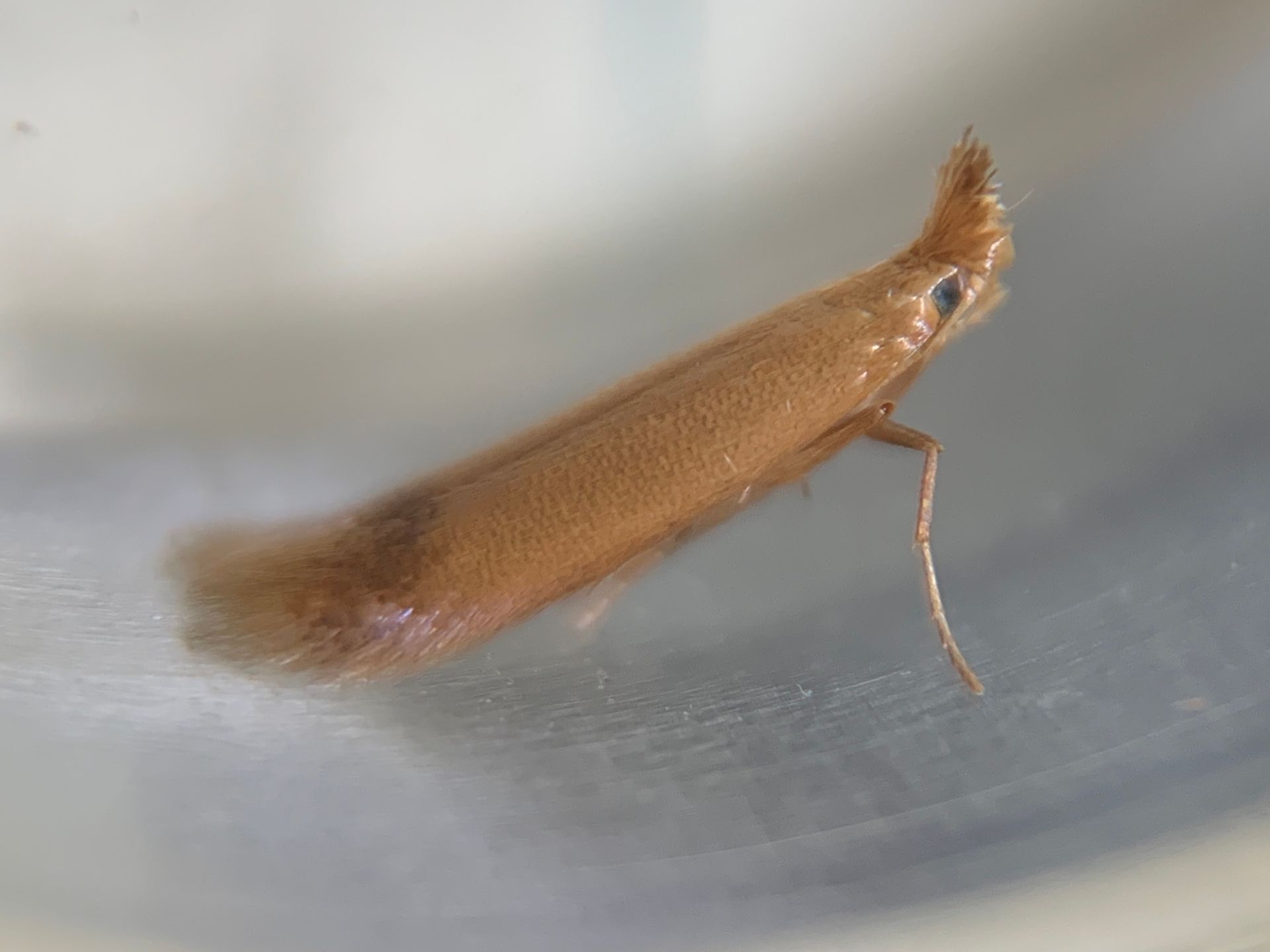
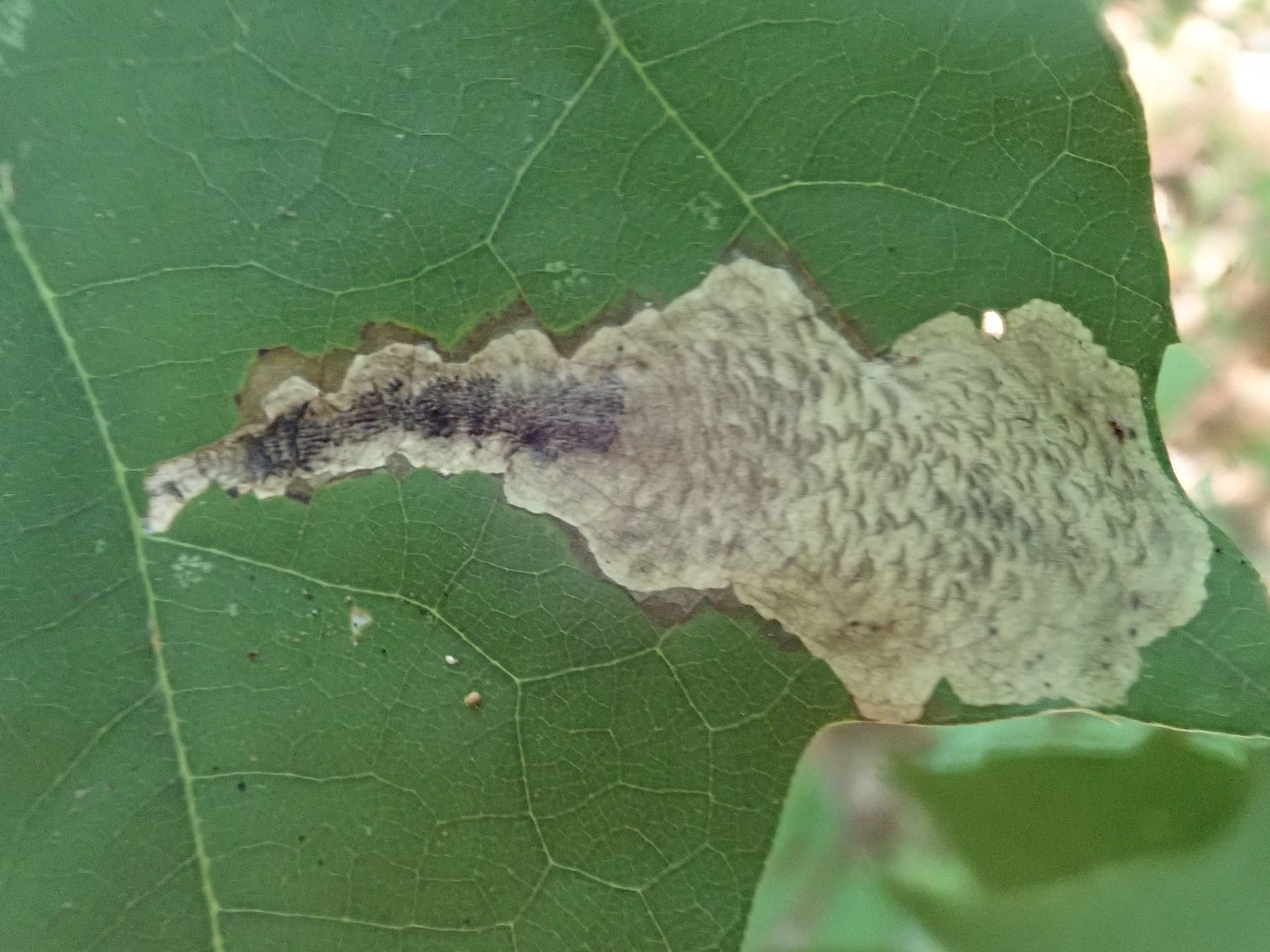
A small in the Tischeriidae, described in 1875. The larvae are leaf miners on multiple oak , creating distinctive trumpet-shaped mines. Recorded from six US states in the eastern and midwestern regions.
Pronunciation
How to pronounce Coptotriche castaneaeella: /ˌkɒptəˈtrɪki ˌkæstəˌniːiˈɛlə/
These audio files are automatically generated. While they are not always 100% accurate, they are a good starting point.
Identification
Larvae identified by their trumpet-shaped leaf mines on oak leaves. are small requiring dissection or genital examination for definitive identification; the specific mine shape distinguishes larvae from other oak-feeding Tischeriidae.
Images
Habitat
Associated with oak-dominated forests and woodlands where Quercus occur.
Distribution
United States: Florida, Illinois, Kentucky, New Jersey, Ohio, and Virginia.
Diet
Larvae feed on leaves of Quercus alba, Quercus bicolor, Quercus coccinea, Quercus imbricaria, Quercus marilandica, Quercus phellos, Quercus prinus, Quercus rubra, and Quercus velutina.
Host Associations
- Quercus alba - larval leaf mine
- Quercus bicolor - larval leaf mine
- Quercus coccinea - larval leaf mine
- Quercus imbricaria - larval leaf mine
- Quercus marilandica - larval leaf mine
- Quercus phellos - larval leaf mine
- Quercus prinus - larval leaf mine
- Quercus rubra - larval leaf mine
- Quercus velutina - larval leaf mine
Behavior
Larvae mine leaves, creating trumpet-shaped mines. are and attracted to light.
Ecological Role
; larval feeding creates localized damage to oak foliage. Role in poorly documented.
Similar Taxa
- Other Coptotriche speciesSimilar mine patterns on oaks; requires examination of mine shape and genitalia for separation.
- Tischeria speciesAlso oak leaf miners; distinguished by mine and characteristics.
More Details
Mine morphology
The trumpet-shaped mine is a diagnostic feature; mines begin as a narrow linear track that expands into a blotch, with concentrated in a central line.
Taxonomic history
Described by V.T. Chambers in 1875; the specific epithet references Castanea (chestnut), though the feeds on oaks, not chestnuts.