
Coptodisca
Walsingham, 1895
Species Guides
15- Coptodisca arbutiella(madrone shield bearer)
- Coptodisca cercocarpella(curl-leaf mountain mahogany leafminer)
- Coptodisca diospyriella
- Coptodisca juglandiella(Walnut Shield-bearer)
- Coptodisca kalmiella
- Coptodisca lucifluella(walnut shield bearer)
- Coptodisca magnella
- Coptodisca matheri
- Coptodisca negligens
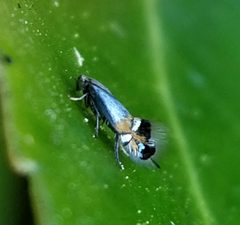
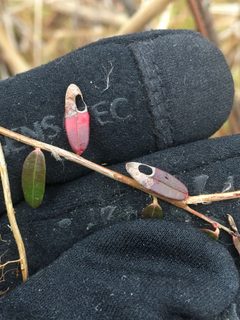
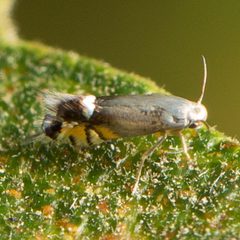
Coptodisca is a of small in the Heliozelidae, established by Walsingham in 1895. are leafminers whose larvae feed internally on leaves of woody plants, creating distinctive blotch mines. Several species have become pests in Europe, particularly C. lucifluella and C. juglandiella on walnut (Juglans) and related trees. The genus is native to the Nearctic region with approximately 20 described species.
Pronunciation
How to pronounce Coptodisca: /ˌkɒptəˈdɪskə/
These audio files are automatically generated. While they are not always 100% accurate, they are a good starting point.
Identification
identified by forewing pattern and genitalia ; molecular analysis (COI sequencing) confirms boundaries. Larvae distinguished by plant association and mine morphology. C. lucifluella and C. juglandiella are separable by adult forewing pattern and larval case structure; genitalic differences are diagnostic.
Images
Habitat
Deciduous woodlands, orchards, and urban plantings of trees. Found wherever host plants of Juglandaceae (walnut, hickory), Ericaceae (cranberry), or other woody occur. In invaded European range, established in city parks, commercial walnut orchards, and roadside plantings.
Distribution
Native to the Nearctic region (North America). in Europe: first detected in Italy in 2010, subsequently recorded from Switzerland, France, Germany, Czech Republic, Slovakia, Hungary, Poland, Ukraine, Bulgaria, and Romania. GBIF records confirm presence in Italy and Vermont, USA.
Seasonality
Multivoltine with three to four per year in temperate climates. emerge April–May with successive generations through summer; final generation larvae enter September–October. Autumn generations typically produce higher mine densities than spring generations.
Diet
Larval feeding is restricted to leaf tissue of plants. Specific host associations vary by : C. lucifluella on Juglans regia, J. nigra, Carya spp., and Pterocarya fraxinifolia; C. juglandiella on J. nigra, J. cinerea, and J. major; C. negligens on cranberry.
Host Associations
- Juglans regia - larval food plantcommon walnut; primary in Europe for C. lucifluella
- Juglans nigra - larval food plantblack walnut
- Juglans cinerea - larval food plantwhite walnut/butternut; new record for C. juglandiella
- Juglans major - larval food plantArizona walnut; new record for C. juglandiella
- Carya illinoinensis - larval food plantpecan; native for C. lucifluella
- Carya cordiformis - larval food plantbitternut hickory
- Pterocarya fraxinifolia - larval food plantCaucasian wingnut; new record for C. lucifluella in Europe
- Cranberry - larval food plant for C. negligens
Life Cycle
deposited on leaf surface. Larva mines leaf mesophyll, creating blotch mine visible on upper surface; larva carries portable case or 'shield' (giving rise to 'shield bearer'). occurs within mine or case. as mature larva in . Three to four annually in favorable climates.
Behavior
Larvae are internal leaf feeders, creating blotch mines that expand as larvae grow. The portable larval case, carried during feeding, is a distinctive behavioral trait of the . are and inconspicuous. C. lucifluella has demonstrated plant shift capability in invaded range, expanding from native Carya to Juglans and Pterocarya.
Ecological Role
Herbivore and foliar pest of woody plants. complexes associated with mines include Chrysocharis spp. (Eulophidae) and unidentified hymenopteran ; rates of 17–32% observed in field studies. High levels can contribute to premature tree decline when combined with other stress factors.
Human Relevance
Economic pest of walnut orchards and ornamental plantings. C. lucifluella and C. juglandiella are of concern in European walnut production. levels can reach 100% of leaves by autumn , though direct economic impact is moderated by high natural larval mortality. Monitoring and identification resources developed for European agricultural extension services.
Similar Taxa
- Other Heliozelidae generaShare leafmining habit and small size; distinguished by specificity, mine , and wing pattern
- Phyllonorycter (Gracillariidae)Also blotch leafminers on woody plants; distinguished by mine position (often lower leaf surface), larval , and resting posture
- Cameraria (Gracillariidae)Similar blotch mines on woody ; distinguished by mine structure and
More Details
Invasion history
C. lucifluella first detected in Europe in Italy in 2010, initially misidentified as Coptodisca sp.; subsequent molecular and morphological study confirmed identity. Rapid spread across central and eastern Europe suggests human-mediated via plant material.
Taxonomic challenges
Historical descriptions of Coptodisca are often inadequate by modern standards, leading to identification difficulties. C. lucifluella lectotype was designated in 2014 to stabilize .
Sources and further reading
- BugGuide
- Wikipedia
- GBIF taxonomy match
- iNaturalist taxon
- NCBI Taxonomy
- Catalogue of Life
- Nearctic walnut leafminers invade Europe: first Coptodisca lucifluella (Clemens, 1860) and now Coptodisca juglandiella (Chambers, 1874) (Lepidoptera, Heliozelidae)
- Life Cycle of Coptodisca negligens (Lepidoptera: Heliozelidae) on Cranberry
- "THE WALNUT SHIELD BEARER COPTODISCA LUCIFLUELLA (CLEMENS, 1860) (LEPIDOPTERA: HELIOZELIDAE) – THE FIRST RECORD IN ROMANIA THE WALNUT SHIELD BEARER COPTODISCA LUCIFLUELLA (CLEMENS, 1860) (LEPIDOPTERA: HELIOZELIDAE) – THE FIRST RECORD IN ROMANIA THE WALNUT SHIELD BEARER COPTODISCA LUCIFLUELLA (CLEMENS, 1860) (LEPIDOPTERA: HELIOZELIDAE) – THE FIRST RECORD IN ROMANIA THE WALNUT SHIELD BEARER COPTODISCA LUCIFLUELLA (CLEMENS, 1860) (LEPIDOPTERA: HELIOZELIDAE) – THE FIRST RECORD IN ROMANIA"
- First record of a walnut shield bearer Coptodisca (Lepidoptera: Heliozelidae) in Europe
- Further data on the establishment of Coptodisca lucifluella (Clemens, 1860) (Lepidoptera: Heliozelidae) in Romania
- Characterization, distribution, biology and impact on Italian walnut orchards of the invasive North-American leafminerCoptodisca lucifluella(Lepidoptera: Heliozelidae)