
Cameraria
L., 1753
Species Guides
36- Cameraria aceriella(maple leafblotch miner)
- Cameraria aesculisella
- Cameraria australisella
- Cameraria bethunella
- Cameraria betulivora
- Cameraria caryaefoliella(Pecan Leafminer Moth)
- Cameraria castaneaeella
- Cameraria cincinnatiella(Gregarious Oak Leafminer Moth)
- Cameraria conglomeratella(Conglomerate Oak Leafminer Moth)
Cameraria is a of leaf-mining in the Gracillariidae. Larvae feed internally on leaf tissue, creating distinctive mines. The genus includes both native and , with Cameraria ohridella being a notable pest of horse-chestnut trees in Europe. are associated primarily with plants in the families Sapindaceae (Aesculus, Acer) and Fagaceae (Quercus, Castanea).
Pronunciation
How to pronounce Cameraria: /kæməˈrɛəriə/
These audio files are automatically generated. While they are not always 100% accurate, they are a good starting point.
Identification
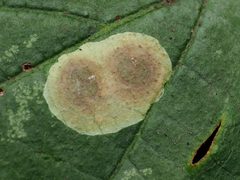
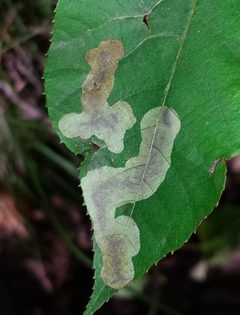
identified by wing pattern and genitalia; larvae identified by leaf mine —typically blotch mines with visible trails. Distinguished from other gracillariid by mine structure and association. -level identification often requires dissection or molecular analysis.
Images
Appearance
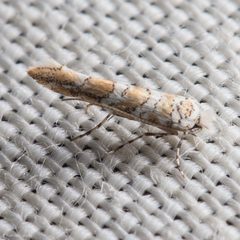
Small with wingspans typically 5–10 mm. Forewings often exhibit characteristic patterns of white, brown, or golden markings. Larvae are minute, flattened, and adapted for life between leaf epidermal layers.
Habitat
Associated with broadleaf trees and shrubs in forests, urban parks, and ornamental plantings. Occurs wherever plants are present, from native woodlands to introduced urban landscapes.
Distribution
Native range includes North America, East Asia, and parts of Europe. Some , notably C. ohridella, have expanded invasively across Europe following introduction from the Balkans region. Individual species distributions are tightly linked to plant ranges.
Seasonality
Multivoltine; number of varies by and climate. C. ohridella produces two to three generations annually in temperate Europe, with facultative partial in pupal stage. Activity period synchronized with leaf , typically May through September.
Diet
Larvae are leaf miners, feeding between upper and lower leaf of plants. Host associations documented for include Aesculus, Acer, Quercus, Castanea, and other woody dicots.
Host Associations
- Aesculus hippocastanum - Primary of C. ohridella
- Aesculus turbinata - Native Japanese of C. serena
- Acer - Multiple feed on maple
- Quercus - Fagaceae-associated in North America
- Castanea - Chestnut-feeding
Life Cycle
Holometabolous. laid on leaf surface. Larvae enter leaf tissue and develop through instars as miners; early instars often sap-feeding, later instars consuming tissue. occurs within the mine or in leaf litter. stage varies by —typically as pupa in .
Behavior
Females exhibit low leaf selectivity prior to oviposition, accepting high proportions of available leaves. This trait has been quantified in C. ohridella and C. guttifinitella, with acceptance rates of 96% and 78% respectively. Larvae remain within single leaves throughout development, creating expanding blotch mines.
Ecological Role
Leaf miners reduce photosynthetic capacity of plants. can cause significant aesthetic and economic damage to urban trees. Natural enemies include (primarily Eulophidae) and fungi. Parasitoid pressure varies geographically; often experience reduced top-down control.
Human Relevance
C. ohridella is a major pest of ornamental horse-chestnut trees in European cities, causing premature leaf browning and defoliation. Management strategies include using , removal of leaf litter, and selection of Aesculus varieties. Other are minor pests or of no economic significance.
Similar Taxa
- PhyllonorycterAlso Gracillariidae leaf miners; distinguished by mine shape (Phyllonorycter typically creates tentiform mines on leaf underside, Cameraria blotch mines) and larval
- LithocolletisHistorical now synonymized with Phyllonorycter; similar but different mine architecture
More Details
Host shifting and diversification
Phylogenetic studies indicate multiple independent shifts between Acer and Aesculus within Cameraria, occurring once in the Nearctic and twice in the Palearctic. This pattern contributes to diversification in the .
Invasion biology
C. ohridella spread from the Balkans across Europe beginning in the 1980s, demonstrating rapid range expansion. Adaptive mechanisms include prolonged preparation, with pupae entering diapause in early independent of .
Sources and further reading
- BugGuide
- Wikipedia
- iNaturalist taxon
- NCBI Taxonomy
- Catalogue of Life
- Cameraria ohridella . [Distribution map].
- Cameraria ohridella . [Distribution map].
- Gegen die Miniermotte Cameraria ohridella resistente Aesculus-Arten in Europa – eine Literatur-Übersicht | Aesculus species resistant to the horse-chestnut leaf-miner Cameraria ohridella in Europe: a survey of the literature
- Ohrid miner Cameraria ohridella Deschka & Dimic: features of invasive foci and perspectives of biological control
- The remarkably low leaf-selectivity prior to oviposition in the moth-pest Cameraria ohridella is not unique to this species within the genus Cameraria
- Особенности биологии каштановой минирующей моли <i>Cameraria ohridella</i> Deschka et Dimić, 1986 (Lepidoptera: Gracillariidae) в Донбассе
- A new host plant for Cameraria ohridella Deschka & Dimić, 1986 (Lepidoptera: Gracillariidae) in Volga region
- Befall, Ausbreitung und Generationenzahl der Rosskastanien-Miniermotte Cameraria ohridella DESCHKA & DIMIC im Bonner Raum. Infestation, Distribution and Number of Generations of the Horse-Chestnut Leafminer Cameraria ohridella DESCHKA & DIMIC in the Area of Bonn, Germany
- Host-shifting pattern common in relatives: phylogenetic study of Sapindaceae-associated Cameraria (Lepidoptera: Gracillariidae), with a description and population genetics of Cameraria serena sp. nov.
- Fungi Associated with Horse-Chestnut Leaf Miner Moth Cameraria ohridella Mortality
- Tree diversity and density affect damage caused by the invasive pest Cameraria ohridella in urban areas
- The Leaf Mining Moths of the Genus Cameraria Associated with Fagaceae in California (Lepidoptera: Gracillariidae)
- OCCURRENCE OF CAMERARIA OHRIDELLA Deschka & Dimic IN BOSNIA-HERZEGOVINA
- Foliar Illumination Affects the Severity of Cameraria ohridella Damage Among Horse Chestnut Species.