
Coptodisca negligens
Braun, 1920
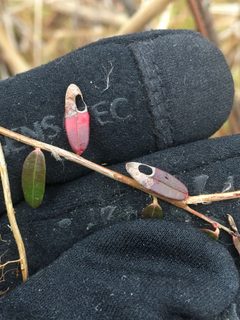
Coptodisca negligens is a minute leaf-mining described by Annette Frances Braun in 1920. are active in late June to mid-July and possess distinctive metallic forewings with orange-yellow tips. The larvae are specialized feeders on cranberry (Vaccinium macrocarpon), mining between leaf layers and occasionally reaching pest status in cultivated bogs.
Pronunciation
How to pronounce Coptodisca negligens: /kɔptoʊˈdɪskə ˈnɛɡlɪˌdʒɛnz/
These audio files are automatically generated. While they are not always 100% accurate, they are a good starting point.
Identification
The sharply bicolored forewings—pale metallic basally and bright orange-yellow apically—are diagnostic among North American Heliozelidae. The extremely small size (4-4.5 mm wingspan) and association with cranberry further support identification. Similar Coptodisca lack this precise color pattern or occur on different .
Images
Appearance
Minute with wingspan of 4-4.5 mm. Forewings divided into two distinct color zones: basal half pale leaden metallic, half bright orange-yellow. Hindwings uniformly gray.
Habitat
Cranberry bogs and plantations; wetlands supporting Vaccinium macrocarpon.
Distribution
North America; recorded from Ohio and cranberry-growing regions.
Seasonality
One annually. on wing late June to mid-July. Larvae present mid-April to early July.
Diet
Larvae feed internally on cranberry (Vaccinium macrocarpon) leaves, creating serpentine or blotch mines between epidermal layers. feeding habits unknown.
Host Associations
- Vaccinium macrocarpon - larval Cranberry; sole documented
Life Cycle
Complete : , larva, pupa, . Larval development occurs within cranberry leaves. presumably in leaf mines or soil, though details not explicitly documented. Single synchronized with cranberry growing season.
Behavior
Larvae are leaf miners, feeding between upper and lower leaf of cranberry. This concealed feeding habit protects larvae from and desiccation.
Ecological Role
Herbivore; consumer of cranberry foliage. In cultivated settings, functions as a minor agricultural pest.
Human Relevance
Occasional pest of cultivated cranberry, though economic impact appears limited based on sparse documentation. Not known to be of conservation or medical significance.
Similar Taxa
- Other Coptodisca speciesMany Heliozelidae are leaf miners with metallic forewings, but differ in color pattern, size, or specificity. C. negligens is distinguished by its unique bicolored forewings and exclusive association with cranberry.
More Details
Taxonomic note
Originally described in 'Lepidopteria' in early sources; now correctly placed in Heliozelidae within superfamily Adeloidea.