Coleoptera
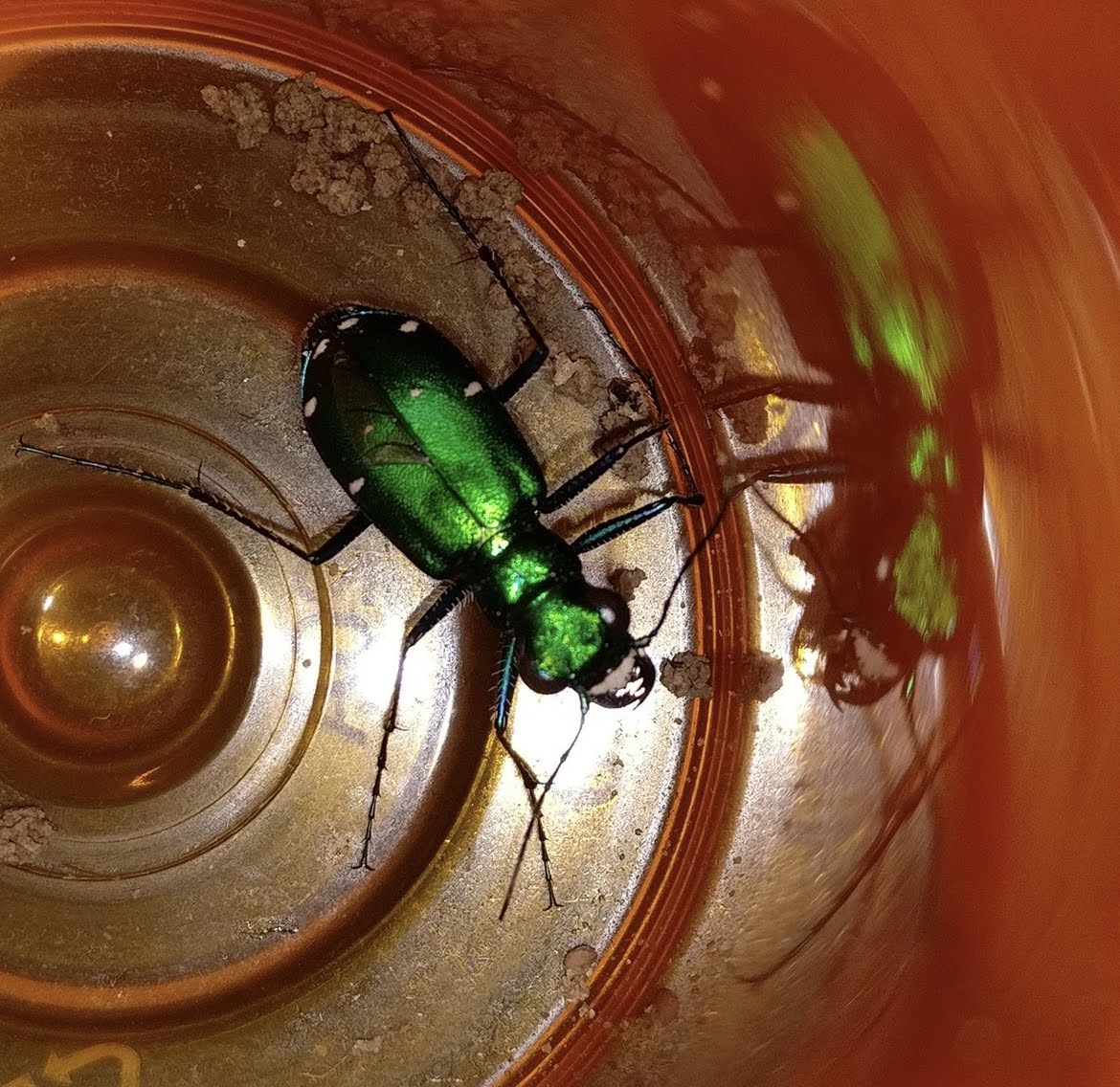
- Tiger beetles are some of the most charismatic insects on Earth: metallic, sharp-eyed, absurdly fast, and every bit as predatory as their name suggests. Come learn how they hunt, why their larvae live like tiny trapdoor monsters in the soil, and what their decline says about the fragile open habitats many other species need too.
Guides
Eusattus politus
Eusattus politus is a species of darkling beetle in the family Tenebrionidae. The genus Eusattus comprises sand-dwelling darkling beetles found in arid and semi-arid regions of western North America. Members of this genus are typically associated with sandy substrates and are active during the warmer months. Based on related species in the genus, E. politus likely inhabits sandy grasslands and dune systems.
Euscaphurus
plate-thigh beetles
Euscaphurus is a genus of plate-thigh beetles in the family Eucinetidae, established by Casey in 1885. The genus contains at least three described species: E. nikkon, E. saltator, and E. spinipes. These beetles belong to a small family of beetles characterized by their distinctive plate-like hind femora. Members of Eucinetidae are generally small, obscure beetles with limited ecological documentation.
Euscaphurus saltator
plate-thigh beetle
Euscaphurus saltator is a species of plate-thigh beetle in the family Eucinetidae. It was described by Casey in 1885 and is found in North America. The family Eucinetidae comprises small beetles characterized by their enlarged hind femora. Limited information is available regarding the specific biology and ecology of this particular species.
Euscepes porcellus
hidden snout weevil
Euscepes porcellus is a species of hidden snout weevil in the family Curculionidae, described by Boheman in 1872. It is native to North America. Members of the genus Euscepes are associated with sweet potato and related plants, though specific ecological details for this species remain limited.
Euschaefferia
Euschaefferia is a genus of beetles in the family Trogossitidae, established by Leng in 1920. The genus is currently considered doubtful in taxonomic status. Only a single observation exists on iNaturalist, indicating extreme rarity or possible synonymy with another genus. Members of Trogossitidae are commonly known as bark-gnawing beetles.
Euschaefferia hicoriae
Euschaefferia hicoriae is a species of beetle in the family Trogossitidae, a group commonly known as bark-gnawing beetles. The species is known from very few records, with only one documented observation on iNaturalist. Members of the genus Euschaefferia are poorly studied, and little is known about their biology or ecology. The specific epithet "hicoriae" suggests a possible association with hickory (Carya species), though this relationship remains unconfirmed.
Eusphalerini
Eusphalerini is a tribe of rove beetles within the subfamily Omaliinae, established by Hatch in 1957. The tribe contains small to medium-sized beetles characterized by particular configurations of the abdominal tergites and wing venation. Members are primarily found in the Northern Hemisphere, with greatest diversity in the Palearctic and Nearctic regions. The group remains relatively poorly studied compared to other omaliine tribes.
Eusphalerum carolinensis
Eusphalerum carolinensis is a species of rove beetle in the family Staphylinidae, described by Zanetti in 2014. It belongs to the subfamily Omaliinae and tribe Eusphalerini. The species is known from multiple states in the eastern and central United States.
Eusphalerum orientale
Eusphalerum orientale is a rove beetle in the subfamily Omaliinae, distributed across northeastern North America with scattered records extending to the Pacific Northwest. The species is documented from Canada and the United States, though specific ecological and behavioral details remain poorly studied. It belongs to a genus commonly associated with decaying organic matter and fungal habitats.
Eusphalerum pothos
Eusphalerum pothos is a species of rove beetle (Staphylinidae) in the subfamily Omaliinae. It is broadly distributed across northern North America, with records spanning Canada from British Columbia to the Atlantic provinces, and the northern United States from Alaska to the Northeast. The species is one of approximately 50 North American members of the genus Eusphalerum, a group of small omaliine rove beetles often associated with decaying plant matter and fungal habitats.
Eusphyrus
fungus weevil
Eusphyrus is a genus of fungus weevils in the family Anthribidae, established by LeConte in 1876. The genus contains at least 30 described species, with most species distributed in the Americas. Eusphyrus vasconicus represents a notable exception, occurring in Italy and representing the only known European species in a predominantly New World genus. Members of this genus are characterized by their association with fungi, typical of anthribid weevils.
Eusphyrus rectus
Eusphyrus rectus is a species of fungus weevil in the beetle family Anthribidae, first described by Schaeffer in 1906. The species has been recorded in North America, Oceania, and Hawaii. It belongs to a genus of small weevils associated with fungal substrates.
Euspilotus assimilis
clown beetle
Euspilotus assimilis is a species of clown beetle in the family Histeridae. It is native to North America and has been recorded across eastern Canada and the eastern United States. As a member of Histeridae, it is likely associated with decaying organic matter, though specific ecological details remain poorly documented.
Euspilotus rossi
clown beetle
Euspilotus rossi is a species of clown beetle in the family Histeridae, described by Wenzel in 1939. The species is recorded from North America, with distribution spanning parts of Canada and the United States. Like other members of Histeridae, it belongs to a group commonly known as clown beetles, though specific ecological details for this species remain limited in available literature.
Eustrophopsis arizonensis
Eustrophopsis arizonensis is a species of polypore fungus beetle in the family Tetratomidae. The species occurs in Central America and North America. As a member of Tetratomidae, it is associated with polypore fungi, though specific ecological details remain limited.
Eustrophopsis bicolor
Eustrophopsis bicolor is a species of polypore fungus beetle in the family Tetratomidae. It is characterized by distinctive antennal coloration that serves as a key identification feature. The species occurs in the Caribbean and North America, including records from Manitoba, Canada.
Eustrophopsis ornatus
Eustrophopsis ornatus is a species of beetle in the family Tetratomidae, described by VanDyke in 1928. This species belongs to a small family of beetles sometimes referred to as polypore fungus beetles or false darkling beetles. The genus Eustrophopsis is part of a group of beetles associated with fungal habitats, particularly wood-decaying fungi. Information regarding the specific biology and ecology of this species remains limited in published literature.
Eutochia
Eutochia is a genus of darkling beetles in the family Tenebrionidae, established by LeConte in 1862. The genus contains relatively few described species and is characterized by its placement within the diverse tenebrionid radiation. Members of this genus are small to medium-sized beetles with the general body plan typical of many Tenebrionidae. The genus appears to be sparsely collected and poorly represented in biological collections.
Eutochia crenata
A darkling beetle species in the family Tenebrionidae, described by LeConte in 1866. Very little published information exists on the biology or ecology of this species.
Eutrichites
Eutrichites is a genus of ant-loving beetles (subfamily Pselaphinae) in the family Staphylinidae. The genus was established by LeConte in 1880 and contains at least two described species: Eutrichites arizonensis (described 1989) and Eutrichites zonatus (described 1865). Members of this genus are small rove beetles associated with ant colonies.
Eutrichites zonatus
ant-loving beetle
Eutrichites zonatus is a species of ant-loving beetle in the family Staphylinidae, first described by Brendel in 1865. It is found across much of North America, with records from Canada and the United States. As a member of the subfamily Pselaphinae, it is associated with ant colonies, though specific ecological details remain poorly documented.
Eutricholistra
Eutricholistra is a genus of soft-winged flower beetles in the family Melyridae, established by Blaisdell in 1924. The genus is currently considered doubtful in taxonomic databases, indicating uncertain validity or placement. No observations of this genus have been recorded on iNaturalist, suggesting it is either extremely rare, poorly collected, or potentially synonymized with another genus.
Eutyphlus schmitti
Eutyphlus schmitti is a minute ant-loving beetle in the family Staphylinidae, described by Raffray in 1904. It belongs to the subfamily Pselaphinae, a diverse group of small rove beetles frequently associated with ant colonies. The species is documented from multiple states in the eastern United States.
Euvacusus coloradanus
Euvacusus coloradanus is a species of ant-like flower beetle in the family Anthicidae, described by Casey in 1904. The species is known from western and central Canada, with records from Alberta, British Columbia, and Manitoba. Members of the genus Euvacusus are small beetles characterized by their compact, ant-like appearance and association with ground-level habitats. Specific biological details for this species remain poorly documented.
Euvrilletta mucorea
Euvrilletta mucorea is a small beetle in the family Ptinidae, commonly known as deathwatch or furniture beetles. The species occurs in North America and was first described by LeConte in 1865. Two subspecies are recognized: E. m. mucorea and E. m. variabilis. Records of this species are sparse, with limited ecological or biological documentation available.
Euxenus
Euxenus is a genus of fungus weevils in the family Anthribidae, comprising approximately 14 described species. The genus was established by John Lawrence LeConte in 1876. Members of this genus are part of the diverse weevil superfamily Curculionoidea, though unlike true weevils (Curculionidae), anthribids lack the elongated snout characteristic of that family.
Euxenus punctatus
fungus weevil
Euxenus punctatus is a species of fungus weevil in the beetle family Anthribidae, first described by Lec. in 1876. As a member of the Anthribidae, it belongs to a group commonly known as fungus weevils due to their association with fungal growth. The species is documented from North America, with specific records from New Brunswick and Québec in Canada. Very little detailed biological information has been published for this particular species.
Euxestidae
Euxestidae is a small family of beetles in the superfamily Coccinelloidea, containing approximately 70 extant species across 10 genera. Formerly treated as a subfamily of Cerylonidae, they were elevated to family status based on morphological and phylogenetic evidence. Members are primarily tropical and subtropical in distribution, with most species occurring in the Afro-Eurasian region. They inhabit concealed microhabitats including decomposing wood, leaf litter, and the nests of social insects.
Euxestus
Euxestus is a genus of small beetles in the family Euxestidae, established by Wollaston in 1858. The genus comprises six described species distributed across tropical and subtropical regions. Members are characterized by their highly polished, smooth elytra. The genus is part of the superfamily Coccinelloidea within the diverse suborder Polyphaga.
Evotus
Evotus is a genus of broad-nosed weevils established by LeConte in 1874. The genus contains at least one described species, E. naso. As members of the subfamily Entiminae, these weevils are characterized by their broad, short rostrum (snout) and elbowed antennae. The genus is placed in the tribe Phyllobiini within the family Curculionidae, the largest family of beetles.
Exapion ulicis
Gorse Seed Weevil
Exapion ulicis is a small seed-feeding weevil specialized on gorse (Ulex europaeus). Adults are light gray with a prominent snout roughly half the body length. The species is native to western Europe and has been introduced to New Zealand, California, Hawaii, and other regions as a biological control agent targeting invasive gorse populations. Larval feeding destroys seeds within pods, reducing plant spread, while adult feeding on stems and spines causes minor damage.
biological-controlinvasive-species-managementseed-predatorhost-specializationtemporal-isolationBrentidaeColeopteraUlex-europaeusgorsewestern-EuropeCaliforniaNew-ZealandHawaiispring-activityoviposition-cuespod-fecundityparasitoidseed-destructionnoctuidpest-control-agentestablished-introductionnative-range-Europeintroduced-range-PacificChileBelgiumOregonnorthern-Californiaforest-gapspasturesnatural-areasseed-lossintensity-of-attackreproductive-isolationecological-specializationsympatric-divergencehost-phenologypod-sizeseed-contentfemale-choicefeeding-damageround-holesstem-feedingspine-feedinglarval-developmentpupal-period6-8-weeks-larval-feeding2-months-pupationwithin-pod-developmentseed-to-ovule-ratiomature-seedsintact-seedsparasitization-ratepopulation-abundancefecund-pod-targetingwhole-plant-traitsflower-traitspod-traitschoice-experimentscommon-gardenBrittanyScotlandReunionhost-availabilityseasonal-activitymorphological-identificationmitochondrial-sequencesnuclear-sequencesphylogenyhost-racesdivergent-selectionecological-speciationsympatric-populationsspring-infestationautumn-infestationintroduced-with-gorsenot-initially-introducedinvasive-plantplant-insect-interactionsoviposition-behaviorfeeding-behaviorpreference-patternsmultiple-trait-usesurface-cuesinternal-cuespod-characteristicshost-choiceplant-susceptibilityinvasion-biologyentomological-experimentalispan-pacific-entomologistdiversity-journalecological-entomologyCoombs-2004HEAR-photo-galleryiNaturalistGBIFNCBIForster-1771CurculionoideaApionidaeFabaceaeGenisteaenoxious-weedagent-of-biological-pest-controllight-graylong-snoutstraight-snout2-3-mmsmall-weevilseed-weevilgorse-seed-weevilestablished-populationspercentage-of-pods-infestedspatial-variationtemporal-variationseed-setseed-productionseed-predation-impactecosystem-serviceweed-biological-controlclassical-biological-controlinundative-biological-controlself-sustaining-populationsnon-target-effectshost-specificityreproductive-phenologyphenological-matchingphenological-isolationallochronic-speciationtemporal-nicheresource-partitioningcompetitive-exclusioncharacter-displacementmolecular-phylogeneticsCOIITSmorphological-charactersindividual-variationenvironmental-variationmitochondrial-DNAnuclear-DNAspecies-differentiationgenetic-divergenceecological-divergenceadaptive-radiationhost-shifthost-race-formationsympatric-speciationreinforcementprezygotic-isolationpostzygotic-isolationhabitat-fragmentationpopulation-structuregene-flowlocal-adaptationphenotypic-plasticitygenetic-driftnatural-selectionsexual-selectionfounder-effectbottleneckinvasion-geneticsenemy-releaseevolutionary-potentialrapid-evolutioncontemporary-evolutioneco-evolutionary-dynamicscommunity-ecologytrophic-interactionsfood-webecosystem-functionecosystem-processnutrient-cyclingenergy-flowpopulation-dynamicsmetapopulationsource-sinkdispersalcolonizationestablishmentspreadimpact-assessmentnon-target-riskefficacyestablishment-successpopulation-establishmentfield-releasemonitoringevaluationadaptive-managementintegrated-pest-managementsustainable-agricultureconservation-biological-controlaugmentative-biological-controlinoculative-biological-controlnatural-enemyherbivorephytophagousmonophagousoligophagouspolyphagousspecialistgeneralistco-evolutioncoevolutionary-arms-raceplant-defenseherbivore-offenseinduced-defenseconstitutive-defensedirect-defenseindirect-defensevolatile-organic-compoundsextrafloral-nectariestrophic-cascadesapparent-competitionenemy-mediated-apparent-competitionintraguild-predationmultitrophic-interactionstrait-mediated-indirect-effectsdensity-mediated-indirect-effectsecosystem-engineeringniche-constructionextended-phenotypeenvironmental-feedbackeco-evolutionary-feedbackevolutionary-rescuegenetic-rescueassisted-migrationmanaged-relocationconservation-translocationreintroductionrestoration-ecologyhabitat-restorationecological-restorationweed-managementrangeland-managementforest-managementprotected-area-managementbiodiversity-conservationecosystem-servicesprovisioning-servicesregulating-servicescultural-servicessupporting-servicessustainable-development-goalsAichi-targetsKunming-Montreal-global-biodiversity-frameworkIPBESIUCNCBDFAOEPPOregulatory-frameworkrisk-analysisenvironmental-impact-assessmentcost-benefit-analysisdecision-supportstakeholder-engagementsocial-licensepublic-acceptancecommunicationeducationoutreachcitizen-scienceiNaturalist-observationsoccurrence-recordsspecimen-recordsmuseum-collectionsvoucher-specimenstype-specimensholotypeparatypesyntypelectotypeneotypeoriginal-descriptionsubsequent-designationtaxonomic-revisionphylogenetic-revisionmonographfield-guideidentification-keydiagnostic-charactersillustrationphotographymicroscopyscanning-electron-microscopymolecular-techniquesDNA-barcodingmetabarcodingenvironmental-DNApopulation-geneticsphylogeographylandscape-geneticsseascape-geneticsisolation-by-distanceisolation-by-environmentisolation-by-resistanceleast-cost-pathcircuit-theoryspecies-distribution-modelingecological-niche-modelingmaxentbioclimworldclimchelsamodisremote-sensingGISspatial-analysistemporal-analysistime-seriesphenologyclimate-changeglobal-warmingphenological-shiftrange-shiftpoleward-shiftelevational-shiftaltitudinal-shifthabitat-trackingniche-trackingniche-conservatismniche-evolutionrealized-nichefundamental-nichebiotic-interactionsabiotic-factorsenvironmental-filteringdispersal-limitationsource-poolspecies-poolregional-poollocal-poolalpha-diversitybeta-diversitygamma-diversityspecies-richnessspecies-evennessspecies-abundancedominanceraritycommonnessendemismcosmopolitanismnativeendemicintroducedinvasivenaturalizedcasualtransientephemeralpersistentestablishedspreadinginvasive-potentialinvasivenessimpactecological-impacteconomic-impactsocial-impactenvironmental-impactnegative-impactpositive-impactbeneficialdetrimentalnuisancepestweedpathogendisease-vectorpublic-healthveterinary-healthcrop-healthforest-healthrangeland-healthecosystem-healthOne-Healthplanetary-healthecohealthconservation-medicinedisease-ecologyparasitologyentomologymedical-entomologyveterinary-entomologyagricultural-entomologyforest-entomologyurban-entomologyaquatic-entomologysystematicstaxonomyphylogeneticsevolutionary-biologypopulation-biologyecosystem-ecologylandscape-ecologyglobal-ecologymacroecologybiogeographyhistorical-biogeographyecological-biogeographyisland-biogeographycontinental-biogeographylatitudinal-gradientaltitudinal-gradientspecies-area-relationshipisland-species-richnessequilibrium-theorynonequilibrium-theoryneutral-theoryniche-theoryassembly-rulespriority-effectsmass-effectsspecies-sortingcompetitionpredationherbivoryparasitismmutualismcommensalismamensalismfacilitationinhibitiontolerancesuccessionprimary-successionsecondary-successiondisturbancerecoveryresilienceresistancestabilitypersistenceturnoverreplacementextinctionimmigrationemigrationbirthdeathreproductionsurvivalgrowthdevelopmentmetamorphosiscomplete-metamorphosisholometaboloushemimetabolousametabolousegglarvapupaadultinstarecdysismoltingdiapausequiescenceaestivationhibernationoverwinteringoverwintering-stageoverwintering-siteoverwintering-strategycold-hardinessfreeze-tolerancefreeze-avoidancesupercoolingcryoprotectantsthermal-biologythermoregulationectothermypoikilothermybehavioral-thermoregulationmicrohabitat-selectionbaskingshadingstiltingperchingroostingshelteringburrowingmininggall-formationleaf-rollingleaf-tyingsilk-productionweb-spinningnest-constructionoviposition-site-selectionhost-plant-selectionmate-choicesperm-competitioncryptic-female-choicepolyandrypolygynymonogamypromiscuitylekkingterritorialityaggressiondefensepredator-avoidanceantipredator-behaviorcrypsismasquerademimicryBatesian-mimicryMüllerian-mimicryautomimicryaggressive-mimicrystartle-displaythanatosisdeath-feigningautotomyreflex-bleedingchemical-defensemechanical-defensephysical-defensebehavioral-defensemutualistic-defenseplant-animal-interactionspollinationseed-dispersalantagonismsynergismantagonistic-pleiotropytrade-offslife-historylife-history-strategyr-selectionK-selectionbet-hedgingiteroparitysemelparityannualperennialbiennialpluriannuallongevitylifespangeneration-timedevelopment-timegrowth-ratereproductive-ratefecundityfertilityvirilitymating-successreproductive-successfitnessinclusive-fitnesskin-selectiongroup-selectionmultilevel-selectionindividual-selectionartificial-selectionsocial-selectionecological-selectionstabilizing-selectiondirectional-selectiondisruptive-selectionbalancing-selectionfrequency-dependent-selectionnegative-frequency-dependent-selectionpositive-frequency-dependent-selectionapostatic-selectionantiapostatic-selectionrare-type-advantagecommon-type-disadvantageheterozygote-advantageheterosishybrid-vigorinbreeding-depressionoutbreeding-depressiongenetic-loadmutational-loadsegregational-loadsubstitutional-loaddrift-loadmigration-loadmutationrecombinationchromosomal-rearrangementgenome-evolutiontransposable-elementshorizontal-gene-transferendosymbiosissymbiogenesisholobionthologenomeextended-evolutionary-synthesisniche-construction-theoryecological-evolutionary-developmental-biologyeco-evo-devodevelopmental-plasticityreaction-normgenotype-environment-interactionGxEnorm-of-reactionplasticitycanalizationgenetic-assimilationgenetic-accommodationcryptic-genetic-variationevolutionary-capacitanceevolvabilityrobustnessmodularityintegrationcorrelationconstrainttrade-offpleiotropyepistasisadditive-genetic-variancedominance-varianceepistatic-variancegenetic-variancephenotypic-varianceenvironmental-varianceheritabilitynarrow-sense-heritabilitybroad-sense-heritabilityresponse-to-selectionbreeder's-equationquantitative-geneticsmolecular-geneticsgenomicstranscriptomicsproteomicsmetabolomicsphenomicsecogenomicsconservation-genomicsfunctional-genomicsstructural-genomicscomparative-genomicsevolutionary-genomicsphylogenomicsmetagenomicsmicrobiomeviromemycobiomebacteriomearchaeomeeukaryomeextended-genotypekeystone-speciesecosystem-engineerfoundation-speciesdominant-speciessubordinate-speciestransient-speciessatellite-speciescore-speciesperipheral-speciesedge-speciesinterior-specieshabitat-generalisthabitat-specialistedge-habitatinterior-habitatmatrix-habitatcorridorstepping-stonesource-habitatsink-habitatpatchfragmentlandscapeseascaperiverscapeskyscapesoundscapesmellscapetastestouchvisionolfactiongustationmechanoreceptionthermoreceptionphotoreceptionchemoreceptionelectroreceptionmagnetoreceptionproprioceptionnociceptionsensory-ecologysensory-biologyneuroethologybehavioral-ecologycognitive-ecologyevolutionary-ecologyecological-immunologyecoimmunologyepidemiologyparasite-ecologyhost-parasite-interactionshost-pathogen-interactionshost-symbiont-interactionsmicrobial-ecologyvirologybacteriologymycologyprotistologyhelminthologyentomopathologymicrobial-controlviral-controlfungal-controlbacterial-controlnematode-controlparasitoid-controlpredator-controlherbivore-controlcompetitor-controlautocidal-controlsterile-insect-techniqueincompatible-insect-techniquegene-driveRNA-interferenceCRISPRgenetic-biocontrolprecision-guided-sterile-insect-techniqueself-limiting-genetic-controlself-sustaining-genetic-controlpopulation-suppressionpopulation-replacementpopulation-eliminationarea-wide-integrated-pest-managementsterile-insect-releaseinundative-releaseinoculative-releaseneoclassical-biological-controlaugmentation-biological-controlhabitat-manipulationcultural-controlphysical-controlmechanical-controlchemical-controlpesticide-resistance-managementinsecticide-resistance-managementherbicide-resistance-managementfungicide-resistance-managementantibiotic-resistance-managementresistance-evolutionresistance-managementrefuge-strategyhigh-dose-strategypyramid-strategyrotation-strategymixture-strategymosaic-strategyintegrated-resistance-managementintegrated-weed-managementintegrated-crop-managementintegrated-forest-managementintegrated-vector-managementintegrated-disease-managementOne-Health-approachecohealth-approachplanetary-health-approachsustainable-intensificationagroecologyorganic-agricultureconservation-agricultureclimate-smart-agricultureprecision-agriculturedigital-agriculturesmart-farmingagricultural-roboticsautonomous-systemsdrone-technologysatellite-imageryGPSvariable-rate-technologysite-specific-managementdecision-support-systemsexpert-systemsartificial-intelligencemachine-learningdeep-learningneural-networkscomputer-visionimage-recognitionpattern-recognitiondata-miningbig-datacloud-computinginternet-of-thingssensor-networkswireless-sensor-networksprecision-livestock-farmingprecision-aquacultureprecision-forestryprecision-horticultureprecision-viticultureprecision-apicultureprecision-sericultureintegrated-farming-systemsmixed-farming-systemsdiversified-farming-systemsagroforestrysilvopasturesilvoarablealley-croppingforest-farminghomegardensmultistrata-systemstropical-homegardenstemperate-agroforestrypermacultureregenerative-agriculturerestorative-agriculturebiodynamic-agriculturenatural-farmingdo-nothing-farmingFukuoka-farmingMasanobu-FukuokaRachel-CarsonSilent-Springintegrated-pest-management-historybiological-control-historyclassical-biological-control-historyRachel-Carson-legacyenvironmental-movementconservation-movementsustainability-scienceresilience-scienceadaptive-governancesocial-ecological-systemssocio-ecological-systemscoupled-human-natural-systemscomplex-adaptive-systemspanarchyadaptive-cyclerigidity-trappoverty-traptransformationtransitionsustainability-transitionenergy-transitionfood-system-transformationagrifood-system-transformationland-use-changeland-cover-changeland-use-intensificationagricultural-expansiondeforestationreforestationafforestationforest-degradationforest-restorationecosystem-restorationwetland-restorationriparian-restorationcoastal-restorationcoral-reef-restorationseagrass-restorationmangrove-restorationsalt-marsh-restorationdune-restorationprairie-restorationsavanna-restorationwoodland-restorationold-growth-restorationdegraded-land-restorationabandoned-land-restorationcontaminated-land-restorationmined-land-restorationpost-industrial-restorationurban-restorationrural-restorationagricultural-restorationpastoral-restorationsilvicultural-restorationecological-engineeringenvironmental-engineeringbioremediationphytoremediationmycoremediationzooremediationmicrobial-remediationnanoremediationelectrokinetic-remediationsoil-washingsoil-vapor-extractionair-spargingpump-and-treatpermeable-reactive-barriersmonitored-natural-attenuationenhanced-natural-attenuationsource-zone-treatmentplume-treatmentrisk-based-corrective-actionrisk-assessmenthazard-assessmentexposure-assessmenttoxicity-assessmentrisk-characterizationrisk-managementrisk-communicationrisk-perceptionrisk-governanceprecautionary-principlepolluter-pays-principleextended-producer-responsibilitycircular-economygreen-economyblue-economybioeconomynatural-capitalecosystem-services-valuationpayment-for-ecosystem-servicesecosystem-based-adaptationecosystem-based-mitigationnature-based-solutionsworking-with-naturebuilding-with-natureengineering-with-naturegreen-infrastructureblue-infrastructureurban-green-infrastructureurban-blue-infrastructuresponge-citycool-cityforest-citybiophilic-citysustainable-cityresilient-citysmart-cityliveable-cityhealthy-cityequitable-cityjust-cityinclusive-cityparticipatory-cityco-productionco-designco-managementcommunity-based-managementcommunity-based-conservationcommunity-based-natural-resource-managementindigenous-and-local-knowledgetraditional-ecological-knowledgebiocultural-diversitybiocultural-heritagesacred-natural-sitesprotected-areasconservation-areasnature-reserveswildlife-reservesnational-parksworld-heritage-sitesbiosphere-reservesRamsar-sitesimportant-bird-areaskey-biodiversity-areasecologically-or-biologically-significant-marine-areasother-effective-area-based-conservation-measuresconservation-beyond-protected-areasconservation-on-private-landconservation-on-communal-landconservation-on-indigenous-landrights-based-conservationgender-responsive-conservationyouth-engagement-in-conservationintergenerational-equityintragenerational-equityenvironmental-justiceclimate-justiceconservation-justiceecological-justicespecies-justiceintersectionalitydecolonization-of-conservationpost-normal-sciencetransdisciplinarityparticipatory-researchaction-researchcommunity-based-participatory-researchcommunity-scienceparticipatory-monitoringadaptive-co-managementsocial-learningknowledge-co-productionboundary-workboundary-objectsboundary-organizationsscience-policy-interfacescience-society-interfaceknowledge-brokeringknowledge-translationknowledge-mobilizationresearch-impactresearch-uptakeevidence-based-policyevidence-based-practiceevidence-informed-decision-makingdecision-support-toolssystematic-reviewmeta-analysisevidence-synthesisknowledge-synthesisrapid-evidence-assessmentliving-evidenceliving-systematic-reviewscoping-reviewrapid-reviewrealist-synthesisnarrative-synthesisqualitative-synthesisquantitative-synthesismixed-methods-synthesisparticipatory-synthesisdeliberative-methodsconsensus-methodsexpert-elicitationstructured-expert-judgmentDelphi-methodnominal-group-techniqueconvergent-interviewfocus-groupstakeholder-workshopparticipatory-mappingparticipatory-modelingscenario-planningfuture-studiesforesightanticipatory-governancetransformative-governancepolycentric-governancemulti-level-governancenetwork-governancecollaborative-governancecooperative-governancedemocratic-governancedeliberative-democracyparticipatory-democracydirect-democracyrepresentative-democracyliberal-democracysocial-democracygreen-democracyecological-democracybiocracyecocracytechnocracymeritocracyplutocracyoligarchyautocracytotalitarianismauthoritarianismpopulismnationalismglobalismlocalismregionalismfederalismconfederalismunitarismcentralismdecentralizationdevolutionsubsidiarityfiscal-federalismenvironmental-federalismcompetitive-federalismcooperative-federalismdual-federalismmarble-cake-federalismlayer-cake-federalismpicket-fence-federalismpermissive-federalismcoercive-federalismmarket-preserving-federalismdemocratic-experimentalismlaboratories-of-democracypolicy-diffusionpolicy-transferpolicy-learningpolicy-innovationpolicy-entrepreneurshippolicy-windowspunctuated-equilibriumadvocacy-coalition-frameworkmultiple-streams-frameworkinstitutional-analysis-and-development-frameworksocial-ecological-systems-frameworksustainability-science-frameworkplanetary-boundaries-frameworkdoughnut-economics-frameworkcircular-economy-frameworkgreen-new-deal-frameworkjust-transition-frameworkleaving-no-one-behind2030-agendaParis-agreementRio-conventionsUNFCCCUNCCDCITESCMSRamsarWorld-HeritageIPCCWHOUNEPUNDPUNESCOWorld-BankIMFWTOOECDG7G20BRICSAfrican-UnionEuropean-UnionASEANMercosurNAFTAUSMCATPPCPTPPRCEPbilateral-investment-treatiesfree-trade-agreementsregional-trade-agreementsmultilateral-environmental-agreementsbilateral-environmental-agreementsstrategic-environmental-assessmentcumulative-impact-assessmentsocial-impact-assessmenthealth-impact-assessmentgender-impact-assessmenthuman-rights-impact-assessmentindigenous-rights-impact-assessmentcultural-heritage-impact-assessmentlandscape-and-visual-impact-assessmentnoise-impact-assessmentair-quality-impact-assessmentwater-quality-impact-assessmentsoil-quality-impact-assessmentbiodiversity-impact-assessmentecosystem-services-impact-assessmentclimate-impact-assessmentcarbon-footprint-assessmentwater-footprint-assessmentland-footprint-assessmentmaterial-footprint-assessmentecological-footprint-assessmentplanetary-footprint-assessmentlife-cycle-assessmentlife-cycle-costingsocial-life-cycle-assessmentlife-cycle-sustainability-assessmentmaterial-flow-analysissubstance-flow-analysisenergy-flow-analysisnutrient-flow-analysiswater-flow-analysiscarbon-flow-analysisnitrogen-flow-analysisphosphorus-flow-analysiscircular-material-flowindustrial-ecologyindustrial-symbiosiseco-industrial-parkurban-metabolismindustrial-metabolismsocio-economic-metabolismsocial-metabolismpolitical-ecologypolitical-economyecological-economicsenvironmental-economicsnatural-resource-economicsresource-economicsenergy-economicsagricultural-economicsforest-economicsfisheries-economicswater-economicsbiodiversity-economicsecosystem-services-economicsconservation-economicsrestoration-economicsenvironmental-valuationcontingent-valuationchoice-experimentbenefit-transferhedonic-pricingtravel-cost-methodproduction-function-approachreplacement-cost-methoddamage-cost-avoided-methodopportunity-cost-methodnet-present-valueinternal-rate-of-returnbenefit-cost-ratiocost-effectiveness-analysismulti-criteria-decision-analysisanalytic-hierarchy-processanalytic-network-processpreference-ranking-organization-method-for-enrichment-evaluationtechnique-for-order-of-preference-by-similarity-to-ideal-solutionelimination-and-choice-expressing-realitydecision-making-trial-and-evaluation-laboratoryVIseKriterijumska-Optimizacija-I-Kompromisno-Resenjepreference-selection-indexcomplex-proportional-assessmentmulti-objective-optimization-on-the-basis-of-ratio-analysisweighted-aggregated-sum-product-assessmentevaluation-based-on-distance-from-average-solutionmeasurement-of-alternatives-and-ranking-according-to-compromise-solutioncomparative-performance-indexpreference-rankingscore-functionaccuracy-functionentropy-weightobjective-weightsubjective-weightcombined-weightsensitivity-analysisuncertainty-analysisfuzzy-logicfuzzy-set-theoryintuitionistic-fuzzy-setneutrosophic-setrough-setsoft-sethesitant-fuzzy-setPythagorean-fuzzy-setq-rung-orthopair-fuzzy-setspherical-fuzzy-setpicture-fuzzy-setcomplex-fuzzy-settype-2-fuzzy-setinterval-type-2-fuzzy-setinterval-valued-fuzzy-setinterval-valued-intuitionistic-fuzzy-setinterval-valued-Pythagorean-fuzzy-setinterval-valued-neutrosophic-setbipolar-fuzzy-setm-polar-fuzzy-setmulti-polar-fuzzy-setlinguistic-term-sethesitant-fuzzy-linguistic-term-setprobabilistic-linguistic-term-set2-tuple-linguistic-modelsymbolic-linguistic-modelvirtual-linguistic-modelnumerical-scale-modellinguistic-hierarchy-modeltransitive-calibration-modelconsistency-driven-methodologyconsistency-indexconsistency-ratioacceptable-consistencyinconsistency-identificationinconsistency-repairpriority-derivationweight-derivationaggregation-operatorordered-weighted-averaging-operatorweighted-averaging-operatorgeometric-operatorpower-operatorBonferroni-meanChoquet-integralShapley-valuegame-theoryNash-equilibriumPareto-optimalityPareto-efficiencyPareto-improvementsocial-welfare-functionutility-functionpreference-relationbinary-relationternary-relationn-ary-relationcomplete-relationincomplete-relationtransitive-relationintransitive-relationreflexive-relationirreflexive-relationsymmetric-relationasymmetric-relationantisymmetric-relationequivalence-relationpartial-ordertotal-orderstrict-orderweak-ordersemiorderinterval-orderPareto-orderlexicographic-orderdominance-relationoutranking-relationconcordancediscordancecredibilitydiscrimination-thresholdindifference-thresholdpreference-thresholdveto-thresholdmajority-ruleCondorcet-winnerCondorcet-loserBorda-countapproval-votingrange-votingscore-votinginstant-runoff-votingsingle-transferable-voteproportional-representationmixed-member-proportionaladditional-member-systemparallel-votingmajority-bonus-systemscorporodouble-votealternative-votesupplementary-votecontingent-voteBucklin-votingCoombs'-methodDodgson's-methodKemeny-Young-methodRanked-pairsSchulze-methodMinimax-CondorcetSmith-setSchwartz-setuncovered-setBanks-settop-cycleminimal-covering-setbipartisan-setessential-settournament-equilibrium-setminimal-extending-setPareto-setdeep-uncovered-setminimal-upward-covering-setminimal-downward-covering-setminimal-covering-set-with-respect-to-pairsminimal-covering-set-with-respect-to-tripletsminimal-stable-setminimal-retentive-setminimal-comprehensive-retentive-setminimal-extensive-retentive-setminimal-weakly-stable-setminimal-strongly-stable-setminimal-collectively-stable-setminimal-individually-stable-setminimal-Nash-stable-setminimal-individually-rational-setminimal-Pareto-optimal-setminimal-weakly-Pareto-optimal-setminimal-strongly-Pareto-optimal-setminimal-collectively-Pareto-optimal-setminimal-individually-Pareto-optimal-setminimal-Nash-Pareto-optimal-setminimal-individually-rational-Pareto-optimal-setminimal-comprehensive-Pareto-optimal-setminimal-extensive-Pareto-optimal-setminimal-weakly-comprehensive-Pareto-optimal-setminimal-strongly-comprehensive-Pareto-optimal-setminimal-collectively-comprehensive-Pareto-optimal-setminimal-individually-comprehensive-Pareto-optimal-setminimal-Nash-comprehensive-Pareto-optimal-setminimal-individually-rational-comprehensive-Pareto-optimal-setminimal-weakly-extensive-Pareto-optimal-setminimal-strongly-extensive-Pareto-optimal-setminimal-collectively-extensive-Pareto-optimal-setminimal-individually-extensive-Pareto-optimal-setminimal-Nash-extensive-Pareto-optimal-setminimal-individually-rational-extensive-Pareto-optimal-setminimal-weakly-retentive-Pareto-optimal-setminimal-strongly-retentive-Pareto-optimal-setminimal-collectively-retentive-Pareto-optimal-setminimal-individually-retentive-Pareto-optimal-setminimal-Nash-retentive-Pareto-optimal-setminimal-individually-rational-retentive-Pareto-optimal-setminimal-weakly-stable-Pareto-optimal-setminimal-strongly-stable-Pareto-optimal-setminimal-collectively-stable-Pareto-optimal-setminimal-individually-stable-Pareto-optimal-setminimal-Nash-stable-Pareto-optimal-setminimal-individually-rational-stable-Pareto-optimal-setminimal-weakly-Nash-stable-Pareto-optimal-setminimal-strongly-Nash-stable-Pareto-optimal-setminimal-collectively-Nash-stable-Pareto-optimal-setminimal-individually-Nash-stable-Pareto-optimal-setminimal-Nash-Nash-stable-Pareto-optimal-setminimal-individually-rational-Nash-stable-Pareto-optimal-setminimal-weakly-individually-rational-Pareto-optimal-setminimal-strongly-individually-rational-Pareto-optimal-setminimal-collectively-individually-rational-Pareto-optimal-setminimal-individually-individually-rational-Pareto-optimal-setminimal-Nash-individually-rational-Pareto-optimal-setminimal-individually-rational-individually-rational-Pareto-optimal-setminimal-weakly-Pareto-optimal-Nash-stable-setminimal-strongly-Pareto-optimal-Nash-stable-setminimal-collectively-Pareto-optimal-Nash-stable-setminimal-individually-Pareto-optimal-Nash-stable-setminimal-Nash-Pareto-optimal-Nash-stable-setminimal-individually-rational-Pareto-optimal-Nash-stable-setminimal-weakly-comprehensive-Pareto-optimal-Nash-stable-setminimal-strongly-comprehensive-Pareto-optimal-Nash-stable-setminimal-collectively-comprehensive-Pareto-optimal-Nash-stable-setminimal-individually-comprehensive-Pareto-optimal-Nash-stable-setminimal-Nash-comprehensive-Pareto-optimal-Nash-stable-setminimal-individually-rational-comprehensive-Pareto-optimal-Nash-stable-setminimal-weakly-extensive-Pareto-optimal-Nash-stable-setminimal-strongly-extensive-Pareto-optimal-Nash-stable-setminimal-collectively-extensive-Pareto-optimal-Nash-stable-setminimal-individually-extensive-Pareto-optimal-Nash-stable-setminimal-Nash-extensive-Pareto-optimal-Nash-stable-setminimal-individually-rational-extensive-Pareto-optimal-Nash-stable-setminimal-weakly-retentive-Pareto-optimal-Nash-stable-setminimal-strongly-retentive-Pareto-optimal-Nash-stable-setminimal-collectively-retentive-Pareto-optimal-Nash-stable-setminimal-individually-retentive-Pareto-optimal-Nash-stable-setminimal-Nash-retentive-Pareto-optimal-Nash-stable-setminimal-individually-rational-retentive-Pareto-optimal-Nash-stable-setminimal-weakly-stable-Pareto-optimal-Nash-stable-setminimal-strongly-stable-Pareto-optimal-Nash-stable-setminimal-collectively-stable-Pareto-optimal-Nash-stable-setminimal-individually-stable-Pareto-optimal-Nash-stable-setminimal-Nash-stable-Pareto-optimal-Nash-stable-setminimal-individually-rational-stable-Pareto-optimal-Nash-stable-setminimal-weakly-Nash-stable-Pareto-optimal-Nash-stable-setminimal-strongly-Nash-stable-Pareto-optimal-Nash-stable-setminimal-collectively-Nash-stable-Pareto-optimal-Nash-stable-setminimal-individually-Nash-stable-Pareto-optimal-Nash-stable-setminimal-Nash-Nash-stable-Pareto-optimal-Nash-stable-setminimal-individually-rational-Nash-stable-Pareto-optimal-Nash-stable-setminimal-weakly-individually-rational-Pareto-optimal-Nash-stable-setminimal-strongly-individually-rational-Pareto-optimal-Nash-stable-setminimal-collectively-individually-rational-Pareto-optimal-Nash-stable-setminimal-individually-individually-rational-Pareto-optimal-Nash-stable-setminimal-Nash-individually-rational-Pareto-optimal-Nash-stable-setminimal-individually-rational-individually-rational-Pareto-optimal-Nash-stable-setminimal-weakly-Pareto-optimal-individually-rational-Nash-stable-setminimal-strongly-Pareto-optimal-individually-rational-Nash-stable-setminimal-collectively-Pareto-optimal-individually-rational-Nash-stable-setminimal-individually-Pareto-optimal-individually-rational-Nash-stable-setminimal-Nash-Pareto-optimal-individually-rational-Nash-stable-setminimal-individually-rational-Pareto-optimal-individually-rational-Nash-stable-setminimal-weakly-comprehensive-Pareto-optimal-individually-rational-Nash-stable-setminimal-strongly-comprehensive-Pareto-optimal-individually-rational-Nash-stable-setminimal-collectively-comprehensive-Pareto-optimal-individually-rational-Nash-stable-setminimal-individually-comprehensive-Pareto-optimal-individually-rational-Nash-stable-setminimal-Nash-comprehensive-Pareto-optimal-individually-rational-Nash-stable-setminimal-individually-rational-comprehensive-Pareto-optimal-individually-rational-Nash-stable-setminimal-weakly-extensive-Pareto-optimal-individually-rational-Nash-stable-setminimal-strongly-extensive-Pareto-optimal-individually-rational-Nash-stable-setminimal-collectively-extensive-Pareto-optimal-individually-rational-Nash-stable-setminimal-individually-extensive-Pareto-optimal-individually-rational-Nash-stable-setminimal-Nash-extensive-Pareto-optimal-individually-rational-Nash-stable-setminimal-individually-rational-extensive-Pareto-optimal-individually-rational-Nash-stable-setminimal-weakly-retentive-Pareto-optimal-individually-rational-Nash-stable-setminimal-strongly-retentive-Pareto-optimal-individually-rational-Nash-stable-setminimal-collectively-retentive-Pareto-optimal-individually-rational-Nash-stable-setminimal-individually-retentive-Pareto-optimal-individually-rational-Nash-stable-setminimal-Nash-retentive-Pareto-optimal-individually-rational-Nash-stable-setminimal-individually-rational-retentive-Pareto-optimal-individually-rational-Nash-stable-setminimal-weakly-stable-Pareto-optimal-individually-rational-Nash-stable-setminimal-strongly-stable-Pareto-optimal-individually-rational-Nash-stable-setminimal-collectively-stable-Pareto-optimal-individually-rational-Nash-stable-setminimal-individually-stable-Pareto-optimal-individually-rational-Nash-stable-setminimal-Nash-stable-Pareto-optimal-individually-rational-Nash-stable-setminimal-individually-rational-stable-Pareto-optimal-individually-rational-Nash-stable-setminimal-weakly-Nash-stable-Pareto-optimal-individually-rational-Nash-stable-setminimal-strongly-Nash-stable-Pareto-optimal-individually-rational-Nash-stable-setminimal-collectively-Nash-stable-Pareto-optimal-individually-rational-Nash-stable-setminimal-individually-Nash-stable-Pareto-optimal-individually-rational-Nash-stable-setminimal-Nash-Nash-stable-Pareto-optimal-individually-rational-Nash-stable-setminimal-individually-rational-Nash-stable-Pareto-optimal-individually-rational-Nash-stable-setminimal-weakly-individually-rational-Pareto-optimal-individually-rational-Nash-stable-setminimal-strongly-individually-rational-Pareto-optimal-individually-rational-Nash-stable-setminimal-collectively-individually-rational-Pareto-optimal-individually-rational-Nash-stable-setminimal-individually-individually-rational-Pareto-optimal-individually-rational-Nash-stable-setminimal-Nash-individually-rational-Pareto-optimal-individually-rational-Nash-stable-setminimal-individually-rational-individually-rational-Pareto-optimal-individually-rational-Nash-stable-setExema conspersa
warty leaf beetle
Exema conspersa is a species of warty leaf beetle in the family Chrysomelidae. The genus Exema belongs to the subfamily Cryptocephalinae, commonly known as warty leaf beetles or case-bearing leaf beetles, recognized for their distinctive sculptured body surfaces. The species is distributed across Central America and North America.
Exochomus californicus Casey, 1899
Exochomus californicus is a small lady beetle species in the family Coccinellidae, described by Casey in 1899. Adults measure 3.5–4 mm in length and display distinctive coloration with black or brown elytra marked by yellow to orange patterns. The species has been documented across a restricted range in western North America, from Washington through Nevada to northern California. Like other members of Coccinellidae, it is presumed to be predatory, though specific ecological details remain poorly documented.
Exomella merickeli
Exomella merickeli is a species of pill beetle in the family Byrrhidae, described by Johnson in 1985. It is known from North America. As a member of the pill beetle family, it likely exhibits the characteristic ability to conglobate—rolling into a compact ball when disturbed. The species is represented by minimal observational data.
Exosternini
clown beetles
Exosternini is a tribe of clown beetles (family Histeridae) containing at least 60 genera and approximately 800 described species. Members are predominantly small, predatory beetles with diverse body forms ranging from compact and rounded to bizarrely flattened. The tribe includes notable genera such as Baconia, known for brilliant metallic coloration, and Operclipygus, characterized by clamshell-like pygidia. Many species remain poorly known due to extreme rarity and tropical distribution.
Falagriini
Falagriini is a tribe of rove beetles within the subfamily Aleocharinae, containing approximately 11 genera and at least 20 described species. The tribe includes several myrmecophilous genera, with some species exhibiting associations with ants. Phylogenetic studies have clarified relationships within the tribe, including the recovery of Sceptobiini as nested within Falagriini.
Fallapion bischoffi
Fallapion bischoffi is a species of straight-snouted weevil in the family Brentidae. The genus Fallapion belongs to the subfamily Apioninae, a group of small weevils commonly known as seed weevils or apionids. As a member of the Brentidae, this species possesses the characteristic elongated snout (rostrum) typical of the family. Information regarding the specific biology and distribution of this species is limited in available sources.
Fallapion ellipticum
Fallapion ellipticum is a species of straight-snouted weevil in the family Brentidae. Members of this genus are characterized by their elongated rostrum and association with woody plants. The specific epithet 'ellipticum' refers to the elliptical body shape. Information on this species remains limited due to its rarity in collections and observations.
Fallapion funereum
Fallapion funereum is a species of straight-snouted weevil in the family Brentidae. As a member of the genus Fallapion, it belongs to a group of small weevils characterized by elongated rostrums. Very few documented observations of this species exist, and its biology remains poorly known. The specific epithet 'funereum' (Latin for 'funeral' or 'deathly') likely refers to its dark coloration.
Fallapion impunctistriatum
Fallapion impunctistriatum is a species of straight-snouted weevil in the family Brentidae. The genus Fallapion comprises small weevils characterized by elongated rostra and reduced wings. Species in this genus are associated with woody plants, though specific ecological data for F. impunctistriatum remain limited. The species epithet 'impunctistriatum' refers to the absence of punctate striae on the elytra, a distinguishing morphological feature.
Fallapion obsoletum
Fallapion obsoletum is a species of straight-snouted weevil in the family Brentidae. The genus Fallapion comprises small weevils, and this species is distinguished by its relatively unmarked, dull coloration implied by the specific epithet "obsoletum" (meaning worn or indistinct). Like other brentids, it possesses an elongated rostrum and lacks the elbowed antennae typical of true weevils (Curculionidae). Published records for this species are sparse, and its biology remains poorly documented.
Falsomordellistena discolor
tumbling flower beetle
Falsomordellistena discolor is a species of tumbling flower beetle in the family Mordellidae. It is found in North America, with records from Canada (New Brunswick, Ontario, Québec) and the United States. The species was described by Melsheimer in 1846. As a member of the tumbling flower beetles, it exhibits the characteristic humpbacked body shape and jumping behavior typical of the family.
Flaviellus subtruncatus
Flaviellus subtruncatus is a species of scarab beetle in the subfamily Aphodiinae. It is a dung beetle native to western North America. The species was described by John Lawrence LeConte in 1878. It is one of few species in the small genus Flaviellus, which is distinguished from related aphodiine genera by subtle morphological characters.
Floridocassis
Floridocassis is a genus of tortoise beetles (family Chrysomelidae) containing a single described species, F. repudiata. The genus was established by Spaeth in 1952. Tortoise beetles in this subfamily (Cassidinae) are characterized by a shield-like body form and the ability to clamp their elytra tightly against the substrate. The genus name suggests a Florida association, though specific distribution details for the genus remain limited in published sources.
Formicilla
antlike flower beetles
Formicilla is a genus of antlike flower beetles in the family Anthicidae. The genus contains at least three described species distributed across Central and North America. Members of this genus are characterized by their ant-mimicking morphology, a common trait within the Anthicidae family. The genus was established by LeConte in 1851.
Formicilla munda
antlike flower beetle
Formicilla munda is a species of antlike flower beetle in the family Anthicidae, first described by LeConte in 1852. The species occurs in both Central America and North America. Like other members of Anthicidae, it exhibits morphological adaptations resembling ants, a form of protective mimicry. The family is commonly known as antlike flower beetles due to this characteristic appearance.
Fornax bicolor
Fornax bicolor is a species of false click beetle in the family Eucnemidae, first described by Melsheimer in 1845. The species epithet 'bicolor' suggests a two-toned coloration pattern. As a member of the Eucnemidae, it belongs to a family of beetles commonly known as false click beetles, which are characterized by their inability to produce the clicking sound that true click beetles (Elateridae) use for righting themselves. The genus Fornax contains species that are typically associated with decaying wood and forest habitats.
Fornax floridana
Fornax floridana is a species of false click beetle in the family Eucnemidae. Very little information is publicly available about this species beyond its taxonomic classification. The genus Fornax contains species commonly known as false click beetles, which are characterized by their inability to produce the clicking sound that defines true click beetles (Elateridae).
Fornax knulli
Fornax knulli is a species of false click beetle in the family Eucnemidae. The genus Fornax belongs to a group of beetles commonly known as false click beetles, which resemble true click beetles (Elateridae) but lack the prosternal process that enables the characteristic clicking mechanism. Species in this family are typically associated with decaying wood and forest habitats. The specific epithet "knulli" honors American coleopterist Joseph N. Knull (1879-1964), who described numerous North American beetle species.
Fornax lucidicollis
Fornax lucidicollis is a species of click beetle in the family Eucnemidae. The genus Fornax is part of the false click beetles, a group distinguished from true click beetles (Elateridae) by their inability to produce the characteristic clicking sound. The specific epithet "lucidicollis" refers to the shiny or polished appearance of the pronotum. Species in this genus are generally small to medium-sized beetles associated with decaying wood and forest habitats.