
Eusphalerini
Hatch, 1957
Genus Guides
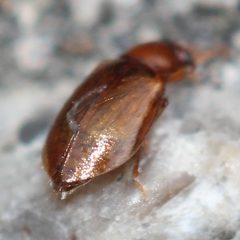
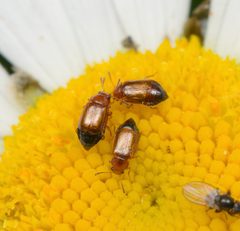
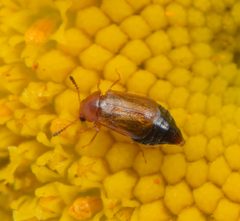
1Eusphalerini is a tribe of rove beetles within the Omaliinae, established by Hatch in 1957. The tribe contains small to medium-sized beetles characterized by particular configurations of the abdominal tergites and wing venation. Members are primarily found in the Northern Hemisphere, with greatest diversity in the Palearctic and Nearctic regions. The group remains relatively poorly studied compared to other omaliine tribes.
Pronunciation
How to pronounce Eusphalerini: /juːˈsfælərɪnaɪ/
These audio files are automatically generated. While they are not always 100% accurate, they are a good starting point.
Identification
Eusphalerini can be distinguished from other Omaliinae tribes by the combination of: abbreviated exposing most of the (as in all Staphylinidae), presence of a distinct paratergite on abdominal segment III, and particular arrangements of the wing venation with reduced anal lobe. The are generally with 11 segments. Tarsal formula is 5-5-5 in most .
Images
Distribution
Primarily distributed across the Northern Hemisphere, with records from North America (Nearctic), Europe, and Asia (Palearctic). The tribe shows a -temperate distribution pattern.
Similar Taxa
- OmaliiniAnother tribe in Omaliinae; differs in wing venation details and abdominal tergite structure, particularly the configuration of the paratergites.
- AnthophaginiShares Omaliinae but has different abdominal segment III structure and generally more elongate body form.
More Details
Taxonomic history
Hatch (1957) established this tribe based on characters of the North American fauna. The concept has been refined by subsequent , particularly in European and Asian faunas, though the tribal limits remain under discussion.