
Omaliini
MacLeay, 1825
ocellate rove beetles
Genus Guides
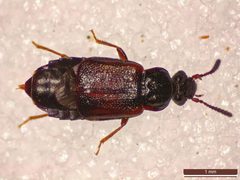
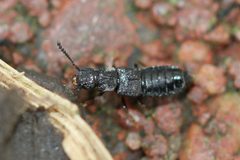
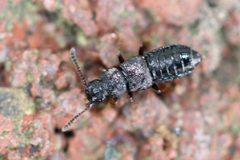
13Omaliini is a tribe of rove beetles within the Omaliinae, characterized by the presence of ocelli. The tribe comprises approximately 45 and 450 described distributed across all zoogeographic regions. Fossil evidence from Cretaceous amber has established the minimum age of the tribe at approximately 100 million years. The tribe exhibits considerable morphological and ecological diversity, with ongoing taxonomic research revealing numerous new species, particularly in Asia and the Papuan Region.
Pronunciation
How to pronounce Omaliini: /oʊˈmæliˌaɪnaɪ/
These audio files are automatically generated. While they are not always 100% accurate, they are a good starting point.
Identification
Members of Omaliini are distinguished from other rove beetle tribes by the presence of ocelli (simple ), a feature referenced in their . The tribe is morphologically diverse, with no single set of external characters uniting all members beyond the ocelli and general omaliine body plan. Identification to typically requires examination of male genitalia, particularly the , and female genital segment structures. -level identification relies on detailed morphological characters including structure, pronotum shape, elytral proportions, and genitalia .
Images
Distribution
distribution across all zoogeographic regions. Documented from the Palearctic (Siberia, Far Eastern Russia, China, Japan, Nepal, Europe, Middle East), Oriental (Southeast Asia, Taiwan, Myanmar), Afrotropical, Neotropical, Nearctic, Australian, and Papuan Regions (Indonesia, Papua New Guinea, Solomon Islands). The fossil Duocalcar is known from Cretaceous amber of France, establishing a minimum age of approximately 100 million years.
Similar Taxa
- Other Omaliinae tribes (e.g., Anthophagini, Eusphalerini)Share the general omaliine body form but lack ocelli; Omaliini is distinguished by the presence of ocelli, a trait absent in related tribes within the .
More Details
Fossil Record
The oldest definitive member of Omaliini, Duocalcar geminum, was discovered in opaque Cretaceous amber from France, dating to the latest Albian (approximately 100 million years ago). This discovery extends the known temporal range of the tribe from the Eocene to the mid-Cretaceous.
Taxonomic Activity
Recent taxonomic research has significantly expanded the known diversity of Omaliini, with numerous new described from previously underexplored regions including China, Nepal, Myanmar, and the Papuan Region. The tribe contains several species-rich including Omalium (with multiple species groups established), Paraphloeostiba, and Pycnoglypta.
Sources and further reading
- BugGuide
- Wikipedia
- iNaturalist taxon
- Catalogue of Life
- Oldest Rove Beetle in the Omaliini Tribe Found in French Amber
- Duocalcar geminum Archives - Entomology Today
- Review of the genus Omalium Gravenhorst, 1802 (Coleoptera: Staphylinidae: Omaliinae: Omaliini) of China
- Two new species of Sinacrulia Shavrin, 2023 (Coleoptera: Staphylinidae: Omaliinae: Omaliini) from Nepal and Myanmar
- A review of the genus Pycnoglypta Thomson, 1858 (Staphylinidae, Omaliinae, Omaliini) with notes on related taxa
- Dropephylloidea, a remarkable new genus from south Europe and the Middle East (Coleoptera: Staphylinidae: Omaliinae: Omaliini)
- Three new species and records of the genus Omalium Gravenhorst, 1802 (Coleoptera: Omaliinae: Omaliini) from the eastern Palaearctic Region
- Review of the genus Omalium Gravenhorst, 1802 (Coleoptera: Staphylinidae: Omaliinae: Omaliini) of Siberia and Far Eastern Russia, with notes on some species from Mongolia and Japan
- Faunistic and diagnostic notes on some species of the genus Omalium Gravenhorst, 1802 of Caucasus, Turkey and Iran (Coleoptera: Staphylinidae: Omaliinae, Omaliini)
- Two new species of the genus Xanthonomus Bernhauer, 1926 from Indonesia and Malaysia (Coleoptera: Staphylinidae: Omaliinae: Omaliini)
- Twenty-one new species of Omaliini from the Papuan Region (Coleoptera: Staphylinidae: Omaliinae), with diagnostic and faunistic notes on some species of the genus Paraphloeostiba Steel, 1960