Eucyllus vagans is a species of broad-nosed weevil in the beetle family Curculionidae. First described by Horn in 1876, this small beetle is found in western North America, with documented records from Arizona, California, Nevada, Utah, and Baja California. As a member of the subfamily Entiminae, it possesses the characteristic short, broad snout typical of this group.
Eudesma is a genus of cylindrical bark beetles in the family Zopheridae, established by LeConte in 1863. The genus contains a single described species, Eudesma undulata. These beetles belong to a group of primarily wood-associated beetles characterized by their compact, cylindrical body form.
Beautiful Clown Weevil, Sesbania Clown Weevil
Eudiagogus pulcher is a species of broad-nosed weevil in the beetle family Curculionidae, first described by Fåhraeus in 1840. It is commonly known as the Beautiful Clown Weevil or Sesbania Clown Weevil. The species is native to North America, with documented occurrence records from Alabama, Arizona, California, Florida, and Georgia. It is a moderately well-observed species with over 1,400 citizen science records on iNaturalist.
pine weevils
Eudociminus is a genus of weevils (Coleoptera: Curculionidae) containing at least two described species. The genus includes the cypress weevil, Eudociminus mannerheimii, which is native to North America and associated with cypress trees. Published biological information for the genus is extremely limited.
Cypress Weevil
Eudociminus mannerheimii, the cypress weevil, is a native North American beetle in the family Curculionidae. It breeds primarily in scarred, weakened, or fallen cypress trees and occasionally damages nursery stock and stump sprouts. Despite its potential to cause localized tree mortality, published biological information remains extremely limited.
Eufallia is a genus of minute brown scavenger beetles (family Latridiidae) established by Muttkowski in 1910. The genus contains two described species: Eufallia africanus (Dajoz, 1970) from Africa and Eufallia seminivea (Motschulsky, 1866). Members of this genus are small beetles associated with decaying organic matter.
Eufallia seminivea is a minute beetle in the family Latridiidae, commonly known as plaster beetles or minute brown scavenger beetles. The species was originally described by Motschulsky in 1866 under the basionym Aridius seminiveus. Latridiidae beetles are generally associated with mold and fungal growth, though specific ecological details for this species remain poorly documented. The genus Eufallia contains few described species and is characterized by distinctive antennal and pronotal morphology.
Euglenesini is a tribe of small beetles within the family Aderidae, commonly known as ant-like leaf beetles. Members of this tribe are characterized by their diminutive size and compact body form. The tribe contains the genus Euglenes and related taxa. These beetles are poorly studied, with limited biological information available.
Eugnamptus is a genus of leaf and bud weevils in the beetle family Attelabidae. The genus contains more than 170 described species. Members of this genus are associated with plant material, particularly leaves and buds, reflecting the feeding habits typical of the family. The genus was established by Carl Johan Schoenherr in 1839.
leaf rolling weevil
Eugnamptus pallidus is a species of leaf rolling weevil in the beetle family Attelabidae. The species was described by Shaeffer in 1908. As a member of the Attelabidae, it belongs to a group of weevils known for their distinctive behavior of rolling or folding leaves to create shelters for their eggs and larvae. The specific name 'pallidus' refers to its pale coloration.
leaf rolling weevil
Eugnamptus punctatus is a species of leaf-rolling weevil in the family Attelabidae, described by Pierce in 1913. The species is native to North America and belongs to a group of weevils known for their distinctive behavior of cutting and rolling leaves to create protective shelters for their eggs and larvae. Two subspecies are recognized: E. p. punctatus and E. p. niger. Like other attelabids, this species exhibits complex parental care behaviors involving leaf manipulation.
leaf rolling weevil
Eugnamptus puncticeps is a species of leaf-rolling weevil in the beetle family Attelabidae. The species was described by LeConte in 1876. It is known from North America. Members of this genus are characterized by their association with leaf-rolling behavior, a distinctive trait of the Attelabidae family.
Eugonus is a genus of fungus weevils in the beetle family Anthribidae, established by Schoenherr in 1833. The genus contains approximately 18 described species. As members of Anthribidae, these weevils are associated with fungal substrates rather than living plant tissues. The genus is part of the diverse weevil superfamily Curculionoidea.
Eulabis is a genus of darkling beetles (family Tenebrionidae) within the tribe Eulabini. The genus was established by Eschscholtz in 1829 and contains species found in western North America. As members of Tenebrionidae, these beetles are generally associated with arid and semi-arid environments. The genus is relatively small and understudied compared to larger tenebrionid genera.
Eulabis bicarinata is a species of darkling beetle in the family Tenebrionidae, described by Eschscholtz in 1829. It belongs to the genus Eulabis, a group of small to medium-sized beetles within the diverse Tenebrionidae family. The species name "bicarinata" refers to the two-keeled or two-ridged structure, likely describing a diagnostic feature of the pronotum or elytra. As with many tenebrionid beetles, it is presumed to inhabit arid or semi-arid environments, though specific ecological data remain limited.
Eulechriops is a genus of true weevils (Curculionidae) established by J. Faust in 1896. The genus comprises more than 80 described species. The name is masculine per ICZN Article 30.1.4.3, which governs compound names ending in -ops. Species-level biology remains poorly documented.
Eulechriops minuta is a species of true weevil in the beetle family Curculionidae. It is native to North America. Very little is known about its specific biology, ecology, or behavior. The genus Eulechriops comprises small weevils, and this species follows that general morphological pattern.
Eulepton is a genus of leaf beetles (family Chrysomelidae) established by Riley in 2019. The genus was erected relatively recently in coleopteran taxonomy, suggesting it may have been separated from a related genus based on morphological or genetic distinctions. As a member of Chrysomelidae, its species are herbivorous beetles. The genus appears to be poorly documented in public sources, with minimal observational records available.
minute marsh-loving beetle
Eulimnichus ater is a species of minute marsh-loving beetle in the family Limnichidae, first described by LeConte in 1854. The species is widely distributed across the Americas, occurring in the Caribbean, Central America, North America, and South America. As a member of the Limnichidae, it belongs to a family of small beetles typically associated with moist or marshy habitats, though specific ecological details for this species remain limited in the available literature.
Eulimnichus californicus is a minute marsh-loving beetle in the family Limnichidae. The species was described by LeConte in 1879 and is known from North America. Members of the genus Eulimnichus are small beetles typically associated with riparian and wetland habitats.
Eumecomera bicolor is a species of false blister beetle in the family Oedemeridae, first described by Horn in 1870. It is found in North America. The genus Eumecomera belongs to a family commonly known as false blister beetles, which are typically soft-bodied beetles associated with flowers and vegetation.
Saline Tiger Beetles
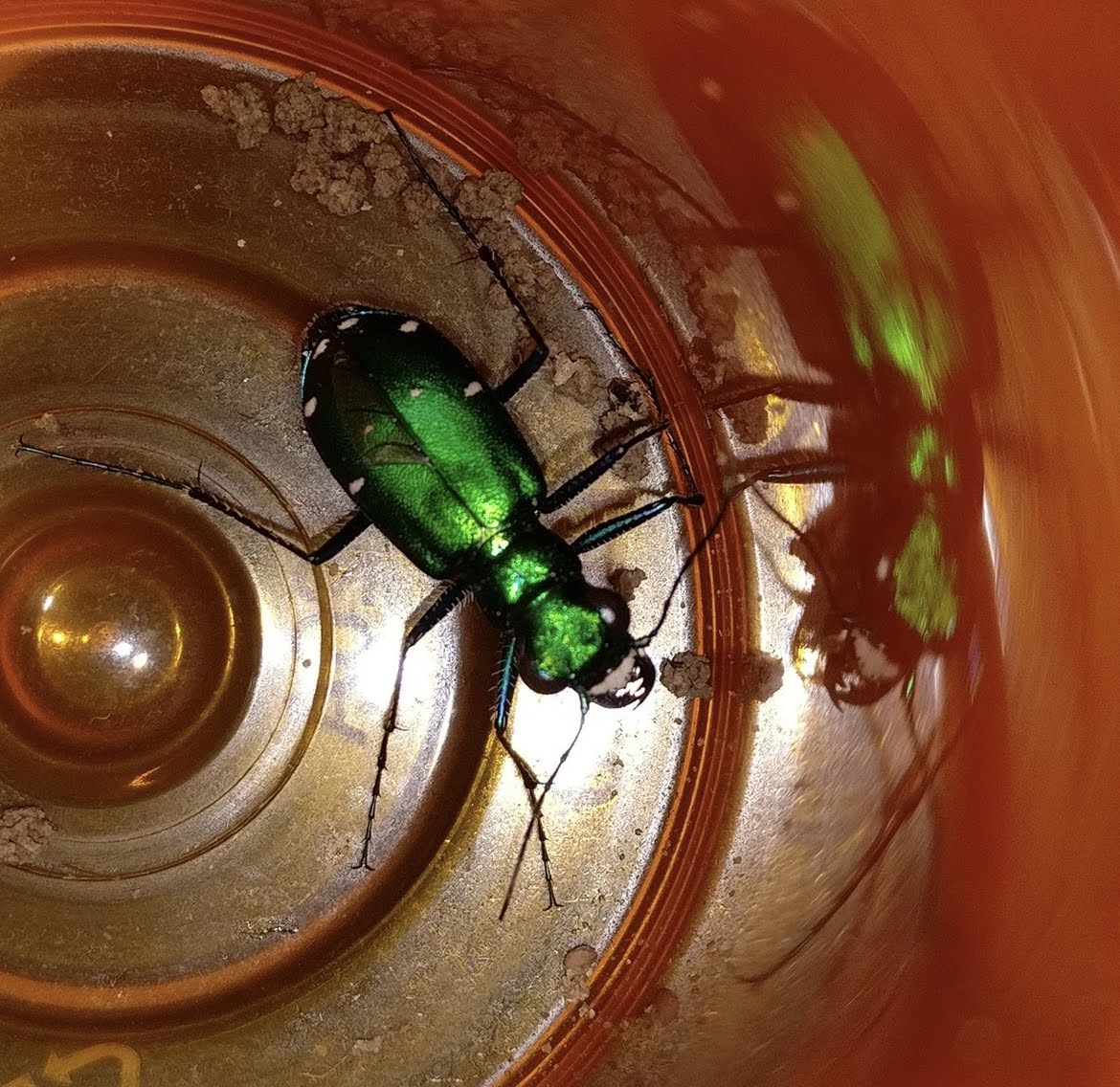
Eunota is a genus of tiger beetles in the family Cicindelidae, commonly known as the saline tiger beetles. The genus was established by Émile Rivalier in 1954 and contains eleven recognized species distributed in the United States and Mexico. Members of this genus are specialized for life in saline habitats including salt flats, alkaline lakes, and tidal marshes. Several species exhibit pronounced white elytral markings, with subspecies showing varying degrees of white coloration.
California Tiger Beetle
Eunota californica, commonly known as the California Tiger Beetle, is a ground-dwelling beetle in the family Carabidae (subfamily Cicindelinae). The species was originally described as Cicindela californica by Ménétriés in 1843 and later transferred to the genus Eunota. It occurs in Mexico and the United States, with 55 iNaturalist observations documenting its presence. As a member of the tiger beetle group, it is likely a fast-running, visually-oriented predator, though specific behavioral studies for this species are limited.
Euparia castanea is an aphodiine dung beetle in the family Scarabaeidae. The species is distributed across Central America and North America, with records from Mexico through Central America to Florida and Texas in the United States. As a member of the tribe Eupariini, it belongs to a group of scarab beetles often associated with ant colonies.
eupariine dung beetles, small dung beetles
Eupariini is a diverse tribe of small dung beetles in the subfamily Aphodiinae (Scarabaeidae). The tribe comprises over 40 genera and approximately 640 described species globally, with exceptional diversity in the Neotropics where around 28 genera and 333 species occur. Members are smaller than their sister lineage Scarabaeinae. The tribe has a broad geographic distribution spanning the Australian, Oriental, and Neotropical zoogeographical regions, with fossil representatives known from Eocene Baltic amber.
Black and White Fungus Weevil
Euparius lugubris is a species of fungus weevil in the beetle family Anthribidae. It is found in North America, where it has been documented in at least 35 observations. The species was described by Olivier in 1800 and is commonly known as the Black and White Fungus Weevil.
Rustic Fungus Weevil
Euparius paganus is a species of fungus weevil in the family Anthribidae, commonly known as the Rustic Fungus Weevil. It is native to North America, with confirmed records from Canada (New Brunswick, Québec) and the United States. As a member of Anthribidae, it is associated with fungal habitats, though specific ecological details remain limited in published literature.
fungus weevil
Euparius pictus is a species of fungus weevil in the beetle family Anthribidae. It was described by Valentine in 1972. The species occurs in Central America and North America, where it inhabits forested environments. As a fungus weevil, it is associated with fungal resources, though specific ecological details remain limited in published literature. The species is represented by few observations in community science databases, suggesting it may be underreported or genuinely uncommon.
spiny-legged rove beetles
Euphaniini is a tribe of rove beetles (Staphylinidae) established by Reitter in 1909, commonly referred to as spiny-legged rove beetles. The tribe comprises at least eight extant and extinct genera, including Deleaster, Euphanias, Mitosynum, Oxypius, Platydeleaster, and Syntomium, plus the fossil genera Protodeleaster and Pseudanotylus. Members of this tribe are classified within the subfamily Oxytelinae.
Euphoria devulsa is a species of flower chafer beetle in the family Scarabaeidae, subfamily Cetoniinae. The species was described by Horn in 1880 and is accepted as valid. It belongs to the genus Euphoria, a group of colorful scarab beetles commonly known as flower chafers or bumble flower beetles. Members of this genus are known for their bee-mimicking flight behavior and attraction to fermenting sap flows on trees.
Euphoria fascifera is a species of flower scarab beetle in the family Scarabaeidae, subfamily Cetoniinae. The species was described by LeConte in 1861. Two subspecies are recognized: E. f. fascifera (LeConte, 1861) and E. f. trapezium Casey, 1915. The genus Euphoria comprises colorful flower chafers known for their bee-mimicking flight behavior and attraction to sap flows and flowers.
Euphoria schottii is a flower scarab beetle in the family Scarabaeidae, subfamily Cetoniinae. The genus Euphoria contains colorful species commonly known as flower chafers or bumble flower beetles, many of which exhibit Batesian mimicry of bees and wasps. Euphoria schottii is one of ten Euphoria species recorded from Arizona, where it occurs in association with agave plants. The species was described by Schott and is part of a genus whose taxonomy has undergone recent revision, with several former subspecies of E. fulgida elevated to full species status.
Two-striped click beetle
Euplastius bivittatus is a species of click beetle in the family Elateridae, order Coleoptera. It belongs to a genus of click beetles characterized by the ability to right themselves when flipped onto their backs using a specialized prosternal process and mesosternal groove mechanism. Very little species-specific information is documented for this taxon. The specific epithet "bivittatus" refers to two stripes, suggesting a distinctive striped pattern on the elytra or body.
Euplastius melsheimeri is a species of click beetle in the family Elateridae. The genus Euplastius is poorly documented in published literature, and this species is known from very few observations. As with other elaterids, adults possess the characteristic clicking mechanism formed by the prosternal process and mesosternal receptacle that enables their jumping escape response. The species epithet honors American entomologist Frederick Ernst Melsheimer.
Euplastius mimicus is a species of click beetle in the family Elateridae. The specific epithet 'mimicus' suggests potential mimicry, though this has not been confirmed in available literature. The genus Euplastius is part of the diverse click beetle family, characterized by the ability to right themselves when flipped using a prosternal process that fits into a mesosternal groove. Available records for this species are extremely limited.
Eupompha elegans perpulchra is a subspecies of blister beetle in the family Meloidae, tribe Eupomphini. It is endemic to California, USA. Adults have been documented feeding on flowers of specific host plants in the Polemoniaceae family, including Eriastrum densifolium, Eriastrum sapphirinum, and Gilia tenuiflora. Mating behavior occurs on host flowers. The subspecies is represented by 930 specimens in the Entomology Research Museum holdings, indicating it is relatively well-collected and presumably common within its range.
Eupompha imperialis is a blister beetle in the family Meloidae, described by Wellman in 1912. The species is recorded from North America. As a member of the tribe Eupomphini, it belongs to a group of blister beetles known for their aposematic coloration and chemical defense. Museum collections hold 42 specimens of this species.
Eupristocerus is a monotypic genus of jewel beetles (family Buprestidae) containing the single species Eupristocerus cogitans. The genus is classified within the tribe Coraebini, a group of buprestids characterized by their association with woody host plants. Eupristocerus cogitans is notable as the only coraebine buprestid known from North America north of Mexico.
Eupsenius is a genus of ant-loving beetles in the family Staphylinidae, subfamily Pselaphinae. The genus contains approximately six described species distributed primarily in North America. Members of this genus are myrmecophilous, living in association with ant colonies. The genus was established by John Lawrence LeConte in 1849.
Eurhoptus curtus is a species of weevil in the family Curculionidae, described by Hamilton in 1893. It belongs to a genus of small weevils found in North America. The species is poorly documented in scientific literature and appears rarely in collections or observations.
Europini is a tribe of beetles within the family Monotomidae, established by Sen Gupta in 1988. The tribe comprises approximately 8 genera and at least 40 described species. Members are commonly referred to as root-eating beetles, reflecting their known feeding habits. The tribe includes genera such as Europs, Aneurops, Bactridium, and Hesperobaenus.
antlike flower beetles
Eurygeniinae is a subfamily of antlike flower beetles within the family Anthicidae, established by J.L. LeConte in 1862. The subfamily comprises approximately 12 genera and more than 50 described species. Members of this group are small beetles that exhibit morphological and behavioral convergence with ants, a characteristic shared with other Anthicidae.
Eurymycter is a genus of fungus weevils (family Anthribidae) established by LeConte in 1876. The genus contains at least four described species distributed in North America. These beetles are associated with fungi, reflecting the ecological niche typical of the Anthribidae family.
fungus weevil
Eurymycter fasciatus is a species of fungus weevil in the beetle family Anthribidae. It is found in North America, with records from Canada including British Columbia, Manitoba, New Brunswick, and Nova Scotia. The species belongs to a family commonly known as fungus weevils, though specific ecological details for this species remain limited.
Euryptychini is a tribe of click beetles within the family Eucnemidae, established by Mamaev in 1976. Members of this tribe are classified in the subfamily Macraulacinae and share characteristics typical of the false click beetles, including reduced or modified clicking mechanisms compared to true click beetles (Elateridae). The tribe is relatively small and poorly documented in the scientific literature, with limited biological and ecological information available.
Euryptychus ulkei is a species of false click beetle in the family Eucnemidae. Very little published information exists about this species. The genus Euryptychus comprises small to medium-sized eucnemids, and species in this family are typically associated with dead or decaying wood where larvae develop as saproxylic feeders. Adults are generally collected by beating vegetation or attracted to light.
cryptic slime mold beetle
Eurysphindus comatulus is a species of cryptic slime mold beetle in the family Sphindidae, first described by McHugh in 1993. It belongs to a genus of small beetles specialized for association with slime molds. The species is known from eastern North America, with records from Ontario and Québec in Canada.
Eusattodera pini is a species of skeletonizing leaf beetle in the family Chrysomelidae. It is a member of the flea beetle tribe Alticini, characterized by enlarged hind femora adapted for jumping. The species is native to North America and feeds on pine foliage.
Eusattus convexus is a darkling beetle species in the family Tenebrionidae, described by John Lawrence LeConte in 1851. The species is known from Mexico and has been documented through 19 iNaturalist observations. As a member of Tenebrionidae, it likely inhabits arid or semi-arid environments typical of the genus, though specific ecological details remain poorly documented in the available literature.
Eusattus difficilis is a species of darkling beetle in the family Tenebrionidae, described by LeConte in 1851. The genus Eusattus belongs to a diverse group of beetles commonly known as darkling beetles, which are primarily found in arid and semi-arid environments. This species is native to Mexico, as indicated by distribution records. The specific epithet "difficilis" (Latin for "difficult") may allude to identification challenges or habitat characteristics. Darkling beetles in this genus are typically ground-dwelling and adapted to dry conditions.