
Eudociminus mannerheimii
Boheman, 1836
Cypress Weevil
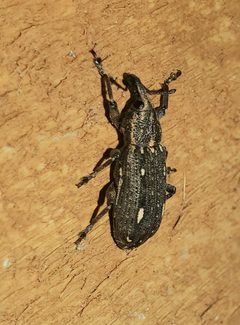
Eudociminus mannerheimii, the cypress weevil, is a native North American in the Curculionidae. It breeds primarily in scarred, weakened, or fallen cypress trees and occasionally damages nursery stock and stump sprouts. Despite its potential to cause localized tree mortality, published biological information remains extremely limited.
Pronunciation
How to pronounce Eudociminus mannerheimii: /ˌjuːdoʊˈsɪmɪnəs ˌmænərˈheɪmiːaɪ/
These audio files are automatically generated. While they are not always 100% accurate, they are a good starting point.
Images
Habitat
Cypress swamps and wetland forests. Breeding occurs in scarred, weakened, or fallen bald cypress and pond cypress. Also documented in nursery settings with small diameter cypress stock.
Distribution
Native to North America. Documented in Florida with range expansion noted; referenced in North Carolina.
Host Associations
- Taxodium distichum - breeding bald cypress; scarred, weakened, or fallen trees used for breeding; small diameter nursery stock damaged by larval tunneling
- Taxodium ascendens - breeding pond cypress; scarred, weakened, or fallen trees used for breeding; stump sprouts and planted seedlings damaged by feeding
Behavior
feeding causes limited wounding and girdling of pond cypress stump sprouts and planted seedlings. Larvae tunnel through the main stem and root collar of small diameter bald cypress nursery stock.
Ecological Role
Possible causative agent of tree mortality in weakened or stressed cypress. Functions as a decomposer of damaged cypress wood.
Human Relevance
Occasional pest of cypress nursery operations and planted seedlings. Not a frequent pest of major economic importance, but damage warrants recognition in forestry and restoration contexts.
More Details
Research needs
The lack of information regarding its complete , potential alternative , and management options has been explicitly identified as warranting further research (Mayfield 2005).
Taxonomic note
Placed in Molytinae; historically treated among pine weevils (Pissodini or related groups) but now classified in Eudociminus.
Sources and further reading
- BugGuide
- Wikipedia
- iNaturalist taxon
- Cypress Weevil, Eudociminus mannerheimii (Boheman) (Coleoptera: Curculionidae)
- New Information About the Cypress Weevil,Eudociminus mannerheimii(Boheman, 1836) (Coleoptera: Curculionidae: Molytinae): Redescription, Range Expansion, New Host Records, and Report as a Possible Causative Agent of Tree Mortality