
Molytinae
Schönherr, 1823
Genus Guides
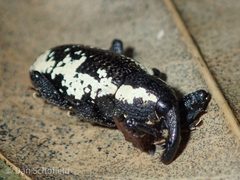
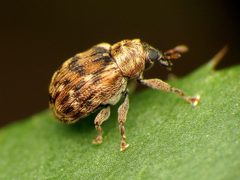
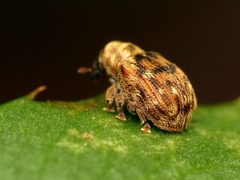
16Molytinae is a large and diverse of weevils (Curculionidae) described by Carl Johan Schönherr in 1823. The subfamily contains numerous tribes and distributed worldwide, with particularly high diversity in tropical and subtropical regions. Many Molytinae are associated with specific plants, including conifers, oaks, and various flowering plants. Some species are economically important as pests of forestry and agricultural crops, while others are restricted to specialized such as leaf litter, caves, or high-elevation . The subfamily has undergone significant taxonomic revision in recent decades, with many new species described particularly from Central America, Africa, and Asia.
Pronunciation
How to pronounce Molytinae: /mɒlɪˈtɪniː/
These audio files are automatically generated. While they are not always 100% accurate, they are a good starting point.
Images
Habitat
Molytinae occupy diverse including forests (coniferous, deciduous, and mixed), grasslands, alpine and subalpine , caves and subterranean environments, leaf litter, and agricultural systems. Many species show strong associations with specific plants or plant . High-elevation species are known from paramo and Afromontane forest ecosystems. Some are specialized for subterranean or cave-dwelling life, showing troglomorphic adaptations such as reduced .
Distribution
Worldwide distribution with centers of diversity in tropical and subtropical regions. Documented from North America (including southwestern U.S., Mexico, and Central America), South America (Ecuador, Brazil, Argentina), Europe (including Mediterranean region, Portugal, Italy, Montenegro, Romania), Africa (Tanzania, West Africa including São Tomé, Ivory Coast, Sierra Leone), Asia (Taiwan, Turkey), and the Canary Islands. Many show restricted local distributions and high .
Human Relevance
Some Molytinae are economically significant pests. Aclees taiwanensis, native to Taiwan, has been introduced to Europe (France, Italy, Slovenia, Poland) and recently recorded in Turkey, where it damages fig trees (Ficus carica) and other Ficus species. Conotrachelus quadrilineatus damages beans in South America. The includes of concern. Conversely, many species are restricted to natural and serve as indicators of health, particularly in old-growth forests and specialized habitats like caves.
Similar Taxa
- CurculioninaeHistorically, several tribes now placed in other (including Bagoinae, Cryptorhynchinae, Hyperinae, Lixinae, Mesoptiliinae, and the tribe Itini) were treated as "tribus groups" within Molytinae in older classifications. These have since been elevated to separate subfamilies or transferred to Curculioninae.
- CycloteriniThe Prothrombosternus was placed in Cycloterini, but its phylogenetic position within Molytinae remains untested and its placement is provisional.
More Details
Tribal composition
Molytinae includes multiple tribes, with significant taxonomic revision ongoing. The tribe Lymantini contains leaf-litter inhabiting such as Theognete, which shows remarkable local in Middle America with 94 described, 92 of them new to science in a 2010 revision. The tribe Anchonini shows transatlantic distribution patterns with genera in both Africa and the Americas. The tribe Orthorhinini includes genera associated with Araucaria such as Eurhamphus.
Subterranean adaptations
Several Molytinae lineages have independently evolved subterranean or cave-dwelling habits. The Baezia in the Canary Islands contains seven eyeless , six associated with caves and the mesovoid shallow substratum (hypogean environment) and one from soil (endogean environment). The genus Pseudoalaocybites includes microphthalmic species from high-elevation paramo . The genus Prothrombosternus from Tanzania is flightless and found in wet Afromontane forest leaf litter.
Taxonomic activity
Molytinae has been subject to intensive taxonomic study in recent decades. Major revisions include the Theognete monograph (94 ), the Leiosoma cribrum group (6 species), and numerous new species descriptions from Central America, Africa, and Asia. data are available for some species, such as Prothrombosternus tarsalis.
Sources and further reading
- BugGuide
- Wikipedia
- iNaturalist taxon
- NCBI Taxonomy
- Curculionidae | Beetles In The Bush
- Insecta | Beetles In The Bush | Page 5
- July | 2022 | Beetles In The Bush
- weevils | Beetles In The Bush
- Anchonidium selvanum sp. nov. (Coleoptera, Curculionidae, Molytinae) from northern Portugal
- Taxonomic revision of Leiosoma cribrum species group (Coleoptera: Curculionidae: Molytinae)
- The genus Prothrombosternus (Coleoptera: Curculionidae: Molytinae) rediscovered: a male from Rubeho Mountains, Tanzania
- Anchonini in Africa: New Species and Genus Confirming a Transatlantic Distribution (Coleoptera: Curculionidae: Molytinae)
- Three new subterranean species of Baezia (Curculionidae, Molytinae) for the Canary Islands
- A NEW RECORD FOR TÜRKİYE'S INVASIVE EXOTIC INSECT FAUNA Aclees taiwanensis Kôno, 1933 (COLEOPTERA: CURCULIONIDAE: MOLYTINAE)
- Eurhamphus pancinii, a new species of the genus Eurhamphus Shuckard, 1838 (Coleoptera: Curculionidae: Molytinae: Orthorhinini) from West Papua
- The first discovery of the genus Pseudoalaocybites Osella, 1980 from Ecuador, with a description of a new species in an alpine ecosystem (Coleoptera, Curculionidae: Molytinae)
- A taxonomic monograph of the Middle American leaf-litter inhabiting weevil genus Theognete Champion (Coleoptera: Curculionidae; Molytinae; Lymantini)
- First Record of Conotrachelus quadrilineatus Champion, 1904 (Coleoptera: Curculionidae: Molytinae) Damaging Beans in South America.