
Bagoinae
Genus Guides
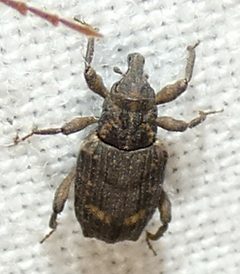
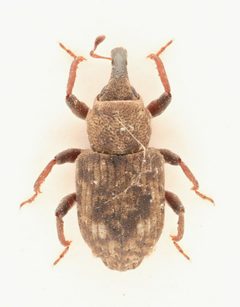
2Bagoinae is a of weevils (Curculionidae) containing the Bagous and related genera. Members are primarily associated with aquatic and semi-aquatic , though some occupy terrestrial environments. The group has been variously classified, with some treatments placing it within Molytinae. The subfamily includes approximately 130 in the Palaearctic region, with the genus Bagous distributed globally except Central and South America.
Pronunciation
How to pronounce Bagoinae: /ˈbæɡoʊ.iːniː/
These audio files are automatically generated. While they are not always 100% accurate, they are a good starting point.
Identification
of Bagoinae, particularly the Bagous, can be recognized by their association with aquatic or riparian combined with typical weevil . Larvae are slender, elongated, slightly curved, with densely asperate and white-yellow coloration; pupae are elongated, slender, and white or yellowish with smooth cuticle. Definitive -level diagnostic characters require examination of genitalia and other internal structures.
Images
Habitat
Primarily aquatic including ponds, old riverbeds, swamps, floodplain meadows, and forests. Some occupy dry terrestrial or xerothermic . Urban have been documented in managed plantings.
Distribution
Bagous is globally distributed except Central and South America. Approximately 130 occur in the Palaearctic region, with 82 in the Western Palaearctic and 31 in Central Europe.
Diet
Most are monophagous or narrowly oligophagous on Dicotyledones; some are or feed on Equisetum. Larvae develop within plant tissue including roots, stems, and root collars.
Host Associations
- Sedum maximum - larval Documented for Bagous claudicans; larvae develop in root collar and underground parts of roots and stems
Life Cycle
Larvae exhibit diverse feeding modes: endophagous in submerged or emerged plant tissue, exophagous, or as leaf-miners. typically occurs in the larval chamber within tissue; seldom in soil. The stage overwinters.
Behavior
are . Members exhibit low capability, contributing to vulnerability and patterns. Some have been employed as agents against aquatic plants.
Ecological Role
Stenotopic serve as indicators of quality and clear water-dependent natural . declines in some species reflect broader wetland degradation and habitat loss.
Human Relevance
Some utilized as agents for aquatic vegetation. degradation has rendered certain species endangered.
Similar Taxa
More Details
Taxonomic Instability
The has been treated variously as distinct or submerged within Molytinae; current classifications recognize it as a valid subfamily of Curculionidae
Molecular Identification
using oxidase I (COI) has been successfully applied to confirm identification of larval stages where morphological characters are insufficient