
Bagous
Germar, 1817
Species Guides
17Bagous is a of semi-aquatic weevils in the Curculionidae containing at least 360 described . Many species are associated with aquatic or semi-aquatic , with several species developed as agents for aquatic plants, particularly Hydrilla verticillata. The genus includes both native and introduced species with varying degrees of specificity. Larvae typically develop within plant stems while feed on stems and leaves.
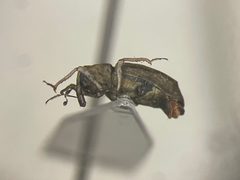
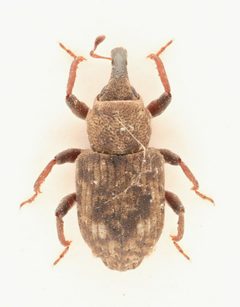
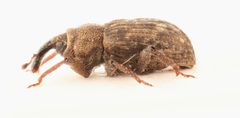
Pronunciation
How to pronounce Bagous: /ˈbeɪɡəs/
These audio files are automatically generated. While they are not always 100% accurate, they are a good starting point.
Images
Habitat
Semi-aquatic and aquatic environments, particularly those supporting submerged aquatic vegetation such as Hydrilla verticillata. occupy ranging from freshwater lakes and ponds to slow-moving waterways where plants occur.
Distribution
Widespread distribution with records from Europe (Denmark, Norway, Sweden), North America (United States including Vermont), and Australia. Specific have been introduced to new regions as agents; for example, Bagous hydrillae was introduced from Australia to Florida, USA in 1991.
Diet
Multiple feed on Hydrilla verticillata, including stems, tubers, and submerged leaves. Bagous hydrillae larvae mine hydrilla stems while feed on stems and submerged leaves. specificity varies among species; some complete development on hydrilla while others do not.
Host Associations
- Hydrilla verticillata - primary Stems, tubers, and submerged leaves; supports complete development of B. hydrillae and B. affinis
Life Cycle
Larvae develop within plant stems; for Bagous hydrillae, single are laid in hydrilla stems and three larval instars develop within. Development from egg to takes 12–14 days at 25°C. occurs on floating plant fragments or those stranded on shorelines.
Behavior
Larvae and feed beneath the water surface, fragmenting stems. Feeding continues on floating fragments and stranded material. Some exhibit higher survival and on tubers compared to stems. Extensive -specificity testing has been conducted for species considered as agents.
Ecological Role
Several serve as agents for aquatic weeds, particularly Hydrilla verticillata. Native species such as B. restrictus may occupy similar without contributing to control of target weeds.
Human Relevance
Used as agents for management of hydrilla in the United States. Bagous hydrillae was introduced to Florida in 1991 after extensive -specificity testing. B. affinis has also been introduced for hydrilla control.
Similar Taxa
- Bagous australasiaeSimilar ; distinguished by figures and descriptions in taxonomic literature for identification
Sources and further reading
- BugGuide
- Wikipedia
- GBIF taxonomy match
- iNaturalist taxon
- NCBI Taxonomy
- Catalogue of Life
- Hydrilla Stem Weevil: Bagous hydrillae O’Brien
- Hydrilla Stems and Tubers as Hosts for Three Bagous Species: Two Introduced Biological Control Agents (Bagous hydrillae and B. affinis) and One Native Species (B. restrictus)
- Hydrilla Stems and Tubers as Hosts for Three <I>Bagous</I> Species: Two Introduced Biological Control Agents (<I>Bagous hydrillae</I> and <I>B. affinis</I>) and One Native Species (<I>B. restrictus</I>)
- Host Range Studies with Bagous affinis (Coleoptera: Curculionidae), an Indian Weevil that Feeds on Hydrilla Tubers
- First Descriptions of Larva and Pupa of Bagous claudicans Boheman, 1845 (Curculionidae, Bagoinae) and Systematic Position of the Species Based on Molecular and Morphological Data
- DISTRIBUTION AND BIOLOGY OF A NEW BAGOUS WEEVIL (COLEOPTERA: CURCULIONIDAE) WHICH FEEDS ON THE AQUATIC WEED, HYDRILLA VERTICILLATA