
Euparius pictus
Valentine, 1972
fungus weevil
Euparius pictus is a of in the Anthribidae. It was described by Valentine in 1972. The species occurs in Central America and North America, where it inhabits forested environments. As a fungus weevil, it is associated with fungal resources, though specific ecological details remain limited in published literature. The species is represented by few observations in science databases, suggesting it may be underreported or genuinely uncommon.
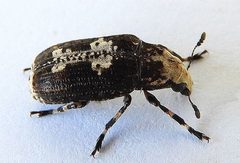
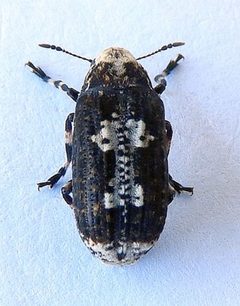
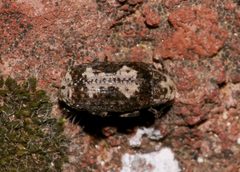
Pronunciation
How to pronounce Euparius pictus: /juːˈpɛəriəs ˈpɪktəs/
These audio files are automatically generated. While they are not always 100% accurate, they are a good starting point.
Identification
Euparius pictus can be distinguished from true weevils ( Curculionidae) by its straight that lack a distinct club. Within Anthribidae, identification to level requires examination of genitalic characters and detailed morphological analysis. The species may be separated from congeneric species by subtle differences in body proportions, punctation patterns, and male genitalia structure. Accurate identification typically requires comparison with or consultation of the original description (Valentine 1972).
Images
Appearance
As a member of Anthribidae, Euparius pictus possesses the characteristic features of fungus weevils: an elongated body form, a straight (non-geniculate) lacking the distinct club of true weevils (Curculionidae), and a moderately elongated rostrum shorter than that of curculionid weevils. The epithet "pictus" (Latin for "painted") suggests patterned or marked coloration, though specific details of markings are not documented in available sources. Body size and precise coloration patterns require examination of .
Habitat
Forested environments in Central and North America. Specific microhabitat preferences are poorly documented, but fungus weevils are generally associated with decaying wood, fungal fruiting bodies, and other substrates supporting fungal growth.
Distribution
Central America and North America. GBIF records indicate presence in Middle America and North America without more precise locality details.
Diet
Associated with fungi, as characteristic of the Anthribidae (fungus weevils). Specific fungal or feeding habits are not documented.
Ecological Role
As a fungus-feeding , likely contributes to nutrient cycling in forest through consumption and of fungal material. Specific ecological functions are not documented.
Human Relevance
No documented economic importance. The has been recorded in science platforms (iNaturalist) with limited observations, suggesting potential value for biodiversity monitoring.
Similar Taxa
- Euparius marmoreusAnother in the same , distinguished by marbled coloration pattern; both species occur in North America and may overlap in distribution
- Members of Curculionidae (true weevils)Superficially similar elongated body form, but distinguished by geniculate (elbowed) with distinct club and typically longer rostrum
More Details
Taxonomic history
Described by Valentine in 1972. The Euparius contains multiple in the Americas, with E. pictus representing one of the less commonly encountered species based on observation frequency.
Data gaps
The is poorly represented in biodiversity databases and natural history collections. Only 8 observations recorded in iNaturalist as of available data, suggesting need for additional survey work to understand distribution and abundance.